
India's $30 trillion goal needs 8-10% growth, $400 billion more annual investment: Jayant Sinha
Development cannot remain concentrated in Delhi, Mumbai, Bengaluru, Hyderabad and a handful of other large cities, Sinha said. He identified Kolkata as particularly important, arguing that a stronger city could serve as an economic anchor for the wider eastern region.
- Aug 21, 2026,
- Updated Aug 21, 2026 5:03 PM IST
India will need to sharply lift investment and sustain economic growth of 8-10% to become a $30 trillion economy by 2047, with eastern India emerging as a critical new growth engine, Jayant Sinha, Former Chair of the Standing Committee for Finance, MoS Finance, and President of Everstone Group said.
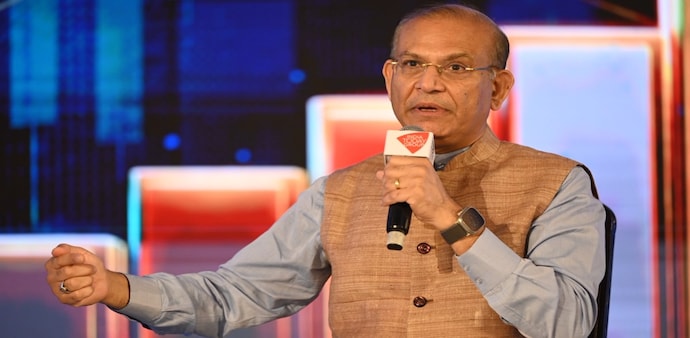
Speaking at the Business Today's IndiaAt100 event, Sinha said the $30 trillion target is one India must aspire to as it seeks to become a high-income economy and make the most of its demographic dividend over the next two decades.
“The answer is we must aspire to $30 trillion,” Sinha said, pointing to India's young population as well as opportunities emerging from artificial intelligence, green technologies and the China-plus-one manufacturing shift.
India has built a resilient economy capable of weathering global shocks and continues to grow at 6-7%, but that pace will not be sufficient to meet its longer-term ambitions, he said. “The challenge for us as everybody says is while we have the demographic advantage to grow at 8 or 9 or 10% and get to the 30 trillion. That's the real challenge for us.”
Investment gap
A key hurdle is the scale of investment required to support such rapid growth. Sinha said that when China's economy was around $4 trillion — roughly where India is now — it was investing about 40-42% of GDP. India, in comparison, invests around 30-31%.
To match that investment intensity, India would need to raise investment by about 10 percentage points of GDP, equivalent to roughly $400 billion, he said.
MUST READ | ‘If we can’t import freely, we can’t export freely’: Jayant Sinha on India’s trade barriers
“So to be able to grow as fast as China did which was 8 or 9 or 10% at that time when they had their demographic surge we have to be investing 10% more than we are investing. What is 10%? 10% is $400 billion,” he explained.
The numbers underscore the scale of the challenge. Sinha said the additional investment requirement would amount to roughly Rs 40-45 lakh crore, far exceeding the scale of public capital expenditure alone.
For Sinha, however, availability of capital itself is not the primary constraint. India needs to create conditions that generate attractive and consistent returns for investors. “It's not about capital. There is more than enough capital in the world. It's actually about returns.”
That would require faster decision-making and execution, he said.
“If we can generate 10-15% net dollar returns consistently cash on cash as it said, you give me a 100 rupees, I give you 300 rupees in five years. If I can give you that return, everybody in the room will give me the hundred rupees.”
Higher investment, in turn, would help create the jobs India needs for its young population, he said adding that the country has to transform its workforce by making its youth highly skilled and productive enough to compete with workers in economies such as China, the US, Germany and Japan.
Growth needs to spread beyond metros
Reaching $30 trillion will also require India to broaden its growth map beyond its established economic centres. Development cannot remain concentrated in Delhi, Mumbai, Bengaluru, Hyderabad and a handful of other large cities, Sinha said, highlighting the substantially lower per-capita incomes in states such as Bihar and Jharkhand.
While India's GDP per capita is around $2,700-2,800, Sinha put Bihar's at about $800 and Jharkhand's at around $1,000. That makes eastern India central to the next phase of India's economic expansion. “If we really have to get to $30 trillion and we have to grow quickly and eastern India will have to participate in that growth,” he said.
Sinha identified Kolkata as particularly important, arguing that a stronger city could serve as an economic anchor for the wider eastern region. “We've got to get Kolkata to pull all the rest of eastern India whether it is Bihar, Jharkhand, Odisha, Assam. Everybody is going to get pulled if Kolkata does well.”
He compared Kolkata's potential role in eastern India with that played by Bengaluru, Chennai, Mumbai and Delhi in their respective regions. “So Kolkata is the key for Eastern India just like Bangalore and Chennai and Mumbai and Delhi are the key for their regions.”
Race against the demographic clock
The urgency behind the investment and regional-growth push stems partly from demographics. India has a large young population today, but Sinha cautioned that this advantage has a limited window.
“We have a lot of young people that we have to make very very productive, highly skilled, fit them into a 21st century economy and in 20 or 25 years these very same young people will be older people.”
India therefore has to simultaneously raise investment, create productive jobs, upgrade skills and develop new centres of economic activity if it is to convert its demographic advantage into sustained growth, he added.
Sinha described the broader development strategy as a “green frontier development model”, built around three transformations — people, technology and energy. India, he said, will have to continually improve its competitiveness rather than treat the $30 trillion milestone simply as an end destination. “It's a race we are in. So, it's we have to evolve. We have to keep getting better.”
Watch the full conversation here:
India@2047: Blueprint for a Developed Nation
India will need to sharply lift investment and sustain economic growth of 8-10% to become a $30 trillion economy by 2047, with eastern India emerging as a critical new growth engine, Jayant Sinha, Former Chair of the Standing Committee for Finance, MoS Finance, and President of Everstone Group said.
Speaking at the Business Today's IndiaAt100 event, Sinha said the $30 trillion target is one India must aspire to as it seeks to become a high-income economy and make the most of its demographic dividend over the next two decades.
“The answer is we must aspire to $30 trillion,” Sinha said, pointing to India's young population as well as opportunities emerging from artificial intelligence, green technologies and the China-plus-one manufacturing shift.
India has built a resilient economy capable of weathering global shocks and continues to grow at 6-7%, but that pace will not be sufficient to meet its longer-term ambitions, he said. “The challenge for us as everybody says is while we have the demographic advantage to grow at 8 or 9 or 10% and get to the 30 trillion. That's the real challenge for us.”
Investment gap
A key hurdle is the scale of investment required to support such rapid growth. Sinha said that when China's economy was around $4 trillion — roughly where India is now — it was investing about 40-42% of GDP. India, in comparison, invests around 30-31%.
To match that investment intensity, India would need to raise investment by about 10 percentage points of GDP, equivalent to roughly $400 billion, he said.
MUST READ | ‘If we can’t import freely, we can’t export freely’: Jayant Sinha on India’s trade barriers
“So to be able to grow as fast as China did which was 8 or 9 or 10% at that time when they had their demographic surge we have to be investing 10% more than we are investing. What is 10%? 10% is $400 billion,” he explained.
The numbers underscore the scale of the challenge. Sinha said the additional investment requirement would amount to roughly Rs 40-45 lakh crore, far exceeding the scale of public capital expenditure alone.
For Sinha, however, availability of capital itself is not the primary constraint. India needs to create conditions that generate attractive and consistent returns for investors. “It's not about capital. There is more than enough capital in the world. It's actually about returns.”
That would require faster decision-making and execution, he said.
“If we can generate 10-15% net dollar returns consistently cash on cash as it said, you give me a 100 rupees, I give you 300 rupees in five years. If I can give you that return, everybody in the room will give me the hundred rupees.”
Higher investment, in turn, would help create the jobs India needs for its young population, he said adding that the country has to transform its workforce by making its youth highly skilled and productive enough to compete with workers in economies such as China, the US, Germany and Japan.
Growth needs to spread beyond metros
Reaching $30 trillion will also require India to broaden its growth map beyond its established economic centres. Development cannot remain concentrated in Delhi, Mumbai, Bengaluru, Hyderabad and a handful of other large cities, Sinha said, highlighting the substantially lower per-capita incomes in states such as Bihar and Jharkhand.
While India's GDP per capita is around $2,700-2,800, Sinha put Bihar's at about $800 and Jharkhand's at around $1,000. That makes eastern India central to the next phase of India's economic expansion. “If we really have to get to $30 trillion and we have to grow quickly and eastern India will have to participate in that growth,” he said.
Sinha identified Kolkata as particularly important, arguing that a stronger city could serve as an economic anchor for the wider eastern region. “We've got to get Kolkata to pull all the rest of eastern India whether it is Bihar, Jharkhand, Odisha, Assam. Everybody is going to get pulled if Kolkata does well.”
He compared Kolkata's potential role in eastern India with that played by Bengaluru, Chennai, Mumbai and Delhi in their respective regions. “So Kolkata is the key for Eastern India just like Bangalore and Chennai and Mumbai and Delhi are the key for their regions.”
Race against the demographic clock
The urgency behind the investment and regional-growth push stems partly from demographics. India has a large young population today, but Sinha cautioned that this advantage has a limited window.
“We have a lot of young people that we have to make very very productive, highly skilled, fit them into a 21st century economy and in 20 or 25 years these very same young people will be older people.”
India therefore has to simultaneously raise investment, create productive jobs, upgrade skills and develop new centres of economic activity if it is to convert its demographic advantage into sustained growth, he added.
Sinha described the broader development strategy as a “green frontier development model”, built around three transformations — people, technology and energy. India, he said, will have to continually improve its competitiveness rather than treat the $30 trillion milestone simply as an end destination. “It's a race we are in. So, it's we have to evolve. We have to keep getting better.”
Watch the full conversation here:
India@2047: Blueprint for a Developed Nation