
India’s jobs problem: Manufacturing has failed to keep pace with young workforce, says expert
India’s manufacturing sector is struggling to generate enough jobs for its rapidly expanding workforce, even as automation and AI threaten to reshape employment across industries.
- Aug 21, 2026,
- Updated Aug 21, 2026 5:37 PM IST
India’s demographic dividend is creating a large labour force, but manufacturing has not generated enough jobs to absorb it, raising concerns about the impact of automation and AI on future employment. Senior Economist Santosh Mehrotra said India needs a stronger manufacturing strategy, while experts at the same session warned that labour-intensive sectors must not be pushed prematurely towards automation.
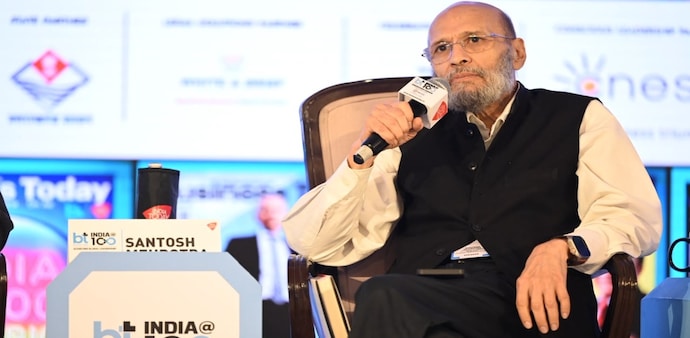
Speaking at the India@100 LIVE session, Senior Economist Santosh Mehrotra said manufacturing has failed to create jobs at the scale required by India’s growing workforce.
“Manufacturing hasn't been able to create as many jobs as we would like it to create,” Mehrotra said, highlighting the disconnect between India’s “demographic dividend of a youth force” and a manufacturing sector that is yet to generate sufficient employment.
He argued that India needs to follow the example of countries that have adopted explicit industrial policies and manufacturing strategies. “For India to grow more manufacturing jobs, India has to become like about 100 other countries of the world that adopted an industrial policy and a manufacturing strategy,” he said.
Mehrotra also questioned whether the Production Linked Incentive (PLI) scheme amounts to a manufacturing strategy. Of its 14 sectors, he noted, 12 are capital-intensive, limiting their potential to generate large numbers of jobs.
Services and employment challenge
Mehrotra warned against relying excessively on services and Global Capability Centres (GCCs) to drive future employment, particularly as AI changes the nature of services work.
“If we are going to remain dependent upon GCCs and the growth in GCCs and in services exports, then AI is not going to allow for the kind of job growth that we have seen in the past 20 years,” he said.
This concern complements economist Abheek Barua’s warning from the same session that India still needs labour-intensive industries such as garments and toys, given its large labour surplus. Barua had cautioned that payroll restructuring under the labour reforms could push smaller labour-intensive units towards greater capital intensity and automation.
Manufacturing share
Mehrotra pointed to a longer-term structural concern, saying manufacturing’s contribution to gross value added has declined from around 16-17% to 14.3%.
He also said labour-intensive manufacturing jobs fell for around a decade and have only recently recovered to levels seen in 2012. The challenge for policymakers, therefore, is twofold: build manufacturing capacity capable of absorbing India’s large workforce while ensuring automation and AI do not further weaken employment growth.
India@2047: Blueprint for a Developed Nation
India’s demographic dividend is creating a large labour force, but manufacturing has not generated enough jobs to absorb it, raising concerns about the impact of automation and AI on future employment. Senior Economist Santosh Mehrotra said India needs a stronger manufacturing strategy, while experts at the same session warned that labour-intensive sectors must not be pushed prematurely towards automation.
Speaking at the India@100 LIVE session, Senior Economist Santosh Mehrotra said manufacturing has failed to create jobs at the scale required by India’s growing workforce.
“Manufacturing hasn't been able to create as many jobs as we would like it to create,” Mehrotra said, highlighting the disconnect between India’s “demographic dividend of a youth force” and a manufacturing sector that is yet to generate sufficient employment.
He argued that India needs to follow the example of countries that have adopted explicit industrial policies and manufacturing strategies. “For India to grow more manufacturing jobs, India has to become like about 100 other countries of the world that adopted an industrial policy and a manufacturing strategy,” he said.
Mehrotra also questioned whether the Production Linked Incentive (PLI) scheme amounts to a manufacturing strategy. Of its 14 sectors, he noted, 12 are capital-intensive, limiting their potential to generate large numbers of jobs.
Services and employment challenge
Mehrotra warned against relying excessively on services and Global Capability Centres (GCCs) to drive future employment, particularly as AI changes the nature of services work.
“If we are going to remain dependent upon GCCs and the growth in GCCs and in services exports, then AI is not going to allow for the kind of job growth that we have seen in the past 20 years,” he said.
This concern complements economist Abheek Barua’s warning from the same session that India still needs labour-intensive industries such as garments and toys, given its large labour surplus. Barua had cautioned that payroll restructuring under the labour reforms could push smaller labour-intensive units towards greater capital intensity and automation.
Manufacturing share
Mehrotra pointed to a longer-term structural concern, saying manufacturing’s contribution to gross value added has declined from around 16-17% to 14.3%.
He also said labour-intensive manufacturing jobs fell for around a decade and have only recently recovered to levels seen in 2012. The challenge for policymakers, therefore, is twofold: build manufacturing capacity capable of absorbing India’s large workforce while ensuring automation and AI do not further weaken employment growth.
India@2047: Blueprint for a Developed Nation