
India’s private space sector enters commercial take-off, says Pawan Goenka, Chairman of IN-SPACe
India’s private space sector is moving from experimental missions to commercial scale, with repeat launches, private investment and customer demand emerging as key growth drivers.
- Aug 21, 2026,
- Updated Aug 23, 2026 1:44 PM IST
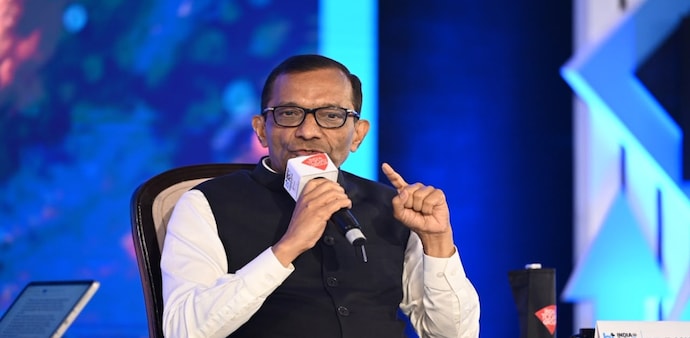
India’s private space sector is moving from experimentation to commercialisation, with the industry now entering a phase where repeatability, scale and demand will determine its global competitiveness, said Dr Pawan Goenka, Chairman of the Indian National Space Promotion and Authorisation Centre (IN-SPACe), at Business Today’s India@100 event.
IN-SPACe was established around four and a half years ago under the Department of Space to both regulate and promote India’s private space sector. According to Goenka, its broader objective is to move space from being primarily a government- and ISRO-led domain to one where private companies make a significant contribution to technology and commerce.
The successful demonstration of a private orbital launch capability by Skyroot Aerospace’s Vikram-1 marked an important first step. However, Goenka stressed that one successful launch alone cannot establish a sustainable launch business. Reliability and repeatability will be critical as private companies seek to win commercial customers carrying expensive satellites and other payloads. He said three or four successful launches without major incidents would significantly improve confidence in a company’s technology.
The opportunity extends well beyond launch vehicles. Goenka said India now has around 450 space startups, with about 20 having reached a stage where they are ready to scale their commercial operations. These companies are working across launch vehicles, satellites, in-space computing, data centres, refuelling and other emerging applications. Several startups are also seeing ambitious revenue growth projections as the sector moves from concept demonstration towards commercialisation.
For India to expand its share of the global space economy, Goenka identified three major priorities. The first is government demand. He said the government needs to act as an anchor customer, with sectors such as defence, agriculture, urban planning, and weather forecasting making greater use of space-based technologies. The government has already placed 31 satellites with the private sector out of a total of 52 satellites under development.
The second priority is greater adoption of space technology by industries outside the space sector. Goenka said sectors such as mining, agriculture, fisheries, and automotive currently make limited use of space beyond applications such as GPS. Increasing awareness and adoption could create a large new source of demand.
The third is internationalisation. India aims to generate $11 billion of its targeted $44-billion space economy from international markets through satellite launches, data, applications, and, eventually, global manufacturing of small satellites.
At the same time, ISRO is gradually shifting towards research, technology development, and infrastructure, while more routine manufacturing and operational activities move to private companies.
Goenka said 120 technologies have already been transferred from ISRO to the private sector, signalling a broader restructuring of India’s space ecosystem.
India@2047: Blueprint for a Developed Nation
India’s private space sector is moving from experimentation to commercialisation, with the industry now entering a phase where repeatability, scale and demand will determine its global competitiveness, said Dr Pawan Goenka, Chairman of the Indian National Space Promotion and Authorisation Centre (IN-SPACe), at Business Today’s India@100 event.
IN-SPACe was established around four and a half years ago under the Department of Space to both regulate and promote India’s private space sector. According to Goenka, its broader objective is to move space from being primarily a government- and ISRO-led domain to one where private companies make a significant contribution to technology and commerce.
The successful demonstration of a private orbital launch capability by Skyroot Aerospace’s Vikram-1 marked an important first step. However, Goenka stressed that one successful launch alone cannot establish a sustainable launch business. Reliability and repeatability will be critical as private companies seek to win commercial customers carrying expensive satellites and other payloads. He said three or four successful launches without major incidents would significantly improve confidence in a company’s technology.
The opportunity extends well beyond launch vehicles. Goenka said India now has around 450 space startups, with about 20 having reached a stage where they are ready to scale their commercial operations. These companies are working across launch vehicles, satellites, in-space computing, data centres, refuelling and other emerging applications. Several startups are also seeing ambitious revenue growth projections as the sector moves from concept demonstration towards commercialisation.
For India to expand its share of the global space economy, Goenka identified three major priorities. The first is government demand. He said the government needs to act as an anchor customer, with sectors such as defence, agriculture, urban planning, and weather forecasting making greater use of space-based technologies. The government has already placed 31 satellites with the private sector out of a total of 52 satellites under development.
The second priority is greater adoption of space technology by industries outside the space sector. Goenka said sectors such as mining, agriculture, fisheries, and automotive currently make limited use of space beyond applications such as GPS. Increasing awareness and adoption could create a large new source of demand.
The third is internationalisation. India aims to generate $11 billion of its targeted $44-billion space economy from international markets through satellite launches, data, applications, and, eventually, global manufacturing of small satellites.
At the same time, ISRO is gradually shifting towards research, technology development, and infrastructure, while more routine manufacturing and operational activities move to private companies.
Goenka said 120 technologies have already been transferred from ISRO to the private sector, signalling a broader restructuring of India’s space ecosystem.
India@2047: Blueprint for a Developed Nation