
Rising demand, Make in India focus driving manufacturing growth in India, but speed bumps need to be addressed, say experts
Companies like KEI Industries are also exporting more from India.
- Aug 21, 2026,
- Updated Aug 21, 2026 8:50 PM IST
India has come a long way in boosting its manufacturing capabilities over the last few years, but there are still speed bumps that need to be addressed, say industry experts.
In the last five years, production-linked incentives have brought manufacturing back on people’s radar, noted Rahul Jain, India head of consulting firm BCG.
“It has still succeeded in only some industries and not all, but if you take electronics as a case, or renewables as a case, you see serious investment that has happened. We have moved the needle from where it was to now,” he pointed out.
Also, companies are now beginning to manufacture specialty products that were earlier not available in India.
“In the automobile space, there is something called hot-forming steel, which makes your cars with 1180 MPa (grade) steel safer, lighter, greener. Soon we are starting production in India at Hazira,” pointed Ranjan Dhar, director, ArcelorMittal Nippon Steel.
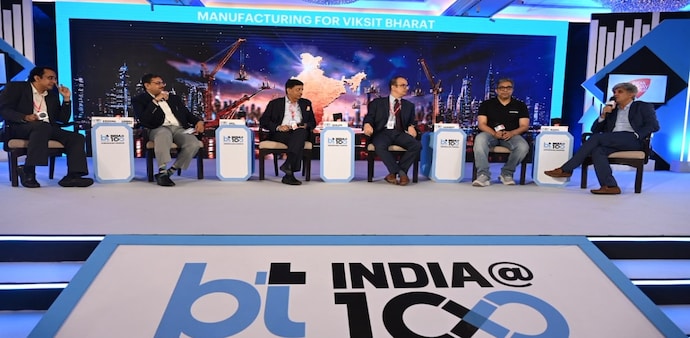
He was speaking during a panel discussion at Business Today’s India@100 conference.
Companies are also undertaking more precision manufacturing. Noida-based Addverb is manufacturing robots in the country, something countries such as China and Taiwan have been very good at.
Manufacturing robots is not a volume game. So, when the company did not find good suppliers who could supply 20 or 30 robots, Addverb decided to build every part itself, said Sangeet Kumar, CEO and co-founder.
While that is not usually the norm, it has helped the company.
“We are able to compete in terms of speed of innovation, which is very difficult to do against the Chinese. But we are there as far as speed is concerned because everything we do is in-house,” explained Kumar.
As India has scaled up manufacturing in new areas such as solar panels, batteries and electronics, domestic demand for Addverb’s robots has also increased, he added.
Other companies like KEI Industries, which makes power cables, are also seeing strong domestic demand.
“Look at the investments that have come into renewable energy, solar, wind and even various steel plants, oil and gas sector. Everywhere the demand is strong. There is demand in infrastructure sectors like railways, metro projects and highways. All these sectors have helped us grow demand,” said Anil Gupta, chairman and MD of KEI Industries.
Companies are also starting to export more.
KEI is now exporting around 18-20% of its products to markets such as Europe and the US. In the next 8-10 years, the plan is to increase exports to 50%, according to Gupta.
However, there are still areas that need improvement, said experts.
For instance, ease of doing business has further scope for improvement, according to Jain of BCG.
“The complexity of land is high, the complexity of dealing with labour laws is high. The approval process varies from state to state and can take too long. So, between ease of doing business and cost of doing business, they do have some concern,” he said.
Skilled manpower is also a challenge, according to Gupta of KEI.
Experts also felt the need to increase investments in research and development.
Dhar feels companies need to have capacities in place to ensure they can meet rising demand.
“Each sector, each company, anyone who has got capacity headroom available, those are the companies that will lead. If you fall short of capacity, you will miss the growth,” he said.
India@2047: Blueprint for a Developed Nation
India has come a long way in boosting its manufacturing capabilities over the last few years, but there are still speed bumps that need to be addressed, say industry experts.
In the last five years, production-linked incentives have brought manufacturing back on people’s radar, noted Rahul Jain, India head of consulting firm BCG.
“It has still succeeded in only some industries and not all, but if you take electronics as a case, or renewables as a case, you see serious investment that has happened. We have moved the needle from where it was to now,” he pointed out.
Also, companies are now beginning to manufacture specialty products that were earlier not available in India.
“In the automobile space, there is something called hot-forming steel, which makes your cars with 1180 MPa (grade) steel safer, lighter, greener. Soon we are starting production in India at Hazira,” pointed Ranjan Dhar, director, ArcelorMittal Nippon Steel.
He was speaking during a panel discussion at Business Today’s India@100 conference.
Companies are also undertaking more precision manufacturing. Noida-based Addverb is manufacturing robots in the country, something countries such as China and Taiwan have been very good at.
Manufacturing robots is not a volume game. So, when the company did not find good suppliers who could supply 20 or 30 robots, Addverb decided to build every part itself, said Sangeet Kumar, CEO and co-founder.
While that is not usually the norm, it has helped the company.
“We are able to compete in terms of speed of innovation, which is very difficult to do against the Chinese. But we are there as far as speed is concerned because everything we do is in-house,” explained Kumar.
As India has scaled up manufacturing in new areas such as solar panels, batteries and electronics, domestic demand for Addverb’s robots has also increased, he added.
Other companies like KEI Industries, which makes power cables, are also seeing strong domestic demand.
“Look at the investments that have come into renewable energy, solar, wind and even various steel plants, oil and gas sector. Everywhere the demand is strong. There is demand in infrastructure sectors like railways, metro projects and highways. All these sectors have helped us grow demand,” said Anil Gupta, chairman and MD of KEI Industries.
Companies are also starting to export more.
KEI is now exporting around 18-20% of its products to markets such as Europe and the US. In the next 8-10 years, the plan is to increase exports to 50%, according to Gupta.
However, there are still areas that need improvement, said experts.
For instance, ease of doing business has further scope for improvement, according to Jain of BCG.
“The complexity of land is high, the complexity of dealing with labour laws is high. The approval process varies from state to state and can take too long. So, between ease of doing business and cost of doing business, they do have some concern,” he said.
Skilled manpower is also a challenge, according to Gupta of KEI.
Experts also felt the need to increase investments in research and development.
Dhar feels companies need to have capacities in place to ensure they can meet rising demand.
“Each sector, each company, anyone who has got capacity headroom available, those are the companies that will lead. If you fall short of capacity, you will miss the growth,” he said.
India@2047: Blueprint for a Developed Nation