
10,000-yr-old volcano awakens: Ash from Ethiopia’s Hayli Gubbi set to impact Indian skies, aviation routes
Satellite data show that the eruption sent a massive ash column soaring between 10 km and 15 km into the atmosphere. According to reports, a plume traveling at 100-120 km/h could reach parts of northwest India by late evening, affecting regions like Gujarat, Rajasthan, Delhi, Haryana, and Punjab.
- Nov 24, 2025,
- Updated Nov 24, 2025 6:15 PM IST
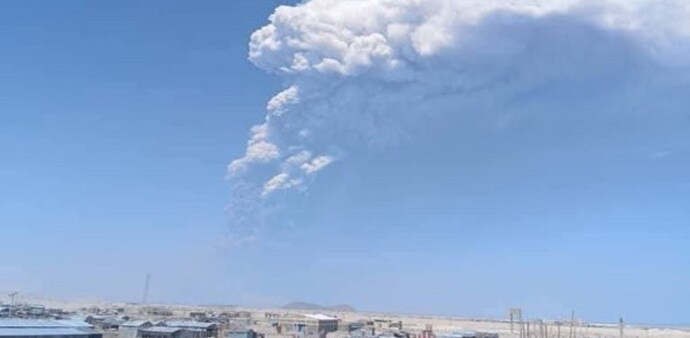
A geological shock in the Danakil Desert — Hayli Gubbi, a little-known shield volcano in Ethiopia’s remote Afar region and part of the Erta Ale Range, erupted explosively on November 23, 2025, at approximately 08:30 UTC. The event marks its first recorded eruption in an estimated 10,000 years, a phenomenon scientists call one of the most extraordinary volcanic awakenings in the region’s history.
Satellite data and advisory from the Toulouse Volcanic Ash Advisory Center (VAAC) show that the eruption sent a massive ash column soaring between 10 km and 15 km into the atmosphere (around 33,000–49,000 feet). Simultaneously, a large plume of sulfur dioxide (SO₂) was released, a key marker of powerful volcanic activity.
By late Sunday, the VAAC confirmed that the most intense phase of eruptive activity had subsided. However, residual ash and gas continued to drift at high altitudes.
Remote location, global effects
Hayli Gubbi sits about 15 km southeast of Erta Ale, one of the most active volcanoes in Ethiopia, in a region few people ever visit. The remoteness makes ground observations nearly impossible; scientists are relying on satellite imaging and remote sensing to understand what’s happening.
The ash cloud did not remain local. Driven by winds, it drifted eastward over the Red Sea, heading toward Oman, Yemen, and beyond. Some of the upper-level ash is forecast to travel even farther – into Iran, Pakistan, and India.
Impacts on aviation, air quality
In India, aviation authorities are on alert. Forecasts suggest the ash plume could reach Delhi and Jaipur, prompting close monitoring by airlines and air-traffic controllers. According to reports, a plume traveling at 100-120 km/h could reach parts of northwest India by late evening, affecting regions like Gujarat, Rajasthan, Delhi, Haryana, and Punjab.
The ash cloud is not just dust. It carries volcanic ash, sulfur dioxide, and fine particles of rock or glass, which can make the sky appear darker. These particles pose a risk to aircraft engines, potentially resulting in flight delays or changes — especially for high-altitude routes.
A major aviation alert unfolded on Monday after IndiGo flight 6E 1433 from Kannur to Abu Dhabi was diverted to Ahmedabad due to the massive volcanic eruption in Ethiopia, an event described by scientists as one of the region’s most extraordinary in recorded history. The Airbus aircraft landed safely in Ahmedabad, and IndiGo said it will operate a return service to Kannur for passengers.
On the ground, while the plume is mostly in the mid-to-upper atmosphere, air quality may worsen locally. Wearing masks can help, though experts note that major health risks are unlikely given the plume’s altitude.
Why this eruption natters
- Scientific significance: This eruption is a rare window into a volcano long considered dormant. Hayli Gubbi has no documented historical eruptions in modern records, making this a watershed event for volcanologists.
- Geological context: Hayli Gubbi is part of the Afar Rift, a tectonically active region. Nearby volcanoes, like Erta Ale, have been much more closely monitored; the sudden activity at Hayli Gubbi raises questions about deeper magma dynamics.
- Global tracking: The eruption underscores the importance of international satellite monitoring and cross-border volcanic ash advisories, especially when plumes can travel thousands of kilometers.
What’s Next
- Ongoing monitoring: VAAC and other agencies will likely keep issuing updates as long as residual ash and gas remain detectable.
- Potential atmospheric effects: The SO₂ release could temporarily influence weather patterns or air quality downwind, depending on how the plume evolves.
- Aviation risk assessment: Airlines will continue to assess risks and potentially reroute flights if needed.
- Scientific study: Researchers may prioritize this site for future study — learning why it erupted now after millennia of dormancy may offer insights into the behavior of shield volcanoes in rift zones.
A geological shock in the Danakil Desert — Hayli Gubbi, a little-known shield volcano in Ethiopia’s remote Afar region and part of the Erta Ale Range, erupted explosively on November 23, 2025, at approximately 08:30 UTC. The event marks its first recorded eruption in an estimated 10,000 years, a phenomenon scientists call one of the most extraordinary volcanic awakenings in the region’s history.
Satellite data and advisory from the Toulouse Volcanic Ash Advisory Center (VAAC) show that the eruption sent a massive ash column soaring between 10 km and 15 km into the atmosphere (around 33,000–49,000 feet). Simultaneously, a large plume of sulfur dioxide (SO₂) was released, a key marker of powerful volcanic activity.
By late Sunday, the VAAC confirmed that the most intense phase of eruptive activity had subsided. However, residual ash and gas continued to drift at high altitudes.
Remote location, global effects
Hayli Gubbi sits about 15 km southeast of Erta Ale, one of the most active volcanoes in Ethiopia, in a region few people ever visit. The remoteness makes ground observations nearly impossible; scientists are relying on satellite imaging and remote sensing to understand what’s happening.
The ash cloud did not remain local. Driven by winds, it drifted eastward over the Red Sea, heading toward Oman, Yemen, and beyond. Some of the upper-level ash is forecast to travel even farther – into Iran, Pakistan, and India.
Impacts on aviation, air quality
In India, aviation authorities are on alert. Forecasts suggest the ash plume could reach Delhi and Jaipur, prompting close monitoring by airlines and air-traffic controllers. According to reports, a plume traveling at 100-120 km/h could reach parts of northwest India by late evening, affecting regions like Gujarat, Rajasthan, Delhi, Haryana, and Punjab.
The ash cloud is not just dust. It carries volcanic ash, sulfur dioxide, and fine particles of rock or glass, which can make the sky appear darker. These particles pose a risk to aircraft engines, potentially resulting in flight delays or changes — especially for high-altitude routes.
A major aviation alert unfolded on Monday after IndiGo flight 6E 1433 from Kannur to Abu Dhabi was diverted to Ahmedabad due to the massive volcanic eruption in Ethiopia, an event described by scientists as one of the region’s most extraordinary in recorded history. The Airbus aircraft landed safely in Ahmedabad, and IndiGo said it will operate a return service to Kannur for passengers.
On the ground, while the plume is mostly in the mid-to-upper atmosphere, air quality may worsen locally. Wearing masks can help, though experts note that major health risks are unlikely given the plume’s altitude.
Why this eruption natters
- Scientific significance: This eruption is a rare window into a volcano long considered dormant. Hayli Gubbi has no documented historical eruptions in modern records, making this a watershed event for volcanologists.
- Geological context: Hayli Gubbi is part of the Afar Rift, a tectonically active region. Nearby volcanoes, like Erta Ale, have been much more closely monitored; the sudden activity at Hayli Gubbi raises questions about deeper magma dynamics.
- Global tracking: The eruption underscores the importance of international satellite monitoring and cross-border volcanic ash advisories, especially when plumes can travel thousands of kilometers.
What’s Next
- Ongoing monitoring: VAAC and other agencies will likely keep issuing updates as long as residual ash and gas remain detectable.
- Potential atmospheric effects: The SO₂ release could temporarily influence weather patterns or air quality downwind, depending on how the plume evolves.
- Aviation risk assessment: Airlines will continue to assess risks and potentially reroute flights if needed.
- Scientific study: Researchers may prioritize this site for future study — learning why it erupted now after millennia of dormancy may offer insights into the behavior of shield volcanoes in rift zones.