
17 pacts, 50,000 worker quota: India-Israel ties enter new strategic phase
The first round of negotiations for the India-Israel Free Trade Agreement (FTA), held from February 23 to 26 in New Delhi also concluded successfully.
- Feb 26, 2026,
- Updated Feb 26, 2026 7:29 PM IST
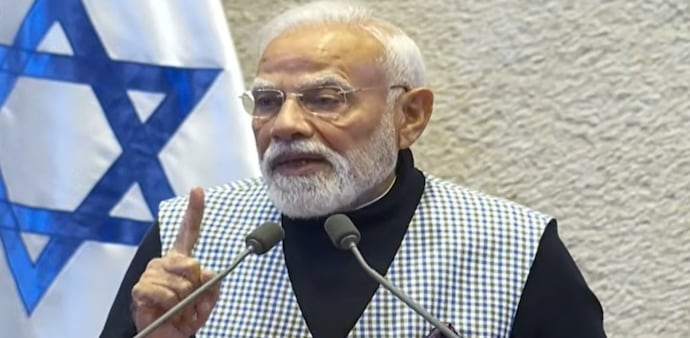
India and Israel elevated their ties to a Special Strategic Partnership during Prime Minister Narendra Modi’s visit to Israel on February 25-26, 2026, signing a sweeping set of agreements spanning technology, agriculture, education, labour mobility and finance.
A total of 17 agreements and MoUs were inked, underscoring the expanding breadth of bilateral cooperation.
In the resources sector, both sides signed an MoU on cooperation in geophysical exploration to boost mineral exploration using advanced geophysical and AI technologies. Another pact focuses on developing the National Maritime Heritage Complex in Lothal, Gujarat, promoting collaboration in exhibitions, research and public engagement around shared maritime history.
Cultural ties received a push through a Cultural Exchange Programme for 2026-2029, covering exchanges in music, theatre, visual arts and other creative fields.
Financial and fintech collaboration also featured prominently. An MoU between NPCI International and Israel’s MASAV aims to enable cross-border remittances through the Unified Payments Interface (UPI). Separately, the International Financial Services Centres Authority (IFSCA) and the Israel Securities Authority agreed to deepen cooperation in financial services, fintech and regulatory exchanges.
In agriculture, ICAR and MASHAV agreed to establish the India-Israel Innovation Centre for Agriculture (IICA), focusing on next-generation technologies such as precision farming, satellite-based irrigation, advanced machinery and pest management. The two sides also signed an MoU on fisheries and aquaculture to promote sustainable, technology-driven practices.
Education and emerging technologies formed another key pillar. An MoU on cooperation in education through the use of Artificial Intelligence aims to foster AI-powered, human-centred learning, research exchange and data literacy. A separate MoU on cooperation in Artificial Intelligence promotes collaboration in AI development, ethical applications and capacity building. A Letter of Intent was also signed to establish an Indo-Israel Cyber Centre of Excellence in India.
Institutional and legal cooperation was strengthened through an agreement between the Israeli Institute of Commercial Arbitration and the Indian Council of Arbitration to promote knowledge exchange and training in arbitration and mediation.
On labour mobility, three implementation protocols were signed covering commerce and services, manufacturing, and the restaurant sector. These frameworks will enable Indian workers to access regulated employment opportunities in Israel across sectors including retail, logistics, food processing and manufacturing.
The visit also saw the presentation of the report of the 4th India-Israel CEO Forum, offering recommendations to align policies with industry trends and promote public-private collaboration.
Among key announcements, the relationship was elevated to a Special Strategic Partnership. The Joint Committee Meeting on Science and Technology was raised to the ministerial level, and a new initiative on Critical and Emerging Technologies led by the National Security Advisors was launched. The two countries also agreed on a Financial Dialogue, a Tech-Gateway initiative, 20 joint fellowships in agricultural research, and an increase in contributions for joint research calls.
Notably, Israel will provide a quota of up to 50,000 Indian workers over the next five years, further institutionalising labour mobility between the two nations.
FTA talks gather pace
The first round of negotiations for the India-Israel Free Trade Agreement (FTA), held from February 23 to 26, 2026 in New Delhi, concluded successfully. The Terms of Reference (ToR), signed in November 2025, established a structured framework for discussions on identified areas to enhance trade and economic cooperation.
Presently on a two-day state visit to Israel, PM Modi, while addressing a Special Plenary of the Knesset in Jerusalem on February 25 called for early finalisation of an ambitious Free Trade Agreement to realise the untapped trade potential between the two countries. On February 24, Union Minister of Commerce and Industry, Piyush Goyal, met the visiting Israeli delegation and emphasised that both sides should work closely to unlock new opportunities in trade, innovation, and growth.
During the four-day negotiations, both countries held discussions across a wide range of areas, including trade in goods and services, rules of origin, sanitary and phytosanitary measures, technical barriers to trade, customs procedures, intellectual property rights, digital trade and other key chapters. They also agreed to continue inter-sessional engagements virtually, with the next round of in-person negotiations scheduled for May 2026 in Israel.
Bilateral merchandise trade between the two countries stood at approximately $3.62 billion in FY 2024-25. The proposed FTA is expected to provide a stable and predictable framework for businesses, unlocking potential in sectors such as machinery, chemicals, textiles, agriculture, medical devices and advanced technologies.
India and Israel elevated their ties to a Special Strategic Partnership during Prime Minister Narendra Modi’s visit to Israel on February 25-26, 2026, signing a sweeping set of agreements spanning technology, agriculture, education, labour mobility and finance.
A total of 17 agreements and MoUs were inked, underscoring the expanding breadth of bilateral cooperation.
In the resources sector, both sides signed an MoU on cooperation in geophysical exploration to boost mineral exploration using advanced geophysical and AI technologies. Another pact focuses on developing the National Maritime Heritage Complex in Lothal, Gujarat, promoting collaboration in exhibitions, research and public engagement around shared maritime history.
Cultural ties received a push through a Cultural Exchange Programme for 2026-2029, covering exchanges in music, theatre, visual arts and other creative fields.
Financial and fintech collaboration also featured prominently. An MoU between NPCI International and Israel’s MASAV aims to enable cross-border remittances through the Unified Payments Interface (UPI). Separately, the International Financial Services Centres Authority (IFSCA) and the Israel Securities Authority agreed to deepen cooperation in financial services, fintech and regulatory exchanges.
In agriculture, ICAR and MASHAV agreed to establish the India-Israel Innovation Centre for Agriculture (IICA), focusing on next-generation technologies such as precision farming, satellite-based irrigation, advanced machinery and pest management. The two sides also signed an MoU on fisheries and aquaculture to promote sustainable, technology-driven practices.
Education and emerging technologies formed another key pillar. An MoU on cooperation in education through the use of Artificial Intelligence aims to foster AI-powered, human-centred learning, research exchange and data literacy. A separate MoU on cooperation in Artificial Intelligence promotes collaboration in AI development, ethical applications and capacity building. A Letter of Intent was also signed to establish an Indo-Israel Cyber Centre of Excellence in India.
Institutional and legal cooperation was strengthened through an agreement between the Israeli Institute of Commercial Arbitration and the Indian Council of Arbitration to promote knowledge exchange and training in arbitration and mediation.
On labour mobility, three implementation protocols were signed covering commerce and services, manufacturing, and the restaurant sector. These frameworks will enable Indian workers to access regulated employment opportunities in Israel across sectors including retail, logistics, food processing and manufacturing.
The visit also saw the presentation of the report of the 4th India-Israel CEO Forum, offering recommendations to align policies with industry trends and promote public-private collaboration.
Among key announcements, the relationship was elevated to a Special Strategic Partnership. The Joint Committee Meeting on Science and Technology was raised to the ministerial level, and a new initiative on Critical and Emerging Technologies led by the National Security Advisors was launched. The two countries also agreed on a Financial Dialogue, a Tech-Gateway initiative, 20 joint fellowships in agricultural research, and an increase in contributions for joint research calls.
Notably, Israel will provide a quota of up to 50,000 Indian workers over the next five years, further institutionalising labour mobility between the two nations.
FTA talks gather pace
The first round of negotiations for the India-Israel Free Trade Agreement (FTA), held from February 23 to 26, 2026 in New Delhi, concluded successfully. The Terms of Reference (ToR), signed in November 2025, established a structured framework for discussions on identified areas to enhance trade and economic cooperation.
Presently on a two-day state visit to Israel, PM Modi, while addressing a Special Plenary of the Knesset in Jerusalem on February 25 called for early finalisation of an ambitious Free Trade Agreement to realise the untapped trade potential between the two countries. On February 24, Union Minister of Commerce and Industry, Piyush Goyal, met the visiting Israeli delegation and emphasised that both sides should work closely to unlock new opportunities in trade, innovation, and growth.
During the four-day negotiations, both countries held discussions across a wide range of areas, including trade in goods and services, rules of origin, sanitary and phytosanitary measures, technical barriers to trade, customs procedures, intellectual property rights, digital trade and other key chapters. They also agreed to continue inter-sessional engagements virtually, with the next round of in-person negotiations scheduled for May 2026 in Israel.
Bilateral merchandise trade between the two countries stood at approximately $3.62 billion in FY 2024-25. The proposed FTA is expected to provide a stable and predictable framework for businesses, unlocking potential in sectors such as machinery, chemicals, textiles, agriculture, medical devices and advanced technologies.