
2 Indian Air Force pilots killed after Sukhoi Su-30 MKI fighter jet crash in Assam
The wreckage was found in a hilly and forested region approximately 60 kilometres from the Jorhat airbase.
- Mar 6, 2026,
- Updated Mar 6, 2026 10:01 AM IST
The Indian Air Force (IAF) confirmed on Friday that two pilots lost their lives after a Sukhoi Su-30MKI fighter jet crashed in Assam's Karbi Anglong district. The incident took place during a routine training mission, with the aircraft losing radar contact soon after departing from Jorhat on Thursday evening.
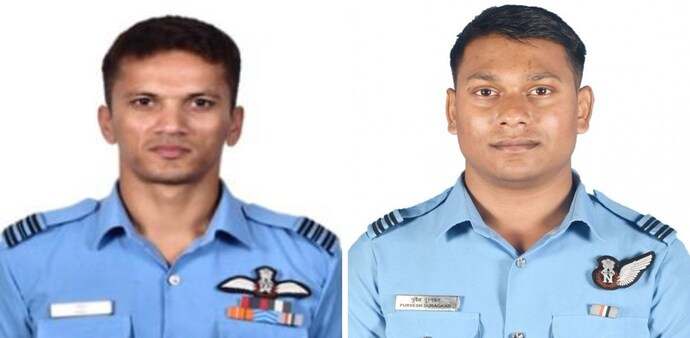
According to information released by the IAF, Squadron Leader Anuj and Flight Lieutenant Purvesh Duragkar were identified as the pilots who died in the crash. The IAF extended condolences to the families of the deceased officers.
The Sukhoi Su-30MKI went missing from radar shortly after it took off from the Jorhat airbase on Thursday evening. The aircraft's last known communication with ground control was logged at 7.42 pm. Search teams were immediately deployed once the aircraft was declared missing.
A statement from the IAF confirmed, "The Su-30MKI which was on a training mission crashed in the area of Karbi Anglong, approx 60 km from Jorhat. Search operations are underway," outlining the sequence of events following the loss of radar contact.
The wreckage was found in a hilly and forested region approximately 60 kilometres from the Jorhat airbase. The location's difficult terrain complicated immediate rescue and recovery efforts, prompting the deployment of search teams and coordination with local authorities. The IAF emphasised the ongoing nature of search and investigation operations at the crash site.
The Sukhoi Su-30MKI has served as a frontline combat aircraft in the IAF since its induction in the early 2000s. It is considered one of the most capable fighters in the Indian inventory. The IAF maintains a fleet of over 200 Sukhoi jets, regularly used for both training and operational missions.
Routine training missions are essential for pilot proficiency and operational preparedness, but can involve significant risks, especially under challenging conditions. The IAF continues to review safety protocols and flight procedures to minimise such incidents and ensure pilot safety.
The cause of the crash remains under investigation as the IAF and relevant authorities work to recover evidence from the site and determine the factors leading to the loss of the aircraft and its crew.
The Indian Air Force (IAF) confirmed on Friday that two pilots lost their lives after a Sukhoi Su-30MKI fighter jet crashed in Assam's Karbi Anglong district. The incident took place during a routine training mission, with the aircraft losing radar contact soon after departing from Jorhat on Thursday evening.
According to information released by the IAF, Squadron Leader Anuj and Flight Lieutenant Purvesh Duragkar were identified as the pilots who died in the crash. The IAF extended condolences to the families of the deceased officers.
The Sukhoi Su-30MKI went missing from radar shortly after it took off from the Jorhat airbase on Thursday evening. The aircraft's last known communication with ground control was logged at 7.42 pm. Search teams were immediately deployed once the aircraft was declared missing.
A statement from the IAF confirmed, "The Su-30MKI which was on a training mission crashed in the area of Karbi Anglong, approx 60 km from Jorhat. Search operations are underway," outlining the sequence of events following the loss of radar contact.
The wreckage was found in a hilly and forested region approximately 60 kilometres from the Jorhat airbase. The location's difficult terrain complicated immediate rescue and recovery efforts, prompting the deployment of search teams and coordination with local authorities. The IAF emphasised the ongoing nature of search and investigation operations at the crash site.
The Sukhoi Su-30MKI has served as a frontline combat aircraft in the IAF since its induction in the early 2000s. It is considered one of the most capable fighters in the Indian inventory. The IAF maintains a fleet of over 200 Sukhoi jets, regularly used for both training and operational missions.
Routine training missions are essential for pilot proficiency and operational preparedness, but can involve significant risks, especially under challenging conditions. The IAF continues to review safety protocols and flight procedures to minimise such incidents and ensure pilot safety.
The cause of the crash remains under investigation as the IAF and relevant authorities work to recover evidence from the site and determine the factors leading to the loss of the aircraft and its crew.