
250+ ropeways, 51 cruise circuits and 28 water aerodromes: India’s tourism network expands
The report highlights the proposed 12.9-km Kedarnath ropeway, which could reduce the journey from Sonprayag to Kedarnath from around 8-9 hours to approximately 36 minutes
- Oct 1, 2026,
- Updated Oct 1, 2026 8:35 AM IST
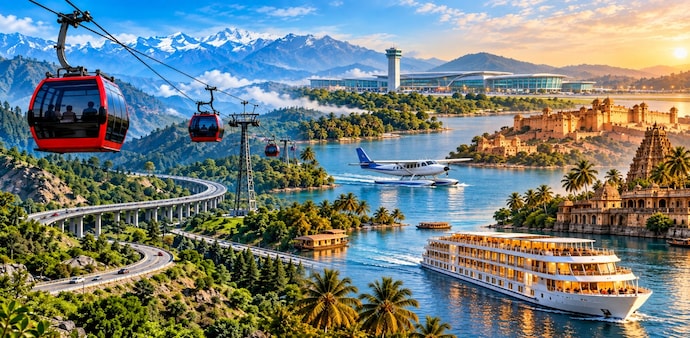
India is expanding its tourism connectivity beyond conventional roads, railways and airports, with ropeways, river cruises and seaplanes emerging as new modes of travel to destinations that are difficult to reach through traditional infrastructure.
A September 2026 report by CBRE Research highlights a pipeline of 250-plus ropeway projects spanning around 1,200 km, alongside rapid growth in river tourism and the development of water aerodromes.
READ THIS: UNESCO heritage sites rise to 991 as cultural tourism surges 9.6% growth across global destinations
Ropeways target pilgrimage and hill destinations
Under the Parvatmala programme, planned ropeway projects represent an estimated investment of Rs 1.25 lakh crore. The network is expected to improve access to high-footfall pilgrimage destinations while reducing pressure on environmentally sensitive hill regions.
The report highlights the proposed 12.9-km Kedarnath ropeway, which could reduce the journey from Sonprayag to Kedarnath from around 8-9 hours to approximately 36 minutes. Similarly, the 12.4-km Hemkund Sahib ropeway is expected to bring the round-trip journey down from around three days to nearly three hours.
The proposed Kashi ropeway is another example. It is expected to cut travel time to the Kashi Vishwanath corridor from 40-45 minutes to around 15 minutes, according to the CBRE report.
River tourism gathers momentum
India's waterways are also becoming an increasingly important part of the tourism ecosystem. Inland waterway passenger traffic increased from 1.61 crore in FY2024 to 7.6 crore in FY2025, while the number of river cruise vessels rose from just three in FY2014 to 25 in FY2025. These vessels currently operate across 17 circuits.
The country currently has 32 operational National Waterways, with a target of increasing this number to 52 by 2030. The Inland Waterways Authority of India also plans 51 new river cruise circuits across 47 waterways by 2047, potentially expanding cruise tourism across the Ganga, Brahmaputra, Yamuna and rivers in Jammu and Kashmir.
Government data separately shows that river cruise voyages on National Waterways increased from 371 in 2023-24 to 443 in 2024-25, a 19.4% rise.
ALSO READ: Global tourism enters a digital era: WEF highlights role of online payments, technology, AI
Seaplanes open another tourism route
Seaplane connectivity is also emerging as an option for India's islands and coastal destinations. More than 28 water aerodromes have been awarded or identified under UDAN-3 and subsequent rounds across destinations including the Andaman and Nicobar Islands, Lakshadweep, Assam, Goa, Gujarat and Telangana.
The CBRE report notes that India's first dedicated seaplane operator, Skyhop Aviation, has received its Air Operator Certificate and is exploring electric and hybrid seaplanes for its fleet by 2030.
India is expanding its tourism connectivity beyond conventional roads, railways and airports, with ropeways, river cruises and seaplanes emerging as new modes of travel to destinations that are difficult to reach through traditional infrastructure.
A September 2026 report by CBRE Research highlights a pipeline of 250-plus ropeway projects spanning around 1,200 km, alongside rapid growth in river tourism and the development of water aerodromes.
READ THIS: UNESCO heritage sites rise to 991 as cultural tourism surges 9.6% growth across global destinations
Ropeways target pilgrimage and hill destinations
Under the Parvatmala programme, planned ropeway projects represent an estimated investment of Rs 1.25 lakh crore. The network is expected to improve access to high-footfall pilgrimage destinations while reducing pressure on environmentally sensitive hill regions.
The report highlights the proposed 12.9-km Kedarnath ropeway, which could reduce the journey from Sonprayag to Kedarnath from around 8-9 hours to approximately 36 minutes. Similarly, the 12.4-km Hemkund Sahib ropeway is expected to bring the round-trip journey down from around three days to nearly three hours.
The proposed Kashi ropeway is another example. It is expected to cut travel time to the Kashi Vishwanath corridor from 40-45 minutes to around 15 minutes, according to the CBRE report.
River tourism gathers momentum
India's waterways are also becoming an increasingly important part of the tourism ecosystem. Inland waterway passenger traffic increased from 1.61 crore in FY2024 to 7.6 crore in FY2025, while the number of river cruise vessels rose from just three in FY2014 to 25 in FY2025. These vessels currently operate across 17 circuits.
The country currently has 32 operational National Waterways, with a target of increasing this number to 52 by 2030. The Inland Waterways Authority of India also plans 51 new river cruise circuits across 47 waterways by 2047, potentially expanding cruise tourism across the Ganga, Brahmaputra, Yamuna and rivers in Jammu and Kashmir.
Government data separately shows that river cruise voyages on National Waterways increased from 371 in 2023-24 to 443 in 2024-25, a 19.4% rise.
ALSO READ: Global tourism enters a digital era: WEF highlights role of online payments, technology, AI
Seaplanes open another tourism route
Seaplane connectivity is also emerging as an option for India's islands and coastal destinations. More than 28 water aerodromes have been awarded or identified under UDAN-3 and subsequent rounds across destinations including the Andaman and Nicobar Islands, Lakshadweep, Assam, Goa, Gujarat and Telangana.
The CBRE report notes that India's first dedicated seaplane operator, Skyhop Aviation, has received its Air Operator Certificate and is exploring electric and hybrid seaplanes for its fleet by 2030.