
5% GST unsustainable: Montek Singh Ahluwalia calls for single 14% slab
'We have too many rates. A purist would say you should have just one rate,' says the economist
- Sep 4, 2025,
- Updated Sep 4, 2025 1:10 PM IST
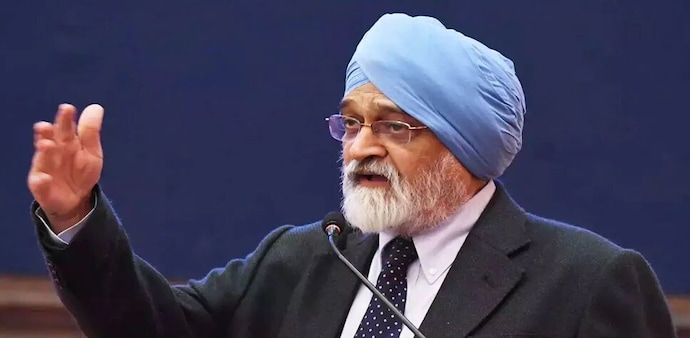
Veteran economist and former Planning Commission deputy chairman Montek Singh Ahluwalia has called for India to move towards a single Goods and Services Tax (GST) slab of 14 per cent, warning that the current system risks undermining both revenue and equity.
In an interview with India Today TV, Ahluwalia said the GST has been a "huge positive," but one that has not lived up to its full promise. "If you wanted a single rate, probably what you should have done is have a 14 per cent rate - six per cent for the Centre, six per cent for the states, and two per cent for urban local bodies. That would be a real reform. Urban bodies lost revenue when Octroi was abolished, and this would give them their due," he argued.
Ahluwalia was blunt about the weaknesses in the current system. "We have too many rates. A purist would say you should have just one rate, but even if you concede two, right now we are operating with about seven," he said. He also flagged that revenues have not kept pace with expectations. "In terms of revenue, we have been getting less than the previous peak as a percent of GDP. Even including cess, we’ve only just about reached where we were before GST was introduced," he noted.
The former finance official criticised the extensive use of cess collections, calling them "an aberration." "The cess, in my view, is an aberration. It generates tax revenue, which is not shared with the states. Half the problem states have is that cess is not part of the divisible pool," he said, adding that this imbalance undercut the federal spirit that GST was supposed to embody.
Ahluwalia also expressed scepticism about the GST Council's latest reforms. "Yes, the rate will go down. But producers will also lose a lot of input tax credit. I'm not sure, net-net, what the effect will be," he cautioned. A 5 per cent slab, he added, was "too low to sustain."
Finance Minister Nirmala Sitharaman announced sweeping GST rationalisation on Wednesday. The 56th GST Council meeting collapsed the previous four slabs into a two-rate system of 5 per cent and 18 per cent, with a new 40 per cent slab for luxury and sin goods. Sitharaman said the reforms were aimed squarely at easing burdens on ordinary households. "Every tax on the common man’s daily use items has gone through a rigorous review, and in most cases the rates have come down drastically… These reforms have been carried out with a focus on the common man," she said.
From September 22, items from hair oil and toothpaste to tractors, televisions and even individual health and life insurance will see sharply lower tax rates. The government expects a Rs 48,000 crore fiscal impact from the changes but believes the consumption boost will offset external headwinds from Donald Trump’s 50% tariffs on Indian exports.
Ahluwalia, however, urged policymakers to look beyond immediate relief and focus on designing a stable and fair long-term tax architecture. "The idea of the GST was that it would promote compliance and raise revenue as a share of GDP. That has not happened. We need to look at this in a composite way," he said.
Veteran economist and former Planning Commission deputy chairman Montek Singh Ahluwalia has called for India to move towards a single Goods and Services Tax (GST) slab of 14 per cent, warning that the current system risks undermining both revenue and equity.
In an interview with India Today TV, Ahluwalia said the GST has been a "huge positive," but one that has not lived up to its full promise. "If you wanted a single rate, probably what you should have done is have a 14 per cent rate - six per cent for the Centre, six per cent for the states, and two per cent for urban local bodies. That would be a real reform. Urban bodies lost revenue when Octroi was abolished, and this would give them their due," he argued.
Ahluwalia was blunt about the weaknesses in the current system. "We have too many rates. A purist would say you should have just one rate, but even if you concede two, right now we are operating with about seven," he said. He also flagged that revenues have not kept pace with expectations. "In terms of revenue, we have been getting less than the previous peak as a percent of GDP. Even including cess, we’ve only just about reached where we were before GST was introduced," he noted.
The former finance official criticised the extensive use of cess collections, calling them "an aberration." "The cess, in my view, is an aberration. It generates tax revenue, which is not shared with the states. Half the problem states have is that cess is not part of the divisible pool," he said, adding that this imbalance undercut the federal spirit that GST was supposed to embody.
Ahluwalia also expressed scepticism about the GST Council's latest reforms. "Yes, the rate will go down. But producers will also lose a lot of input tax credit. I'm not sure, net-net, what the effect will be," he cautioned. A 5 per cent slab, he added, was "too low to sustain."
Finance Minister Nirmala Sitharaman announced sweeping GST rationalisation on Wednesday. The 56th GST Council meeting collapsed the previous four slabs into a two-rate system of 5 per cent and 18 per cent, with a new 40 per cent slab for luxury and sin goods. Sitharaman said the reforms were aimed squarely at easing burdens on ordinary households. "Every tax on the common man’s daily use items has gone through a rigorous review, and in most cases the rates have come down drastically… These reforms have been carried out with a focus on the common man," she said.
From September 22, items from hair oil and toothpaste to tractors, televisions and even individual health and life insurance will see sharply lower tax rates. The government expects a Rs 48,000 crore fiscal impact from the changes but believes the consumption boost will offset external headwinds from Donald Trump’s 50% tariffs on Indian exports.
Ahluwalia, however, urged policymakers to look beyond immediate relief and focus on designing a stable and fair long-term tax architecture. "The idea of the GST was that it would promote compliance and raise revenue as a share of GDP. That has not happened. We need to look at this in a composite way," he said.