
'50 harmful effects': Ex-RAW chief warns of GM food risks in US trade deal
Twenty years ago, I warned about the risks of GM foods for consumers and the need for farmers to purchase new GM seeds each year, the former officer said.
Business Today Desk
- Jul 9, 2025,
- Updated Jul 9, 2025 7:57 PM IST
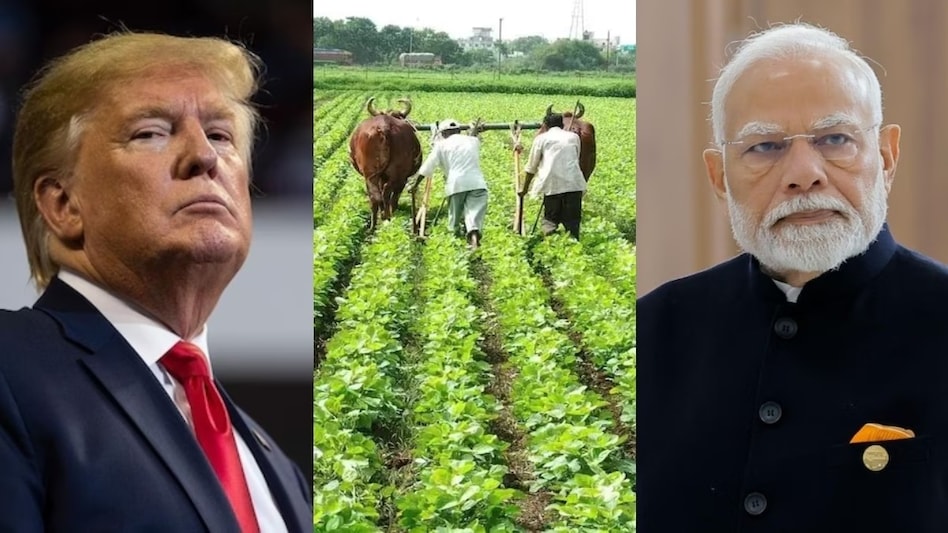
As India and the United States inch toward finalising a bilateral trade agreement, former RAW chief Vikram Sood has flagged serious concerns over the inclusion of genetically modified (GM) foods and seeds in the deal.
"The Indian trade delegation is currently negotiating with the US and inevitably the issue of GM foods and seeds has been discussed," Sood said on Wednesday. "Twenty years ago, I warned about the risks of GM foods for consumers and the need for farmers to purchase new GM seeds each year. These seeds are not self-generating. This would mean dependence in perpetuity. Besides, there would be harmful effects that these would have on environment and individuals."
Advertisement
GM crops: '50 harmful effects'
Citing the work of a French researcher, he added, "Nathan Batalion listed 50 harmful effects." Sood went on to say, "For America, it is always American interests first, which also means American business interests, varying from Lockheed Martin to Monsanto to Microsoft to ExxonMobil and everything else. Annoy them and you annoy America. At least it used to be like that."
"India and the US see regional threats and interests differently. India does not have to acquiesce to US interests, and America needs to accept that differences are inevitable and are not meant to be anti-US," he said.
Advertisement
Agriculture and dairy have emerged as key sticking points in the ongoing trade negotiations, sources told Business Today on Wednesday. "India is not keen on opening up sensitive sectors of agriculture, particularly dairy and genetically modified crops," one official said, noting the national interest involved and the livelihoods of millions of Indian farmers.
Despite pressure, India is said to have held firm on these issues while offering broader access in non-sensitive areas. These include limited concessions on US farm products such as Washington apples, pecan nuts, almonds, and walnuts. India is also reportedly open to further purchases of crude oil and defence equipment.
GTRI warns of risk from GM
The Global Trade Research Initiative (GTRI) has also cautioned that permitting GM agricultural products from the US could jeopardise India’s agricultural exports to sensitive markets like the European Union. The EU, one of India's largest agri-export destinations, has stringent rules on GM labelling and widespread consumer resistance to genetically linked products. While GM feed is technically permitted, many European buyers insist on fully GM-free supply chains.
Advertisement
Ajay Srivastava, founder of GTRI, said India's fragmented agri-logistics and the absence of a robust segregation system make the risk of cross-contamination high. Even trace amounts of GM material in consignments of rice, tea, spices, honey or organic foods could lead to serious trade consequences. "This could lead to shipment rejections, higher testing costs, and erosion of India’s GMO-free image, especially in sensitive sectors like rice, tea, honey, spices, and organic foods," Srivastava said. "Without robust traceability and labelling systems, GM feed imports could hurt India's export competitiveness in the EU."
Genetically modified crops are created by inserting selected genes-often from bacteria, viruses, other plants, or sometimes animals-into a plant’s DNA to introduce new traits like resistance to pests or tolerance to herbicides.
As India and the United States inch toward finalising a bilateral trade agreement, former RAW chief Vikram Sood has flagged serious concerns over the inclusion of genetically modified (GM) foods and seeds in the deal.
"The Indian trade delegation is currently negotiating with the US and inevitably the issue of GM foods and seeds has been discussed," Sood said on Wednesday. "Twenty years ago, I warned about the risks of GM foods for consumers and the need for farmers to purchase new GM seeds each year. These seeds are not self-generating. This would mean dependence in perpetuity. Besides, there would be harmful effects that these would have on environment and individuals."
Advertisement
GM crops: '50 harmful effects'
Citing the work of a French researcher, he added, "Nathan Batalion listed 50 harmful effects." Sood went on to say, "For America, it is always American interests first, which also means American business interests, varying from Lockheed Martin to Monsanto to Microsoft to ExxonMobil and everything else. Annoy them and you annoy America. At least it used to be like that."
"India and the US see regional threats and interests differently. India does not have to acquiesce to US interests, and America needs to accept that differences are inevitable and are not meant to be anti-US," he said.
Advertisement
Agriculture and dairy have emerged as key sticking points in the ongoing trade negotiations, sources told Business Today on Wednesday. "India is not keen on opening up sensitive sectors of agriculture, particularly dairy and genetically modified crops," one official said, noting the national interest involved and the livelihoods of millions of Indian farmers.
Despite pressure, India is said to have held firm on these issues while offering broader access in non-sensitive areas. These include limited concessions on US farm products such as Washington apples, pecan nuts, almonds, and walnuts. India is also reportedly open to further purchases of crude oil and defence equipment.
GTRI warns of risk from GM
The Global Trade Research Initiative (GTRI) has also cautioned that permitting GM agricultural products from the US could jeopardise India’s agricultural exports to sensitive markets like the European Union. The EU, one of India's largest agri-export destinations, has stringent rules on GM labelling and widespread consumer resistance to genetically linked products. While GM feed is technically permitted, many European buyers insist on fully GM-free supply chains.
Advertisement
Ajay Srivastava, founder of GTRI, said India's fragmented agri-logistics and the absence of a robust segregation system make the risk of cross-contamination high. Even trace amounts of GM material in consignments of rice, tea, spices, honey or organic foods could lead to serious trade consequences. "This could lead to shipment rejections, higher testing costs, and erosion of India’s GMO-free image, especially in sensitive sectors like rice, tea, honey, spices, and organic foods," Srivastava said. "Without robust traceability and labelling systems, GM feed imports could hurt India's export competitiveness in the EU."
Genetically modified crops are created by inserting selected genes-often from bacteria, viruses, other plants, or sometimes animals-into a plant’s DNA to introduce new traits like resistance to pests or tolerance to herbicides.
Read more!