
A ‘mini Switzerland’ or a hazard? Expert's concerns grow over Kishangarh’s white plains
Despite being an industrial waste site, it draws at least 5,000 visitors daily, with numbers rising to 20,000 on weekends and holidays.
- Mar 29, 2026,
- Updated Mar 29, 2026 2:56 PM IST
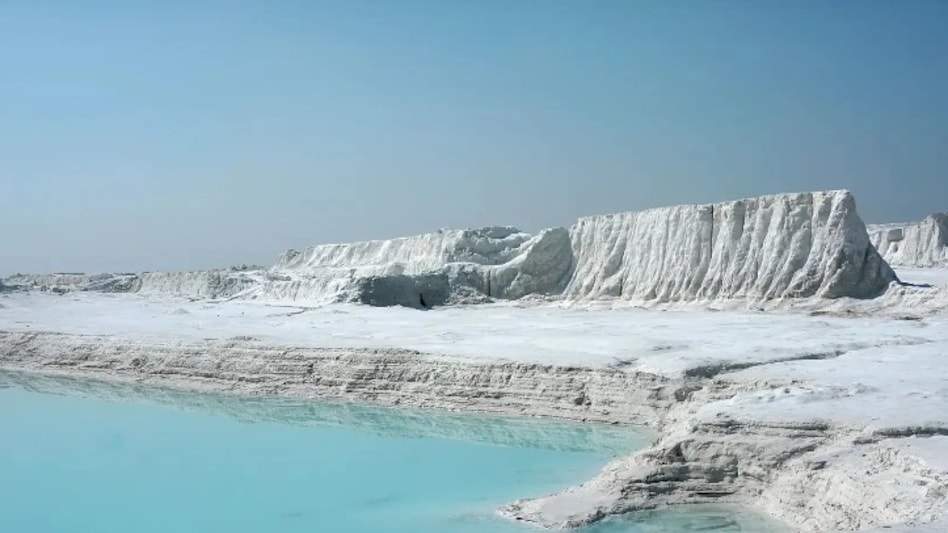
What appears at first glance like a dazzling snow-covered valley under the blazing sun has become one of Rajasthan’s most unexpected tourist attractions. Social media users often compare the surreal white landscape to Switzerland’s alpine snowfields or the shimmering salt flats of Bolivia. But the reality is far different: this striking terrain is actually Asia’s largest marble waste dumping yard, located in Kishangarh in Rajasthan’s Ajmer district.
Spread across roughly 350 acres, the site is formed entirely from marble slurry — the chalky waste produced during marble cutting and polishing. Every day, more than 700 tankers arrive here, unloading nearly 22 lakh litres of slurry. Over the years, the waste has hardened into vast white plateaus and hills, creating a landscape that looks almost otherworldly.
A Viral Tourist Attraction
Despite being an industrial dumping ground, the site has transformed into a viral tourist hotspot. Visitors arrive in large numbers to capture photographs against the stark white backdrop and pools of blue water that form within the slurry deposits.
According to estimates, the location attracts around 5,000 visitors daily, with footfall rising to nearly 20,000 during weekends and holidays.
The surreal scenery has also become a favourite destination for pre-wedding shoots, music videos and commercial filming. The site first gained widespread attention after being used in a song shoot for the 2016 Bollywood film Kis Kisko Pyaar Karoon. Since then, it has hosted several music and film shoots, including Nora Fatehi’s “Chhor Denge”, Honey Singh and Nushrratt Bharuccha’s “Saiyaan Ji”, and the song “Dus Bahane” from Baaghi 3.
To capitalise on the growing interest, the Kishangarh Marble Association now operates the area as a tourist attraction. Facilities include a helipad, changing rooms, restaurants and recreational zones. While entry is free, visitors must obtain a pass. Photography and filming come with fees — ₹500 for a digital camera, ₹5,100 per day for pre-wedding shoots and up to ₹21,000 for commercial shoots.
A “Toxic Tourist Destination”
Behind the picturesque visuals, however, experts warn that the site may pose serious environmental and health risks.
Scientific studies conducted by the Central University of Rajasthan have described the dumping yard as a “toxic tourist destination,” citing widespread pollution and lack of environmental safeguards. The issue has even reached the National Green Tribunal, which has constituted a joint committee with pollution control authorities to examine the situation.
Laxmi Kant Sharma, a professor of environmental science at the Central University of Rajasthan, said the dumping yard operates with almost no environmental protection measures.
“Despite its scale and impact, the dumping yard is being operated in rampant violation of basic environmental safeguards. There is no engineered liner system, no decanting wells, no dust suppression mechanisms, no monitoring of air or groundwater, and no protective green belt,” Sharma told PTI.
“These failures have led to severe contamination of groundwater, degradation of agricultural land and high levels of fugitive dust pollution, thereby endangering public health.”
Rising Pollution Concerns
Research conducted around the dumping yard revealed alarming environmental indicators. Studies found that total dissolved solids in groundwater had risen to nearly 10 times the safe limit within a six-kilometre radius of the site.
Soil and water samples also showed unusually high concentrations of hazardous substances.
“The concentration of lead silicate in soil and nitrate and fluoride concentrations in water were found several times higher than normal levels, indicating extreme contamination. Our study also found that the concentration of PM2.5 exceeds the limit of ambient air quality standards,” Sharma said.
Because the marble waste particles are extremely fine — smaller than 75 micrometres — they can easily travel long distances through air and settle on farmland.
“These particles can spread far and wide, making the soil infertile. Several people may be suffering from silicosis. The government needs to take immediate action to prevent the situation from getting out of hand,” he warned.
Tourism Amid Dust and Slurry
Even as environmental concerns grow, tourist activity continues unabated.
Visitors — including children — are often seen roaming the white terrain without protective masks, taking photographs and exploring the slurry formations. Some have been seen rubbing their eyes amid swirling marble dust.
Workers managing tourist activities typically cover their faces with cloth to protect themselves from the airborne particles.
Nearby, restaurants operate in a chaupati-style arrangement where visitors eat while clouds of marble dust drift across the area. Tankers arrive roughly every 10 minutes to dump more slurry, even as tourists pose for photos around the site.
Impact on Nearby Villages
Farmers in nearby villages such as Tokra, Bhojiyawas, Rahimpura, Phaloda, Mohanpura and Kali Dungri say the marble dust is affecting agricultural land and crop productivity.
The dumping yard itself traces its origins to the 1980s, when the Kishangarh Marble Association was formed. Around three decades ago, the Rajasthan State Industrial Development and Investment Corporation allotted two dumping plots where marble slurry began accumulating.
Since then, Kishangarh has grown into one of India’s largest marble processing hubs, with more than 1,200 marble cutting units operating in the city.
Officials defend the site
Kishangarh MLA Vikas Chaudhary defended the management of the site while acknowledging that pollution concerns would be addressed if necessary.
“The machinery that is being used by the industry now generates less waste. The marble association is doing a very good job of maintaining the dumping yard and Kishangarh is being seen as a popular tourist destination,” he said.
“However, if there are any pollution or health concerns, we are open to addressing them.”
What appears at first glance like a dazzling snow-covered valley under the blazing sun has become one of Rajasthan’s most unexpected tourist attractions. Social media users often compare the surreal white landscape to Switzerland’s alpine snowfields or the shimmering salt flats of Bolivia. But the reality is far different: this striking terrain is actually Asia’s largest marble waste dumping yard, located in Kishangarh in Rajasthan’s Ajmer district.
Spread across roughly 350 acres, the site is formed entirely from marble slurry — the chalky waste produced during marble cutting and polishing. Every day, more than 700 tankers arrive here, unloading nearly 22 lakh litres of slurry. Over the years, the waste has hardened into vast white plateaus and hills, creating a landscape that looks almost otherworldly.
A Viral Tourist Attraction
Despite being an industrial dumping ground, the site has transformed into a viral tourist hotspot. Visitors arrive in large numbers to capture photographs against the stark white backdrop and pools of blue water that form within the slurry deposits.
According to estimates, the location attracts around 5,000 visitors daily, with footfall rising to nearly 20,000 during weekends and holidays.
The surreal scenery has also become a favourite destination for pre-wedding shoots, music videos and commercial filming. The site first gained widespread attention after being used in a song shoot for the 2016 Bollywood film Kis Kisko Pyaar Karoon. Since then, it has hosted several music and film shoots, including Nora Fatehi’s “Chhor Denge”, Honey Singh and Nushrratt Bharuccha’s “Saiyaan Ji”, and the song “Dus Bahane” from Baaghi 3.
To capitalise on the growing interest, the Kishangarh Marble Association now operates the area as a tourist attraction. Facilities include a helipad, changing rooms, restaurants and recreational zones. While entry is free, visitors must obtain a pass. Photography and filming come with fees — ₹500 for a digital camera, ₹5,100 per day for pre-wedding shoots and up to ₹21,000 for commercial shoots.
A “Toxic Tourist Destination”
Behind the picturesque visuals, however, experts warn that the site may pose serious environmental and health risks.
Scientific studies conducted by the Central University of Rajasthan have described the dumping yard as a “toxic tourist destination,” citing widespread pollution and lack of environmental safeguards. The issue has even reached the National Green Tribunal, which has constituted a joint committee with pollution control authorities to examine the situation.
Laxmi Kant Sharma, a professor of environmental science at the Central University of Rajasthan, said the dumping yard operates with almost no environmental protection measures.
“Despite its scale and impact, the dumping yard is being operated in rampant violation of basic environmental safeguards. There is no engineered liner system, no decanting wells, no dust suppression mechanisms, no monitoring of air or groundwater, and no protective green belt,” Sharma told PTI.
“These failures have led to severe contamination of groundwater, degradation of agricultural land and high levels of fugitive dust pollution, thereby endangering public health.”
Rising Pollution Concerns
Research conducted around the dumping yard revealed alarming environmental indicators. Studies found that total dissolved solids in groundwater had risen to nearly 10 times the safe limit within a six-kilometre radius of the site.
Soil and water samples also showed unusually high concentrations of hazardous substances.
“The concentration of lead silicate in soil and nitrate and fluoride concentrations in water were found several times higher than normal levels, indicating extreme contamination. Our study also found that the concentration of PM2.5 exceeds the limit of ambient air quality standards,” Sharma said.
Because the marble waste particles are extremely fine — smaller than 75 micrometres — they can easily travel long distances through air and settle on farmland.
“These particles can spread far and wide, making the soil infertile. Several people may be suffering from silicosis. The government needs to take immediate action to prevent the situation from getting out of hand,” he warned.
Tourism Amid Dust and Slurry
Even as environmental concerns grow, tourist activity continues unabated.
Visitors — including children — are often seen roaming the white terrain without protective masks, taking photographs and exploring the slurry formations. Some have been seen rubbing their eyes amid swirling marble dust.
Workers managing tourist activities typically cover their faces with cloth to protect themselves from the airborne particles.
Nearby, restaurants operate in a chaupati-style arrangement where visitors eat while clouds of marble dust drift across the area. Tankers arrive roughly every 10 minutes to dump more slurry, even as tourists pose for photos around the site.
Impact on Nearby Villages
Farmers in nearby villages such as Tokra, Bhojiyawas, Rahimpura, Phaloda, Mohanpura and Kali Dungri say the marble dust is affecting agricultural land and crop productivity.
The dumping yard itself traces its origins to the 1980s, when the Kishangarh Marble Association was formed. Around three decades ago, the Rajasthan State Industrial Development and Investment Corporation allotted two dumping plots where marble slurry began accumulating.
Since then, Kishangarh has grown into one of India’s largest marble processing hubs, with more than 1,200 marble cutting units operating in the city.
Officials defend the site
Kishangarh MLA Vikas Chaudhary defended the management of the site while acknowledging that pollution concerns would be addressed if necessary.
“The machinery that is being used by the industry now generates less waste. The marble association is doing a very good job of maintaining the dumping yard and Kishangarh is being seen as a popular tourist destination,” he said.
“However, if there are any pollution or health concerns, we are open to addressing them.”