
'A very serious problem': Economist warns North-South divide could lead to fate like USSR
You have this economic difference where the South is prosperous, but politically, the North is powerful and getting more so if you look at the delimitation. This is an existential crisis, warns Rathin Roy
- Oct 29, 2025,
- Updated Oct 29, 2025 5:11 PM IST
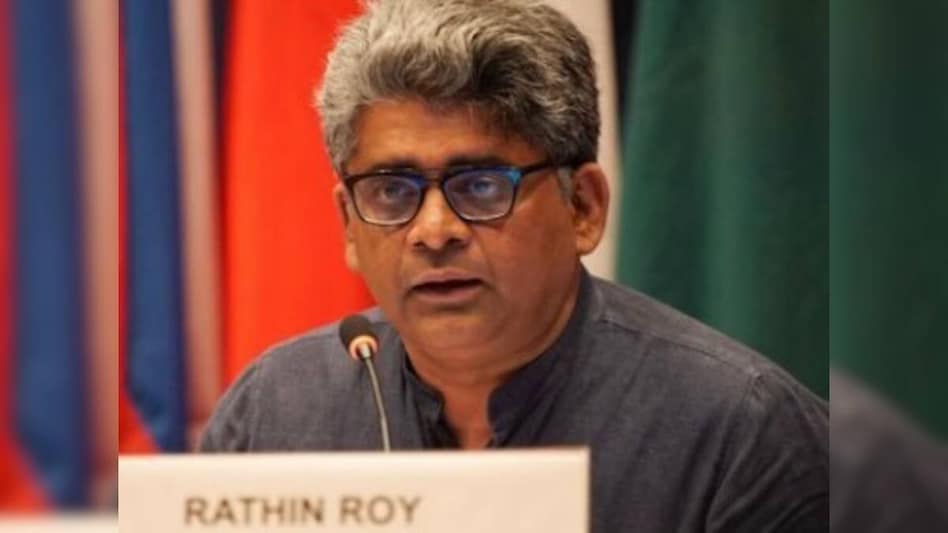
Economist and policy expert Rathin Roy has warned of an existential crisis facing India due to growing divisions between the economically prosperous southern states and the politically powerful northern states. Speaking at the Manthan India Samvaad 2025, Roy, who has worked with the Finance Commission of India and UNDP, flagged the widening gap in both income and human development indicators between the two regions.
He pointed out that while the southern states, including Tamil Nadu, Kerala, and Andhra Pradesh, have significantly higher per capita income compared to northern states like Uttar Pradesh and Bihar, the political power in the country remains disproportionately concentrated in the north.
"Every state in the peninsula, including Andhra Pradesh - which is the poorest - has a per capita income which is at least double that of any Great Indian Peninsula (GIP) state," Roy stated. He also compared the income levels of Tamil Nadu and Kerala to those of Indonesia. India's per capita average is about $2,600-$2,700. These two states, he added, are at about $4,500. "But UP and Bihar are poorer than Nepal, the country we all love to talk about as sending immigrants here. And of course, much poorer than Bangladesh."
Roy also underlined the disparities in health, education, life expectancy, and poverty ratios. "HDI (Human Development Index), life expectancy, health, education attainment, and poverty ratios in Tamil Nadu and Kerala are equal to many developed countries. South India, taken as a whole, is definitely equal to upper-middle-income countries." In contrast, he pointed to northern India, where, he said, human development indicators remain comparable to those of Afghanistan and Burkina Faso.
The economist then discussed how the economic disparity impacts India's political structure. "Population matters politically," Roy noted. He explained that the current representation in Parliament doesn't fairly reflect the population distribution between the South and North. "The South has far more representation in Parliament than its population would warrant, and the Great Indian Plain has far less representation than its population would warrant."
Roy predicted that the next delimitation based on population will further shift the balance, making the political system even more skewed in favor of the northern states. "If you do delimitation, then the ratio of the five southern states to the Northern states will fall dramatically."
For example, he explained further, today Andhra Pradesh plus Telangana is half of Uttar Pradesh. "After the delimitation based on the census, it will be a quarter of UP. Put it another way, a combination of UP, Bihar, and any one other GIP state would effectively provide a permanent majority in the Lok Sabha. So, you have this economic difference where the South is prosperous, but politically, the North is powerful and getting more so if you look at the delimitation. This is, I think, an existential crisis."
Roy then pointed out the rarity and unsustainability of this situation, citing historical precedents. He explained that in most other federal countries, the economically prosperous regions are also the most populous. "If you look at any other federalist polity, where people are poor, not many people live there," Roy said.
"In the US, it's New York, California, and Illinois, which are rich. Not many people live in Mississippi and South Dakota. If you look at Brazil, they live in Sao Paulo, Minas, and Rio de Janeiro. The majority population lives in the coastal provinces."
He noted that the former USSR and Yugoslavia, where the richer regions were politically dominated by poorer provinces, eventually ceased to exist. "There is no country in the history of the world since the Second World War, where you have this conjunction that we have in India - a politically powerful north and an economically powerful south. And the two countries that had it in the past, both don't exist anymore."
"The former USSR and the former Yugoslavia, where they did have the majority population living in poorer provinces, the minority living in richer provinces - that conjuncture was not politically sustainable. Those nations have ceased to exist. Therefore, I say this is an existential problem. This is not a joke," he warned, suggesting that India may face similar challenges if the imbalance persists.
Roy listed three potential solutions to address these disparities. His preferred option is economic convergence, where the north's income grows faster than the south's, leading to an eventual leveling of the playing field. However, he acknowledged the challenge, citing the 300% difference in per capita income between the two regions, which makes immediate convergence unlikely. "It's not going to happen in the lifetimes of most people in this room," he stated.
The other two options include population redistribution, with more people moving to the south, or an extreme shift where the southern states become 15 times more prosperous than the north, effectively dominating the country. While Roy dismissed the latter as an unrealistic solution, he stressed the urgency of finding a political resolution to the crisis. "This is an existential problem, not a joke. This is a very serious problem that we are facing."
Economist and policy expert Rathin Roy has warned of an existential crisis facing India due to growing divisions between the economically prosperous southern states and the politically powerful northern states. Speaking at the Manthan India Samvaad 2025, Roy, who has worked with the Finance Commission of India and UNDP, flagged the widening gap in both income and human development indicators between the two regions.
He pointed out that while the southern states, including Tamil Nadu, Kerala, and Andhra Pradesh, have significantly higher per capita income compared to northern states like Uttar Pradesh and Bihar, the political power in the country remains disproportionately concentrated in the north.
"Every state in the peninsula, including Andhra Pradesh - which is the poorest - has a per capita income which is at least double that of any Great Indian Peninsula (GIP) state," Roy stated. He also compared the income levels of Tamil Nadu and Kerala to those of Indonesia. India's per capita average is about $2,600-$2,700. These two states, he added, are at about $4,500. "But UP and Bihar are poorer than Nepal, the country we all love to talk about as sending immigrants here. And of course, much poorer than Bangladesh."
Roy also underlined the disparities in health, education, life expectancy, and poverty ratios. "HDI (Human Development Index), life expectancy, health, education attainment, and poverty ratios in Tamil Nadu and Kerala are equal to many developed countries. South India, taken as a whole, is definitely equal to upper-middle-income countries." In contrast, he pointed to northern India, where, he said, human development indicators remain comparable to those of Afghanistan and Burkina Faso.
The economist then discussed how the economic disparity impacts India's political structure. "Population matters politically," Roy noted. He explained that the current representation in Parliament doesn't fairly reflect the population distribution between the South and North. "The South has far more representation in Parliament than its population would warrant, and the Great Indian Plain has far less representation than its population would warrant."
Roy predicted that the next delimitation based on population will further shift the balance, making the political system even more skewed in favor of the northern states. "If you do delimitation, then the ratio of the five southern states to the Northern states will fall dramatically."
For example, he explained further, today Andhra Pradesh plus Telangana is half of Uttar Pradesh. "After the delimitation based on the census, it will be a quarter of UP. Put it another way, a combination of UP, Bihar, and any one other GIP state would effectively provide a permanent majority in the Lok Sabha. So, you have this economic difference where the South is prosperous, but politically, the North is powerful and getting more so if you look at the delimitation. This is, I think, an existential crisis."
Roy then pointed out the rarity and unsustainability of this situation, citing historical precedents. He explained that in most other federal countries, the economically prosperous regions are also the most populous. "If you look at any other federalist polity, where people are poor, not many people live there," Roy said.
"In the US, it's New York, California, and Illinois, which are rich. Not many people live in Mississippi and South Dakota. If you look at Brazil, they live in Sao Paulo, Minas, and Rio de Janeiro. The majority population lives in the coastal provinces."
He noted that the former USSR and Yugoslavia, where the richer regions were politically dominated by poorer provinces, eventually ceased to exist. "There is no country in the history of the world since the Second World War, where you have this conjunction that we have in India - a politically powerful north and an economically powerful south. And the two countries that had it in the past, both don't exist anymore."
"The former USSR and the former Yugoslavia, where they did have the majority population living in poorer provinces, the minority living in richer provinces - that conjuncture was not politically sustainable. Those nations have ceased to exist. Therefore, I say this is an existential problem. This is not a joke," he warned, suggesting that India may face similar challenges if the imbalance persists.
Roy listed three potential solutions to address these disparities. His preferred option is economic convergence, where the north's income grows faster than the south's, leading to an eventual leveling of the playing field. However, he acknowledged the challenge, citing the 300% difference in per capita income between the two regions, which makes immediate convergence unlikely. "It's not going to happen in the lifetimes of most people in this room," he stated.
The other two options include population redistribution, with more people moving to the south, or an extreme shift where the southern states become 15 times more prosperous than the north, effectively dominating the country. While Roy dismissed the latter as an unrealistic solution, he stressed the urgency of finding a political resolution to the crisis. "This is an existential problem, not a joke. This is a very serious problem that we are facing."