
'Aadhaar is NEVER the first identity': UIDAI CEO's big claim amid Bihar voters revision row
Tejashwi Yadav, leader of the Rashtriya Janata Dal, criticised the EC's decision to exclude Aadhaar and other widely held documents.
- Jul 9, 2025,
- Updated Jul 9, 2025 1:24 PM IST
The Unique Identification Authority of India (UIDAI) has clarified that Aadhaar is "never the first identity," amid rising tensions in Bihar over its exclusion from acceptable identification documents in the ongoing Special Intensive Revision (SIR) of electoral rolls. The Election Commission's (EC) efforts to update the voter list in Bihar have sparked protests, with many voters expressing dissatisfaction over the exclusion of commonly used ID proofs, including Aadhaar, PAN, and driving licences.
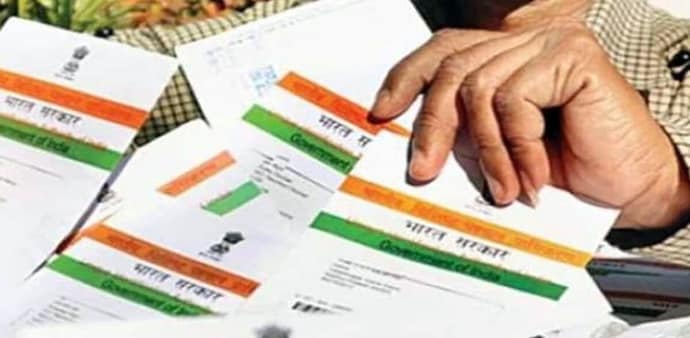
Speaking to India Today, UIDAI CEO Bhuvnesh Kumar highlighted the UIDAI's ongoing efforts to check the fake Aadhaar card industry, highlighting the built-in QR code that enables verification of card authenticity.
"There is a QR code on all the new Aadhaar cards issued and there is an Aadhaar QR scanner app developed by UIDAI. With this app, one can match the credentials of the Aadhaar card with what is embedded in the QR code. If somebody produces a fake Aadhaar card, it can easily be checked and stopped," Kumar explained. Additionally, the UIDAI is developing a new app to facilitate digital sharing of identity, allowing Aadhaar holders to share their information seamlessly.
Tejashwi Yadav, leader of the Rashtriya Janata Dal, criticised the EC's decision to exclude Aadhaar and other widely held documents. At a press conference, he stated, "It is perplexing that Aadhar cards, which are made after biometric verification, and to which the EC intends to link respective voter ID cards, are not being accepted."
He urged the EC to pause the revision exercise, particularly due to its timing before the upcoming assembly elections in Bihar. Yadav also demanded transparency regarding the identity and role of volunteers assisting booth-level officers.
Despite the criticisms, the Election Commission asserted that the SIR is "implemented smoothly at the ground level," with "no change in instructions." The EC aims to update the voter list for nearly eight crore voters by July 25, focusing on eliminating ineligible names and ensuring only eligible citizens are included.
The list of acceptable documents for the SIR includes identity or pension cards of PSU employees, government-issued certificates pre-July 1, 1987, and various other certificates, but notably excludes Aadhaar. The EC's decision has led some to call for a review of the process, with concerns over the fairness and timing of the revision exercise.
The ongoing debate highlights the complexities surrounding the use of Aadhaar and other identity documents in official processes. As the UIDAI continues to enhance security and usability features, the discourse around identity verification and voter list accuracy remains a significant focus in Bihar's political landscape.
The Unique Identification Authority of India (UIDAI) has clarified that Aadhaar is "never the first identity," amid rising tensions in Bihar over its exclusion from acceptable identification documents in the ongoing Special Intensive Revision (SIR) of electoral rolls. The Election Commission's (EC) efforts to update the voter list in Bihar have sparked protests, with many voters expressing dissatisfaction over the exclusion of commonly used ID proofs, including Aadhaar, PAN, and driving licences.
Speaking to India Today, UIDAI CEO Bhuvnesh Kumar highlighted the UIDAI's ongoing efforts to check the fake Aadhaar card industry, highlighting the built-in QR code that enables verification of card authenticity.
"There is a QR code on all the new Aadhaar cards issued and there is an Aadhaar QR scanner app developed by UIDAI. With this app, one can match the credentials of the Aadhaar card with what is embedded in the QR code. If somebody produces a fake Aadhaar card, it can easily be checked and stopped," Kumar explained. Additionally, the UIDAI is developing a new app to facilitate digital sharing of identity, allowing Aadhaar holders to share their information seamlessly.
Tejashwi Yadav, leader of the Rashtriya Janata Dal, criticised the EC's decision to exclude Aadhaar and other widely held documents. At a press conference, he stated, "It is perplexing that Aadhar cards, which are made after biometric verification, and to which the EC intends to link respective voter ID cards, are not being accepted."
He urged the EC to pause the revision exercise, particularly due to its timing before the upcoming assembly elections in Bihar. Yadav also demanded transparency regarding the identity and role of volunteers assisting booth-level officers.
Despite the criticisms, the Election Commission asserted that the SIR is "implemented smoothly at the ground level," with "no change in instructions." The EC aims to update the voter list for nearly eight crore voters by July 25, focusing on eliminating ineligible names and ensuring only eligible citizens are included.
The list of acceptable documents for the SIR includes identity or pension cards of PSU employees, government-issued certificates pre-July 1, 1987, and various other certificates, but notably excludes Aadhaar. The EC's decision has led some to call for a review of the process, with concerns over the fairness and timing of the revision exercise.
The ongoing debate highlights the complexities surrounding the use of Aadhaar and other identity documents in official processes. As the UIDAI continues to enhance security and usability features, the discourse around identity verification and voter list accuracy remains a significant focus in Bihar's political landscape.