
'Abolish LTCG on equities': Raghav Chadha pitches global model for Indian investors
"My Demand: Make Long Term Capital Gain TAX on Equities NIL for individual investor," says Chadha
- Feb 9, 2026,
- Updated Feb 9, 2026 10:11 PM IST
As the government raised the Securities Transaction Tax (STT) in the Budget 26 while leaving long-term capital gains (LTCG) tax unchanged, Aam Aadmi Party (AAP) Rajya Sabha MP Raghav Chadha on Monday urged the Centre to scrap LTCG tax on equities for individual investors altogether.
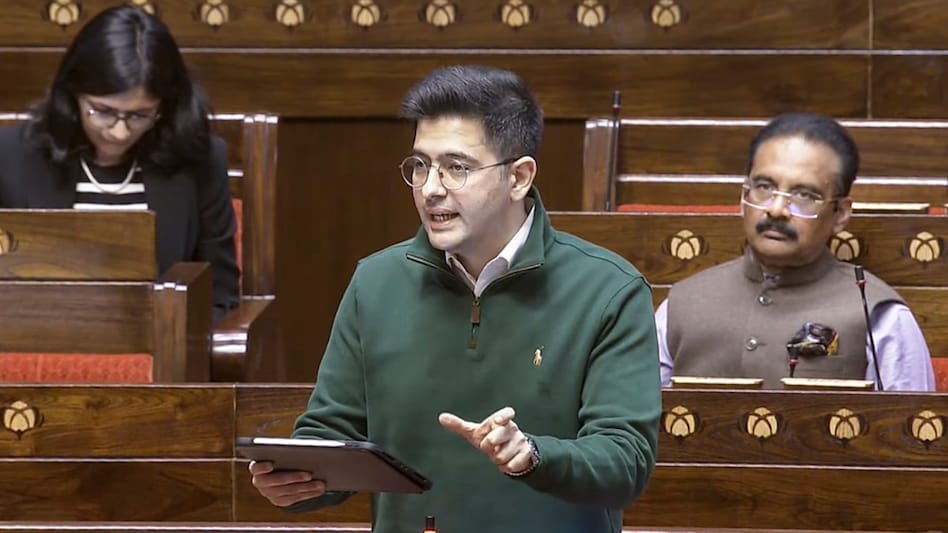
"My Demand: Make Long Term Capital Gain TAX on Equities NIL for individual investor," Chadha said while speaking the Rajya Sabha. He welcomed the decision to increase STT on derivatives, but argued that keeping both STT and LTCG in place discourages genuine long-term investors.
"I welcome the hike in STT (security transaction tax) on derivatives as it can curb reckless speculation. Nearly 90% of retail investors lose money in F&O, turning markets into gambling," Chadha said.
In her Budget speech, Finance Minister Nirmala Sitharaman increased the STT on futures to 0.05 per cent from 0.02 per cent. "STT on options premium and exercise of options are both proposed to be raised to 0.15 per cent from the present rate of 0.1 per cent and 0.125 per cent, respectively," she said.
In the previous Budget, LTCG on equities had been raised from 10 per cent to 12.5 per cent, a move that had drawn criticism from several market participants. Some expected that the FM may revisit the last hike. However, the finance minister did not change the long-term capital gains tax this year.
Chadha pointed to the historical logic behind STT. "When STT was originally introduced, LTCG was zero. But now with both STT and LTCG in place, investors are disincentivised," he said. He urged the government "to abolish LTCG on equities for individuals, as done in Switzerland, Singapore, UAE & others."
According to Chadha, scrapping LTCG for individuals would have broader economic effects. "This will boost household wealth, reduce speculation, and shift savings from gold & real estate into equities," he said.
Reacting to the STT hike in the Budget, Prasanna Tantri, Associate Professor of Finance at the Indian School of Business (ISB), said: "The increase in the Securities Transaction Tax is defensible in isolation, but it contradicts the original logic of STT as a substitute for capital gains taxation. India now has both high capital gains taxes and a rising STT, which distorts market incentives."
As the government raised the Securities Transaction Tax (STT) in the Budget 26 while leaving long-term capital gains (LTCG) tax unchanged, Aam Aadmi Party (AAP) Rajya Sabha MP Raghav Chadha on Monday urged the Centre to scrap LTCG tax on equities for individual investors altogether.
"My Demand: Make Long Term Capital Gain TAX on Equities NIL for individual investor," Chadha said while speaking the Rajya Sabha. He welcomed the decision to increase STT on derivatives, but argued that keeping both STT and LTCG in place discourages genuine long-term investors.
"I welcome the hike in STT (security transaction tax) on derivatives as it can curb reckless speculation. Nearly 90% of retail investors lose money in F&O, turning markets into gambling," Chadha said.
In her Budget speech, Finance Minister Nirmala Sitharaman increased the STT on futures to 0.05 per cent from 0.02 per cent. "STT on options premium and exercise of options are both proposed to be raised to 0.15 per cent from the present rate of 0.1 per cent and 0.125 per cent, respectively," she said.
In the previous Budget, LTCG on equities had been raised from 10 per cent to 12.5 per cent, a move that had drawn criticism from several market participants. Some expected that the FM may revisit the last hike. However, the finance minister did not change the long-term capital gains tax this year.
Chadha pointed to the historical logic behind STT. "When STT was originally introduced, LTCG was zero. But now with both STT and LTCG in place, investors are disincentivised," he said. He urged the government "to abolish LTCG on equities for individuals, as done in Switzerland, Singapore, UAE & others."
According to Chadha, scrapping LTCG for individuals would have broader economic effects. "This will boost household wealth, reduce speculation, and shift savings from gold & real estate into equities," he said.
Reacting to the STT hike in the Budget, Prasanna Tantri, Associate Professor of Finance at the Indian School of Business (ISB), said: "The increase in the Securities Transaction Tax is defensible in isolation, but it contradicts the original logic of STT as a substitute for capital gains taxation. India now has both high capital gains taxes and a rising STT, which distorts market incentives."