
After Op Sindoor success, India, Russia begin talks on advanced BrahMos production: Report
Russia has extended full technical support to India for the project, and initial talks between New Delhi and Moscow have already taken place
- May 25, 2025,
- Updated May 25, 2025 12:14 PM IST
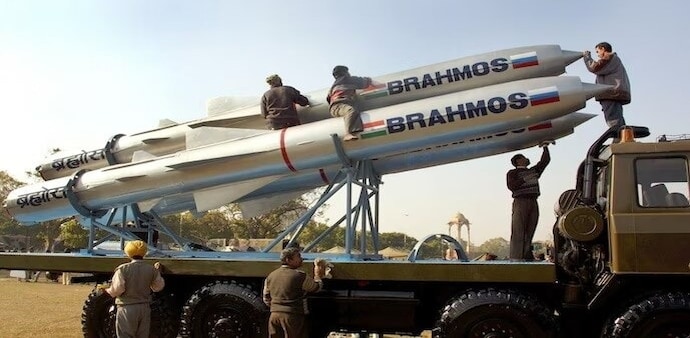
India and Russia have opened negotiations to jointly manufacture an advanced version of the BrahMos missile, following the system's successful deployment during Operation Sindoor and recent strikes on terror infrastructure in Pakistan and Pakistan-occupied Kashmir (PoK), Economic Times reported on Sunday.
According to the report, Russia has extended full technical support to India for the project, and initial talks between New Delhi and Moscow have already taken place. The newly inaugurated BrahMos facility in Uttar Pradesh, established at a cost of Rs 300 crore, has been identified for producing this upgraded version in significant numbers.
The BrahMos Aerospace Unit in Lucknow was inaugurated on May 11 by Defence Minister Rajnath Singh and Uttar Pradesh Chief Minister Yogi Adityanath. The 80-hectare facility, developed under the Uttar Pradesh Defence Industrial Corridor, includes an anchor unit PTC and seven supporting facilities, aimed at bolstering India’s missile production capabilities.
Praising the missile's performance during the recent conflict, Yogi Adityanath had remarked, "You must have seen a glimpse of the BrahMos missile during Operation Sindoor. If you didn’t, then just ask the people of Pakistan about the power of the BrahMos missile."
On May 10, India launched BrahMos missiles from SU-30 MKI fighter jets to strike Pakistan's Nur Khan airbase near Rawalpindi — a key command-and-control hub for its northern air operations and close to its Strategic Plans Division that oversees the country's nuclear arsenal. BrahMos missiles were also reportedly used to target Jaish-e-Mohammed's headquarters in Bahawalpur.
Defence Minister Rajnath Singh had earlier confirmed the missile's deployment in these operations, saying it sent a clear message of strength and deterrence. "BrahMos is not just a weapon, but it is a message in itself. A message of the strength of our armed forces. A message of our deterrence towards the enemy. A message of our commitment to safeguarding our borders,” Singh said during the inauguration of the BrahMos integration and testing facility in Lucknow.
The missile, which has a range of 290–400 km and top speeds of Mach 2.8, cannot be intercepted by any known Pakistani or Chinese air defence systems, officials said as per the report. India has land-to-land, ship-to-land, and air-launched variants of the missile under active deployment.
The BrahMos project is a joint venture between India and Russia. The new production facility in Lucknow is expected to play a key role in India’s broader push for defence self-reliance under the 'Make in India' and 'Atmanirbhar Bharat' initiatives.
As part of the Uttar Pradesh Defence Industrial Corridor — announced by Prime Minister Narendra Modi in 2018 — the Lucknow facility is among six defence manufacturing hubs across the state, including Kanpur, Aligarh, Jhansi, Agra, and Chitrakoot. The corridor is attracting both public and private investments in drones, UAVs, aircraft, ammunition, and advanced materials.
The Ministry of Defence said on social media, “It includes not only missile production but also testing, integration, and a materials complex for aerospace-grade components."
India and Russia have opened negotiations to jointly manufacture an advanced version of the BrahMos missile, following the system's successful deployment during Operation Sindoor and recent strikes on terror infrastructure in Pakistan and Pakistan-occupied Kashmir (PoK), Economic Times reported on Sunday.
According to the report, Russia has extended full technical support to India for the project, and initial talks between New Delhi and Moscow have already taken place. The newly inaugurated BrahMos facility in Uttar Pradesh, established at a cost of Rs 300 crore, has been identified for producing this upgraded version in significant numbers.
The BrahMos Aerospace Unit in Lucknow was inaugurated on May 11 by Defence Minister Rajnath Singh and Uttar Pradesh Chief Minister Yogi Adityanath. The 80-hectare facility, developed under the Uttar Pradesh Defence Industrial Corridor, includes an anchor unit PTC and seven supporting facilities, aimed at bolstering India’s missile production capabilities.
Praising the missile's performance during the recent conflict, Yogi Adityanath had remarked, "You must have seen a glimpse of the BrahMos missile during Operation Sindoor. If you didn’t, then just ask the people of Pakistan about the power of the BrahMos missile."
On May 10, India launched BrahMos missiles from SU-30 MKI fighter jets to strike Pakistan's Nur Khan airbase near Rawalpindi — a key command-and-control hub for its northern air operations and close to its Strategic Plans Division that oversees the country's nuclear arsenal. BrahMos missiles were also reportedly used to target Jaish-e-Mohammed's headquarters in Bahawalpur.
Defence Minister Rajnath Singh had earlier confirmed the missile's deployment in these operations, saying it sent a clear message of strength and deterrence. "BrahMos is not just a weapon, but it is a message in itself. A message of the strength of our armed forces. A message of our deterrence towards the enemy. A message of our commitment to safeguarding our borders,” Singh said during the inauguration of the BrahMos integration and testing facility in Lucknow.
The missile, which has a range of 290–400 km and top speeds of Mach 2.8, cannot be intercepted by any known Pakistani or Chinese air defence systems, officials said as per the report. India has land-to-land, ship-to-land, and air-launched variants of the missile under active deployment.
The BrahMos project is a joint venture between India and Russia. The new production facility in Lucknow is expected to play a key role in India’s broader push for defence self-reliance under the 'Make in India' and 'Atmanirbhar Bharat' initiatives.
As part of the Uttar Pradesh Defence Industrial Corridor — announced by Prime Minister Narendra Modi in 2018 — the Lucknow facility is among six defence manufacturing hubs across the state, including Kanpur, Aligarh, Jhansi, Agra, and Chitrakoot. The corridor is attracting both public and private investments in drones, UAVs, aircraft, ammunition, and advanced materials.
The Ministry of Defence said on social media, “It includes not only missile production but also testing, integration, and a materials complex for aerospace-grade components."