
AG Perarivalan enrols as advocate after three decades in jail in Rajiv Gandhi case
A.G. Perarivalan, released in 2022 after over three decades in jail in the Rajiv Gandhi assassination case, has enrolled as an advocate with the Bar Council of Tamil Nadu and Puducherry. He is set to practise at the Madras High Court.
- Apr 28, 2026,
- Updated Apr 28, 2026 6:20 PM IST
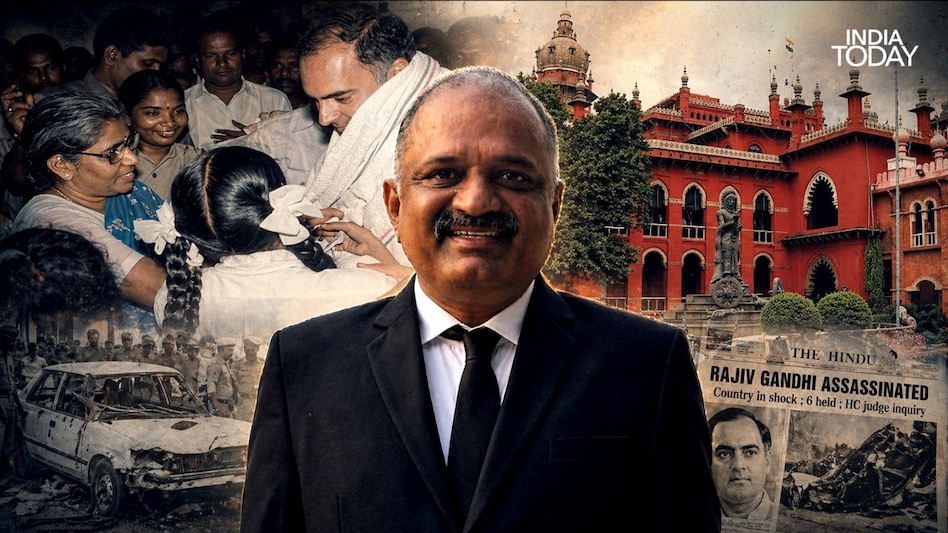
A.G. Perarivalan, one of the life convicts in the assassination case of former Prime Minister Rajiv Gandhi, has begun a new chapter in his life by enrolling as an advocate. On April 27, 2026, he was formally enrolled with the Bar Council of Tamil Nadu and Puducherry and is set to practise at the Madras High Court.
Perarivalan, now 54, was released in May 2022 after the Supreme Court invoked its extraordinary powers under Article 142 of the Constitution, citing his prolonged incarceration of more than 30 years. His death sentence had earlier been commuted to life imprisonment. After his release, he pursued a law degree from a private college in Karnataka, completed it in 2025, and cleared the All India Bar Examination the same year.
Dressed in a black lawyer’s coat, Perarivalan said his long legal battle inspired him to study law. He has made it clear that his ambition is not personal success, but to become a voice for undertrial prisoners and life convicts who lack access to legal aid, particularly those unable to afford representation. He has also called for reforms such as post-conviction exoneration laws, similar to frameworks in countries like the United States, Japan and Australia.
Arrest and early years
Perarivalan was just 19 years old when he was arrested in June 1991, weeks after Rajiv Gandhi was assassinated in a suicide bombing at Sriperumbudur, Tamil Nadu, by the LTTE. According to his family, he was taken from his home for what was described as routine questioning, with assurances that he would return soon. Trusting this, his parents handed him over to the police.
However, he was not released. The CBI kept him in custody, and for 59 days his whereabouts were unknown, with even his mother denied access. Fearing repercussions, the family initially avoided legal intervention, believing he would be freed. The primary allegation against him was that he had purchased and supplied a nine-volt battery used in the explosive device. The case, filed under TADA, relied heavily on a shopkeeper’s testimony.
Trial, conviction and commutation
In 1998, a TADA court convicted Perarivalan and others for conspiracy to murder and sentenced them to death. The Supreme Court upheld this verdict in 1999. However, in 2014, the apex court commuted his death sentence to life imprisonment, citing an 11-year delay in deciding his mercy petition, raising serious concerns over due process.
On May 18, 2022, the Supreme Court ordered his release, bringing an end to over three decades of incarceration. His journey—from a teenager taken into custody to a practising lawyer—reflects a rare and complex transition shaped by years of litigation. Now stepping into the legal profession, Perarivalan says he hopes to work towards a more equitable and humane justice system, ensuring that those without resources are not denied their right to fair representation.
A.G. Perarivalan, one of the life convicts in the assassination case of former Prime Minister Rajiv Gandhi, has begun a new chapter in his life by enrolling as an advocate. On April 27, 2026, he was formally enrolled with the Bar Council of Tamil Nadu and Puducherry and is set to practise at the Madras High Court.
Perarivalan, now 54, was released in May 2022 after the Supreme Court invoked its extraordinary powers under Article 142 of the Constitution, citing his prolonged incarceration of more than 30 years. His death sentence had earlier been commuted to life imprisonment. After his release, he pursued a law degree from a private college in Karnataka, completed it in 2025, and cleared the All India Bar Examination the same year.
Dressed in a black lawyer’s coat, Perarivalan said his long legal battle inspired him to study law. He has made it clear that his ambition is not personal success, but to become a voice for undertrial prisoners and life convicts who lack access to legal aid, particularly those unable to afford representation. He has also called for reforms such as post-conviction exoneration laws, similar to frameworks in countries like the United States, Japan and Australia.
Arrest and early years
Perarivalan was just 19 years old when he was arrested in June 1991, weeks after Rajiv Gandhi was assassinated in a suicide bombing at Sriperumbudur, Tamil Nadu, by the LTTE. According to his family, he was taken from his home for what was described as routine questioning, with assurances that he would return soon. Trusting this, his parents handed him over to the police.
However, he was not released. The CBI kept him in custody, and for 59 days his whereabouts were unknown, with even his mother denied access. Fearing repercussions, the family initially avoided legal intervention, believing he would be freed. The primary allegation against him was that he had purchased and supplied a nine-volt battery used in the explosive device. The case, filed under TADA, relied heavily on a shopkeeper’s testimony.
Trial, conviction and commutation
In 1998, a TADA court convicted Perarivalan and others for conspiracy to murder and sentenced them to death. The Supreme Court upheld this verdict in 1999. However, in 2014, the apex court commuted his death sentence to life imprisonment, citing an 11-year delay in deciding his mercy petition, raising serious concerns over due process.
On May 18, 2022, the Supreme Court ordered his release, bringing an end to over three decades of incarceration. His journey—from a teenager taken into custody to a practising lawyer—reflects a rare and complex transition shaped by years of litigation. Now stepping into the legal profession, Perarivalan says he hopes to work towards a more equitable and humane justice system, ensuring that those without resources are not denied their right to fair representation.