
'Agitations bound to happen': SC issues notice to Centre, orders independent panel to probe police action
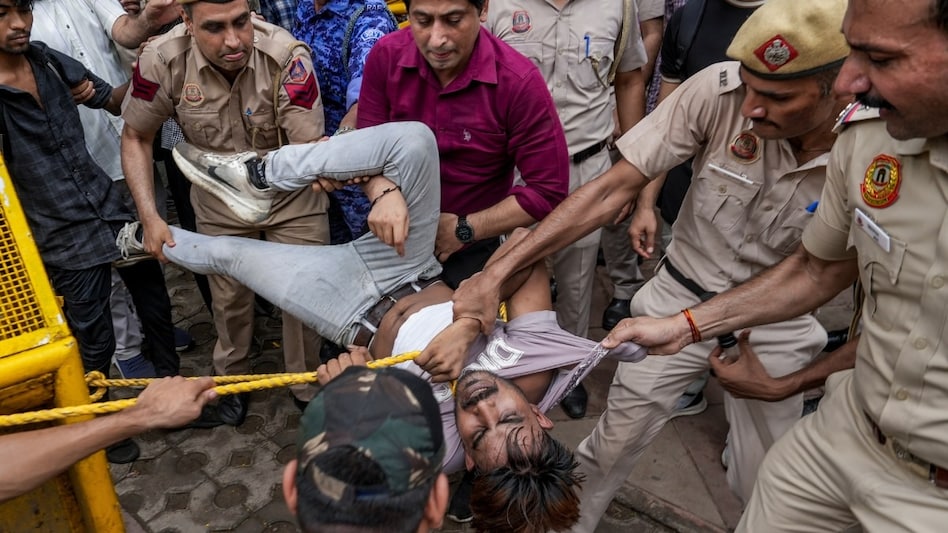
The bench said that the apex court is examining allegations of police violence, including claims about grievous injuries, assault on women, advocates and media persons
- Jul 28, 2026,
- Updated Jul 28, 2026 12:28 PM IST
The Supreme Court on Tuesday said that it would issue notices to the Centre and the states where allegations of police excesses have been raised. The Chief Justice of India (CJI)-led bench directed the Advocate Generals of the concerned states to appear before the court virtually during the next hearing.
Besides this, the court observed that agitations are "bound to happen" in a democracy, saying that those who committed excesses and took the law into their own hands must be brought under the law.
The bench said that once a uniform protocol governing protests and police action is put in place, “whoever has committed excesses and taken the law into their own hands, and whoever has committed atrocities, they must be brought under the law.”
The bench said that the apex court is examining allegations of police violence, including claims about grievous injuries, assault on women, advocates and media persons. It also observed that the allegations made out a prima facie case of commission of offences. “Why should there not be an independent probe into these allegations?” CJI Surya Kant said.
The court also said that it will order the constitution of a high-powered committee to investigate incidents of violence in Delhi and other states. The CJI-led bench noted that police may contend that even peaceful protests are sometimes infiltrated by unruly elements, causing violence.
The CJI said that the proposed all-India protocol governing protests and crowd-control measures requires some modifications, as things aren't happening controversially either, and the issue needed to be addressed.
What did the government say?
Solicitor General Tushar Mehta, representing the Centre, informed the Supreme Court that the government had no objection to an independent investigation into the matter. However, he opposed the names proposed by the petitioners for the probe panel, contending that the court alone should decide its composition.
"I am with the students. I don't believe students would have committed violence," Mehta said, while adding that the Centre was willing to accept any inquiry committee constituted by the Supreme Court.
Seeking two days to file a detailed response, Mehta said the government would also place the findings of its own inquiry before the court. "If this court feels that everything needs to be supervised, we will accept it," he submitted.
Addressing the petitioners' allegations involving incidents in Delhi, Kerala, Bihar, Madhya Pradesh, Assam and Maharashtra, Mehta urged the court to first assess the available material before widening the scope of the investigation.
"If something is found in any other state, this court may take a call. It's a complete recipe bringing all states here to ensure the matter won't be smoothly heard," he said.
What did the petitioners say?
Appearing for the petitioners, senior advocate Abhishek Manu Singhvi informed the Supreme Court that the petitioners had submitted a state-wise compilation detailing alleged instances of police excesses during the CJP protests across six states and Union Territories.
According to Singhvi, the documents contained photographs and videos purportedly showing the use of force, including lathi-charges, tear gas, police personnel in civilian clothes, and pellet guns. He also alleged that the police action violated the Supreme Court's rulings in the Anita Thakur and Ramlila Maidan cases, which lay down guidelines for handling protests.
Taking note of the submissions, Chief Justice Surya Kant remarked that "the most conservative language we can use is to say that an independent probe is prima facie made out," indicating that the allegations merited an impartial inquiry.
(With inputs from ANI, Aneesha Mathur)
The Supreme Court on Tuesday said that it would issue notices to the Centre and the states where allegations of police excesses have been raised. The Chief Justice of India (CJI)-led bench directed the Advocate Generals of the concerned states to appear before the court virtually during the next hearing.
Besides this, the court observed that agitations are "bound to happen" in a democracy, saying that those who committed excesses and took the law into their own hands must be brought under the law.
The bench said that once a uniform protocol governing protests and police action is put in place, “whoever has committed excesses and taken the law into their own hands, and whoever has committed atrocities, they must be brought under the law.”
The bench said that the apex court is examining allegations of police violence, including claims about grievous injuries, assault on women, advocates and media persons. It also observed that the allegations made out a prima facie case of commission of offences. “Why should there not be an independent probe into these allegations?” CJI Surya Kant said.
The court also said that it will order the constitution of a high-powered committee to investigate incidents of violence in Delhi and other states. The CJI-led bench noted that police may contend that even peaceful protests are sometimes infiltrated by unruly elements, causing violence.
The CJI said that the proposed all-India protocol governing protests and crowd-control measures requires some modifications, as things aren't happening controversially either, and the issue needed to be addressed.
What did the government say?
Solicitor General Tushar Mehta, representing the Centre, informed the Supreme Court that the government had no objection to an independent investigation into the matter. However, he opposed the names proposed by the petitioners for the probe panel, contending that the court alone should decide its composition.
"I am with the students. I don't believe students would have committed violence," Mehta said, while adding that the Centre was willing to accept any inquiry committee constituted by the Supreme Court.
Seeking two days to file a detailed response, Mehta said the government would also place the findings of its own inquiry before the court. "If this court feels that everything needs to be supervised, we will accept it," he submitted.
Addressing the petitioners' allegations involving incidents in Delhi, Kerala, Bihar, Madhya Pradesh, Assam and Maharashtra, Mehta urged the court to first assess the available material before widening the scope of the investigation.
"If something is found in any other state, this court may take a call. It's a complete recipe bringing all states here to ensure the matter won't be smoothly heard," he said.
What did the petitioners say?
Appearing for the petitioners, senior advocate Abhishek Manu Singhvi informed the Supreme Court that the petitioners had submitted a state-wise compilation detailing alleged instances of police excesses during the CJP protests across six states and Union Territories.
According to Singhvi, the documents contained photographs and videos purportedly showing the use of force, including lathi-charges, tear gas, police personnel in civilian clothes, and pellet guns. He also alleged that the police action violated the Supreme Court's rulings in the Anita Thakur and Ramlila Maidan cases, which lay down guidelines for handling protests.
Taking note of the submissions, Chief Justice Surya Kant remarked that "the most conservative language we can use is to say that an independent probe is prima facie made out," indicating that the allegations merited an impartial inquiry.
(With inputs from ANI, Aneesha Mathur)