
‘Alienated India, only country to balance China…’: Fareed Zakaria on why Trump’s Beijing woes are unending
Fareed Zakaria said that as the Middle East grew quieter the Chinese front grew more discordant. “In this arena Trump has lurched from threat to retreat to confusion,” he said.
- Oct 21, 2025,
- Updated Oct 21, 2025 2:04 PM IST
The Gaza ceasefire, constructed by US President Donald Trump, was an undisputed success, but China is a different ball-game altogether. Where pressure yields in the Middle East, patience triumphs with China, where flattery paves the way for the Middle East, strategy builds the foundation for China, said geostrategist and columnist, Fareed Zakaria. As such, one of the key cards to be played is India.
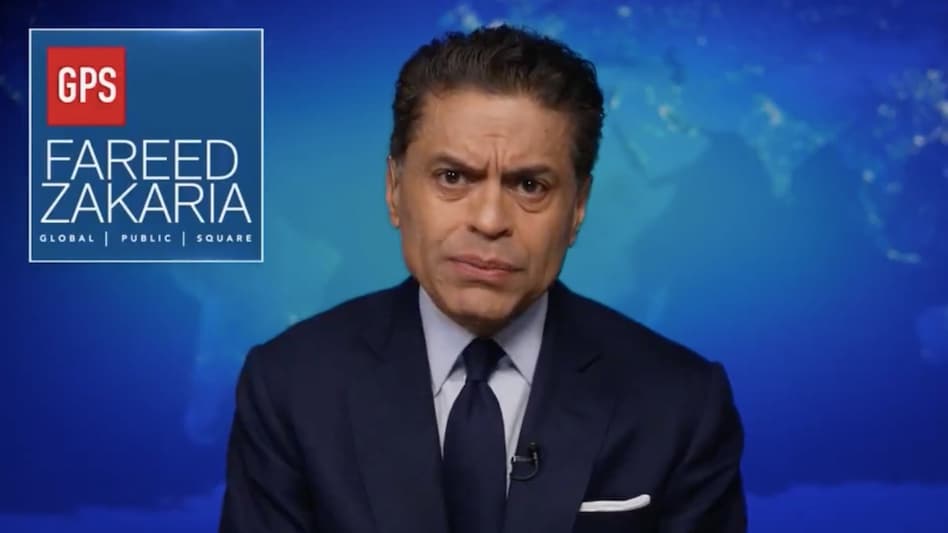
In his show, GPS, Zakaria said that as the Middle East grew quieter the Chinese front grew more discordant. “In this arena Trump has lurched from threat to retreat to confusion,” said Zakaria.
“The problem is Trump's diplomatic playbook, effective in the Middle East, fits poorly in the longer, larger struggle with China. Trump’s approach works where America has overwhelming leverage. In the Middle East, Washington holds the purse strings, the weapon systems, the security umbrella, cutting edge technology and the UN veto. The region’s leaders – Netanyahu, Sisi, Erdogan, Mohammad bin Salman – are strongmen who respond to presidential pressure and transactional incentives. Trump loves this world. He can call a leader, threaten, flatter and then make a deal. The Hamas-Israel ceasefire was just that kind of performance – personal, visible and theatrical,” explained Zakaria.
He added: “The contest with China by contrast is of structure – a rivalry between two great powers bound by mutual dependence. Here Trump's instincts misfired. He prefers bluffing to planning, pressure to partnership but Beijing has the strength to call his bluffs.”
Zakaria explained that Washington has leverage on Beijing as China depends on the US and its allies for advanced chip design, aerospace technology, and access to western markets but then America also depends on China for about 70 per cent of its rare earth imports, more than 70 per cent lithium-ion battery imports, semiconductors and pharmaceuticals. Moreover, China is a power to reckon with when it comes to manufacturing.
So, while the US alone might not be able to tip the scales to its favour, Washington along with its allies can. “The combined economies of America, the European Union, Japan and India represent over 50 per cent of global GDP and more than 50 per cent of world R&D spending. The best China strategy then involves coalition management, coordinated investments, technology partnerships and share deterrence. That requires patience, conviction and trust. Trump’s record here is dim,” he said.
Zakaria stated that Europe and Canada were alienated by the US with punitive tariffs. Trump called for a review of the AUKUS submarine pact that bounded the UK, US and Australia, repeatedly questioned NATO’s value, and upended nearly three decades of patient diplomacy with India, “the only country with the scale to balance China economically, technologically and militarily over time”. “By slapping sky-high tariffs on India and publicly courting Pakistan, now a de facto Chinese defence ally, he has managed to enrage New Delhi for little discernable gain”, said Zakaria.
Moreover, the critical aspect of any competition with China is internal, rebuilding US capacity by investing in research, supporting critical industries and attracting global talent. Yet federal R&D spending as a share of GDP has fallen and that was before Trump's massive research cuts this year. Visa restrictions and other Trump administration actions have driven international student arrival down 19 per cent since last year, and support for homegrown technology has been pushed to the side, replaced by tariffs and more tariffs, said Zakaria.
“The US-China relationship is not the place for impulsive tweeting. Trump’s deal in the Middle East shows that his style of diplomacy shows it can deliver bursts of success where personalities and asymmetries rule. But the China context is slower, harder, more technical, less theatrical. It requires statecraft not showmanship, patience not bravado. The stakes couldn’t be higher. If Trump continues to treat Beijing the way it treats the Gulf, then America might discover that the art of the deal is no substitute for the architecture of strategy,” he added.
The Gaza ceasefire, constructed by US President Donald Trump, was an undisputed success, but China is a different ball-game altogether. Where pressure yields in the Middle East, patience triumphs with China, where flattery paves the way for the Middle East, strategy builds the foundation for China, said geostrategist and columnist, Fareed Zakaria. As such, one of the key cards to be played is India.
In his show, GPS, Zakaria said that as the Middle East grew quieter the Chinese front grew more discordant. “In this arena Trump has lurched from threat to retreat to confusion,” said Zakaria.
“The problem is Trump's diplomatic playbook, effective in the Middle East, fits poorly in the longer, larger struggle with China. Trump’s approach works where America has overwhelming leverage. In the Middle East, Washington holds the purse strings, the weapon systems, the security umbrella, cutting edge technology and the UN veto. The region’s leaders – Netanyahu, Sisi, Erdogan, Mohammad bin Salman – are strongmen who respond to presidential pressure and transactional incentives. Trump loves this world. He can call a leader, threaten, flatter and then make a deal. The Hamas-Israel ceasefire was just that kind of performance – personal, visible and theatrical,” explained Zakaria.
He added: “The contest with China by contrast is of structure – a rivalry between two great powers bound by mutual dependence. Here Trump's instincts misfired. He prefers bluffing to planning, pressure to partnership but Beijing has the strength to call his bluffs.”
Zakaria explained that Washington has leverage on Beijing as China depends on the US and its allies for advanced chip design, aerospace technology, and access to western markets but then America also depends on China for about 70 per cent of its rare earth imports, more than 70 per cent lithium-ion battery imports, semiconductors and pharmaceuticals. Moreover, China is a power to reckon with when it comes to manufacturing.
So, while the US alone might not be able to tip the scales to its favour, Washington along with its allies can. “The combined economies of America, the European Union, Japan and India represent over 50 per cent of global GDP and more than 50 per cent of world R&D spending. The best China strategy then involves coalition management, coordinated investments, technology partnerships and share deterrence. That requires patience, conviction and trust. Trump’s record here is dim,” he said.
Zakaria stated that Europe and Canada were alienated by the US with punitive tariffs. Trump called for a review of the AUKUS submarine pact that bounded the UK, US and Australia, repeatedly questioned NATO’s value, and upended nearly three decades of patient diplomacy with India, “the only country with the scale to balance China economically, technologically and militarily over time”. “By slapping sky-high tariffs on India and publicly courting Pakistan, now a de facto Chinese defence ally, he has managed to enrage New Delhi for little discernable gain”, said Zakaria.
Moreover, the critical aspect of any competition with China is internal, rebuilding US capacity by investing in research, supporting critical industries and attracting global talent. Yet federal R&D spending as a share of GDP has fallen and that was before Trump's massive research cuts this year. Visa restrictions and other Trump administration actions have driven international student arrival down 19 per cent since last year, and support for homegrown technology has been pushed to the side, replaced by tariffs and more tariffs, said Zakaria.
“The US-China relationship is not the place for impulsive tweeting. Trump’s deal in the Middle East shows that his style of diplomacy shows it can deliver bursts of success where personalities and asymmetries rule. But the China context is slower, harder, more technical, less theatrical. It requires statecraft not showmanship, patience not bravado. The stakes couldn’t be higher. If Trump continues to treat Beijing the way it treats the Gulf, then America might discover that the art of the deal is no substitute for the architecture of strategy,” he added.