
‘All we saw was cactus’: Ex-Army officer and wife turn 2.5 acres of barren Udaipur land into 10-room homestay
The transformation of the land also involved changing its ability to support vegetation.
- Oct 11, 2026,
- Updated Oct 11, 2026 5:09 PM IST
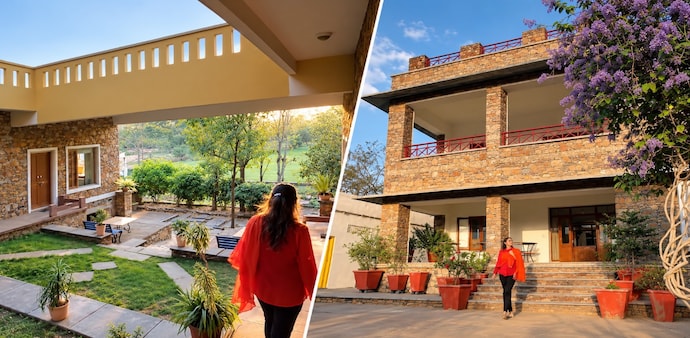
An ex-Army officer and his wife have transformed a 2.5-acre stretch of barren land in Udaipur into a 10-bedroom heritage homestay, building it from scratch over nearly a decade with local craftsmanship, farming and traditional Rajasthani practices, The Better India reported.
Major Durga Das, 66, and his wife Jyoti Jasol, 57, bought the land in 1994 after falling in love with Udaipur during a road trip. At the time, the couple says, the property was largely covered in cactus and could not support much else. Today, their homestay, Devra, has lush fields, farms, locally grown produce and rooms built in traditional Marwari style.
Das, who served in the Indian Army for 13 years, left the service to develop the land. Jyoti, who was then the manager of the Textile Gallery at the City Palace, had also been thinking about building a life around the property.
“We had always wanted to buy a home in Udaipur,” Jyoti told TBI.
The couple initially tried floriculture, hoping to supply flowers to the Taj Palace, Udaipur. The business did not work out. After moving to Delhi in 1997, Jyoti returned to the property in 1999 to pursue the homestay plan.
Don't Miss: Ex-Army chief on Starlink: 'I wouldn't depend on any foreign-owned telecom system in India'
Devra began welcoming guests in 2004. During the years of construction, Jyoti worked closely with local craftsmen and brought a local worker, Shivji, on board to help build the property.
Turning barren land into a working farm
The transformation of the land also involved changing its ability to support vegetation. Jyoti recalls that when they first saw it, “all we saw was cactus.”
The couple began bringing loamy soil from Pichola Lake, which Jyoti says was rich in minerals and nutrients and helped them grow their first trees. She notes that such soil extraction is no longer allowed, following a 2016 proposal that placed three Udaipur lakes, including Pichola, under a prohibited zone.
Devra now grows wheat, seasonal vegetables, jowar, methi, avlas, berries, jamuns, guavas, chikoos, neem, tamarind and dates. The property harvests 400 kg of chikoos every year, along with other fruits.
Must Read: Mahadev betting app probe: Shefali Bagga surrenders bulk of ₹1.2 cr promotional fee to ED
A homestay built around local traditions
The 10-bedroom property follows permaculture practices and uses traditional cooking methods. Its kitchen serves dishes such as lal maas, bhuta ki subji, tarbuz ki subji and makki and bajra chulha rotis.
Guests can also take part in heritage cooking classes, bird watching and village visits.
Das says the project was meant to be more than a homestay.
“I saw this (Devra) as an opportunity to cultivate a generation that is acutely aware of their surroundings,” he says.
For Jyoti, the years spent building Devra also became a lesson in patience and relationships. “The journey taught me to be patient and take things as they come. Everything happens in its own space and time,” she says.
An ex-Army officer and his wife have transformed a 2.5-acre stretch of barren land in Udaipur into a 10-bedroom heritage homestay, building it from scratch over nearly a decade with local craftsmanship, farming and traditional Rajasthani practices, The Better India reported.
Major Durga Das, 66, and his wife Jyoti Jasol, 57, bought the land in 1994 after falling in love with Udaipur during a road trip. At the time, the couple says, the property was largely covered in cactus and could not support much else. Today, their homestay, Devra, has lush fields, farms, locally grown produce and rooms built in traditional Marwari style.
Das, who served in the Indian Army for 13 years, left the service to develop the land. Jyoti, who was then the manager of the Textile Gallery at the City Palace, had also been thinking about building a life around the property.
“We had always wanted to buy a home in Udaipur,” Jyoti told TBI.
The couple initially tried floriculture, hoping to supply flowers to the Taj Palace, Udaipur. The business did not work out. After moving to Delhi in 1997, Jyoti returned to the property in 1999 to pursue the homestay plan.
Don't Miss: Ex-Army chief on Starlink: 'I wouldn't depend on any foreign-owned telecom system in India'
Devra began welcoming guests in 2004. During the years of construction, Jyoti worked closely with local craftsmen and brought a local worker, Shivji, on board to help build the property.
Turning barren land into a working farm
The transformation of the land also involved changing its ability to support vegetation. Jyoti recalls that when they first saw it, “all we saw was cactus.”
The couple began bringing loamy soil from Pichola Lake, which Jyoti says was rich in minerals and nutrients and helped them grow their first trees. She notes that such soil extraction is no longer allowed, following a 2016 proposal that placed three Udaipur lakes, including Pichola, under a prohibited zone.
Devra now grows wheat, seasonal vegetables, jowar, methi, avlas, berries, jamuns, guavas, chikoos, neem, tamarind and dates. The property harvests 400 kg of chikoos every year, along with other fruits.
Must Read: Mahadev betting app probe: Shefali Bagga surrenders bulk of ₹1.2 cr promotional fee to ED
A homestay built around local traditions
The 10-bedroom property follows permaculture practices and uses traditional cooking methods. Its kitchen serves dishes such as lal maas, bhuta ki subji, tarbuz ki subji and makki and bajra chulha rotis.
Guests can also take part in heritage cooking classes, bird watching and village visits.
Das says the project was meant to be more than a homestay.
“I saw this (Devra) as an opportunity to cultivate a generation that is acutely aware of their surroundings,” he says.
For Jyoti, the years spent building Devra also became a lesson in patience and relationships. “The journey taught me to be patient and take things as they come. Everything happens in its own space and time,” she says.