
'Tejas should not go the Marut way': Former IAF officer cautions amid jet delays, says Atmanirbharta must not become our weakness
Delays cause capability degradation, therefore the government must seek accountability from weapon suppliers, whether foreign or domestic, writes former Group Captain Ajay Ahlawat
- Jul 2, 2025,
- Updated Jul 2, 2025 4:51 PM IST
Former Air Force Group Captain Ahay Ahlawat has warned that India's push for defence self-reliance risks becoming a liability if persistent delays and poor coordination continue to plague indigenous weapons programmes like the Tejas Mk1A. "The threats are evolving rapidly, so the demands from the services would evolve too,” Ahlawat wrote in an opinion piece for The Print. "It would be foolhardy to assume that the IAF would not revise ASQRs (Air Staff Qualitative Requirements) as the deliveries are delayed and newer, more potent threats emerge. The bottom line remains unchanged."
He said the onus of equipping the IAF and other services is on the government. "Delays cause capability degradation, therefore the government must seek accountability from weapon suppliers, whether foreign or domestic. Atmanirbharta is our strength — it should not be allowed to become our vulnerability."
Ahlawat cautioned that India's defence planners cannot afford to ignore the pace at which aerial threats are evolving, especially with China fielding fifth-generation fighters like the J-20 and J-35, and reports suggesting Pakistan may soon acquire the J-35 as well. He warned that the Tejas Mk1A and Mk2—both 4.5-generation platforms that are yet to enter full operational service — could risk obsolescence by the time they are inducted.
"The threats are evolving rapidly, so the demands from the services would evolve too,” he noted, stressing that the IAF's qualitative requirements must adapt accordingly and delays in delivery must not become an excuse for underpreparedness.
Ahlawat drew a direct comparison between the Tejas and India's earlier attempt at building a domestic fighter — the HF-24 Marut. He said both platforms suffered from recurring problems: engine shortcomings, lack of inter-departmental coordination, and shifting political will. "India's pursuit of self-reliance in defence aviation is a saga of ambition and innovation," he said. "It is also a tale of bureaucratic bungling, lack of accountability, and the absence of inter-department coordination. We tend to make the same mistakes over and over again."
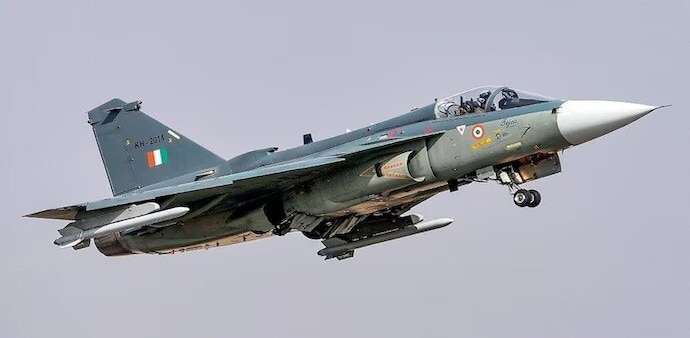
Highlighting the slow pace of development, Ahlawat noted that the Tejas programme, initiated in 1983, took 18 years to conduct its first flight and only achieved final operational clearance in 2019. So far, 38 aircraft have been delivered to the Indian Air Force (IAF), out of the 83 ordered, and no Mk1A units have been handed over despite deadlines set for 2024.
Despite its troubled development, Ahlawat acknowledged the Tejas programme's operational reliability and flight safety. He credited the fighter for performing well in multiple exercises and maintaining an accident-free record during testing — a rare feat for any single-engine fighter development project.
In May this year, Air Chief Marshal Amar Preet Singh openly flagged the failure to meet project timelines. "Not a single project that I can think of has been completed on time," he said at the CII Annual Business Summit. "Why should we promise something which cannot be achieved?"
He further urged Indian industry to prioritise execution over overpromising. "In the next 10 years, the Air Force will require more input from the industry, but we also need to act today and get into quick Make in India programs so that we can achieve the 'Now Ready' part of it, while 'Design in India' continues to progress in the near future," Singh said.
Former Air Force Group Captain Ahay Ahlawat has warned that India's push for defence self-reliance risks becoming a liability if persistent delays and poor coordination continue to plague indigenous weapons programmes like the Tejas Mk1A. "The threats are evolving rapidly, so the demands from the services would evolve too,” Ahlawat wrote in an opinion piece for The Print. "It would be foolhardy to assume that the IAF would not revise ASQRs (Air Staff Qualitative Requirements) as the deliveries are delayed and newer, more potent threats emerge. The bottom line remains unchanged."
He said the onus of equipping the IAF and other services is on the government. "Delays cause capability degradation, therefore the government must seek accountability from weapon suppliers, whether foreign or domestic. Atmanirbharta is our strength — it should not be allowed to become our vulnerability."
Ahlawat cautioned that India's defence planners cannot afford to ignore the pace at which aerial threats are evolving, especially with China fielding fifth-generation fighters like the J-20 and J-35, and reports suggesting Pakistan may soon acquire the J-35 as well. He warned that the Tejas Mk1A and Mk2—both 4.5-generation platforms that are yet to enter full operational service — could risk obsolescence by the time they are inducted.
"The threats are evolving rapidly, so the demands from the services would evolve too,” he noted, stressing that the IAF's qualitative requirements must adapt accordingly and delays in delivery must not become an excuse for underpreparedness.
Ahlawat drew a direct comparison between the Tejas and India's earlier attempt at building a domestic fighter — the HF-24 Marut. He said both platforms suffered from recurring problems: engine shortcomings, lack of inter-departmental coordination, and shifting political will. "India's pursuit of self-reliance in defence aviation is a saga of ambition and innovation," he said. "It is also a tale of bureaucratic bungling, lack of accountability, and the absence of inter-department coordination. We tend to make the same mistakes over and over again."
Highlighting the slow pace of development, Ahlawat noted that the Tejas programme, initiated in 1983, took 18 years to conduct its first flight and only achieved final operational clearance in 2019. So far, 38 aircraft have been delivered to the Indian Air Force (IAF), out of the 83 ordered, and no Mk1A units have been handed over despite deadlines set for 2024.
Despite its troubled development, Ahlawat acknowledged the Tejas programme's operational reliability and flight safety. He credited the fighter for performing well in multiple exercises and maintaining an accident-free record during testing — a rare feat for any single-engine fighter development project.
In May this year, Air Chief Marshal Amar Preet Singh openly flagged the failure to meet project timelines. "Not a single project that I can think of has been completed on time," he said at the CII Annual Business Summit. "Why should we promise something which cannot be achieved?"
He further urged Indian industry to prioritise execution over overpromising. "In the next 10 years, the Air Force will require more input from the industry, but we also need to act today and get into quick Make in India programs so that we can achieve the 'Now Ready' part of it, while 'Design in India' continues to progress in the near future," Singh said.