
‘Bachat Utsav’: PM Modi launches GST 2.0 on Navratri Eve as part of next-gen tax reform
Under the revised structure, nearly 99 percent of goods previously taxed at 12 percent will shift to the 5 percent slab, while about 90 percent of items from the 28 percent bracket will now be taxed at 18 percent. A 40 percent compensation cess will remain in effect for luxury and sin goods.
- Sep 21, 2025,
- Updated Sep 21, 2025 5:41 PM IST
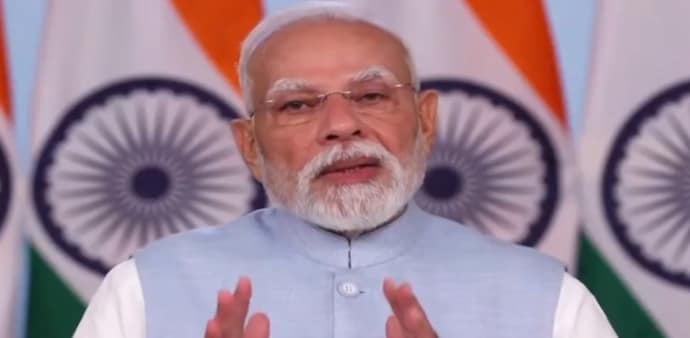
Prime Minister Narendra Modi launched a sweeping overhaul of India's tax regime on the eve of Navratri, introducing GST 2.0 as a new chapter in the country's economic transformation with a promise to cut consumer costs, simplify logistics, and draw global investment.
Calling it the beginning of a “Bachat Utsav,” or festival of savings, Modi said the reforms aim to reduce household expenses and make India more attractive for businesses by removing bottlenecks and promoting cooperative federalism. The restructured Goods and Services Tax, approved by the GST Council earlier this month, moves to a simplified two-tier system — 5 percent and 18 percent — effective September 22, the first day of Navratri.
Under the revised structure, nearly 99 percent of goods previously taxed at 12 percent will shift to the 5 percent slab, while about 90 percent of items from the 28 percent bracket will now be taxed at 18 percent. A 40 percent compensation cess will remain in effect for luxury and sin goods.
Citing an example of the need for tax reforms, Modi cited the report of a French technology company which it more cost-effective to ship parts from Bangalore to Europe and then back to Hyderabad — 570 kilometers away — rather than transport them directly due to domestic inefficiencies.
“India was dealing with different kinds of taxes from service to numerous others,” Modi said. “Dozens of taxes were making the system complex for transporting goods from one state to another. Many checkposts had to be passed, there were many hurdles.”
The Prime Minister added, “We made India free of dozens of taxes, bringing ‘one nation, one tax.’”
The inefficiencies are not limited to foreign companies. The World Bank notes that freight delays caused by roadblocks and stoppages increase logistics costs for Indian manufacturers to levels often higher than their entire wage bills — more than double in the case of textiles. Halving these delays could cut freight times by 20-30 percent and logistics costs by 30-40 percent.
Modi emphasised that GST 2.0 is a "next-gen reform" driven by the evolving needs and aspirations of India. “When time changes, a country’s needs change. Next-gen reforms are essential,” he said.
Among the immediate impacts, daily consumer goods including food products, medicines, soaps, health insurance, and life insurance will either become tax-free or fall under the 5 percent slab, directly benefiting millions of households.
Prime Minister Narendra Modi said the government’s latest tax reforms, including the decision to raise the income tax exemption limit and the rollout of GST 2.0, will collectively save people nearly ₹2.5 lakh crore, providing direct relief to households across the country.
He further urged state governments to actively promote manufacturing under the Atmanirbhar Abhiyan, stressing that strengthening domestic production is key to generating jobs, reducing dependence on imports, and positioning India as a global hub for industry and innovation.
Prime Minister Narendra Modi launched a sweeping overhaul of India's tax regime on the eve of Navratri, introducing GST 2.0 as a new chapter in the country's economic transformation with a promise to cut consumer costs, simplify logistics, and draw global investment.
Calling it the beginning of a “Bachat Utsav,” or festival of savings, Modi said the reforms aim to reduce household expenses and make India more attractive for businesses by removing bottlenecks and promoting cooperative federalism. The restructured Goods and Services Tax, approved by the GST Council earlier this month, moves to a simplified two-tier system — 5 percent and 18 percent — effective September 22, the first day of Navratri.
Under the revised structure, nearly 99 percent of goods previously taxed at 12 percent will shift to the 5 percent slab, while about 90 percent of items from the 28 percent bracket will now be taxed at 18 percent. A 40 percent compensation cess will remain in effect for luxury and sin goods.
Citing an example of the need for tax reforms, Modi cited the report of a French technology company which it more cost-effective to ship parts from Bangalore to Europe and then back to Hyderabad — 570 kilometers away — rather than transport them directly due to domestic inefficiencies.
“India was dealing with different kinds of taxes from service to numerous others,” Modi said. “Dozens of taxes were making the system complex for transporting goods from one state to another. Many checkposts had to be passed, there were many hurdles.”
The Prime Minister added, “We made India free of dozens of taxes, bringing ‘one nation, one tax.’”
The inefficiencies are not limited to foreign companies. The World Bank notes that freight delays caused by roadblocks and stoppages increase logistics costs for Indian manufacturers to levels often higher than their entire wage bills — more than double in the case of textiles. Halving these delays could cut freight times by 20-30 percent and logistics costs by 30-40 percent.
Modi emphasised that GST 2.0 is a "next-gen reform" driven by the evolving needs and aspirations of India. “When time changes, a country’s needs change. Next-gen reforms are essential,” he said.
Among the immediate impacts, daily consumer goods including food products, medicines, soaps, health insurance, and life insurance will either become tax-free or fall under the 5 percent slab, directly benefiting millions of households.
Prime Minister Narendra Modi said the government’s latest tax reforms, including the decision to raise the income tax exemption limit and the rollout of GST 2.0, will collectively save people nearly ₹2.5 lakh crore, providing direct relief to households across the country.
He further urged state governments to actively promote manufacturing under the Atmanirbhar Abhiyan, stressing that strengthening domestic production is key to generating jobs, reducing dependence on imports, and positioning India as a global hub for industry and innovation.