
'Battle between two ideologies': Asim Munir's fresh rhetoric on Op Sindoor anniversary
Munir revived his rhetoric around the two-nation theory that he had pushed in a speech days before the Pahalgam terror attack.
- May 10, 2026,
- Updated May 10, 2026 3:56 PM IST
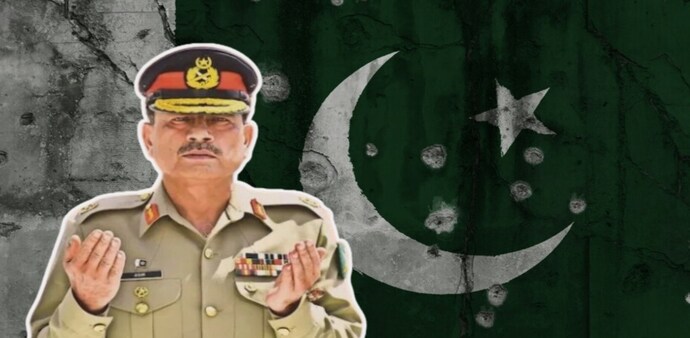
Pakistan Army chief Field Marshal Asim Munir on Sunday described last year's military conflict with India as a "battle between two ideologies". Munir revived his rhetoric around the two-nation theory that he had pushed in a speech days before the Pahalgam terror attack.
Addressing a ceremony at the General Headquarters in Rawalpindi to mark the first anniversary of "Marka-e-Haq" - the name Pakistan has given to the four-day conflict with India in May 2025 - Munir claimed Pakistan's strategy during the confrontation was "superior" to India's.
"Marka-e-Haq was not merely a traditional war fought between two countries or militaries, but in reality, it was a decisive marka (battle) between two ideologies," he said.
The conflict followed the April 2025 Pahalgam terror attack in which 26 people, mostly tourists, were killed. In response, India launched Operation Sindoor on May 7, carrying out airstrikes on nine terror infrastructures in Pakistan and Pakistan-occupied Kashmir. The Indian strikes eliminated at least 100 terrorists.
Pakistan attempted retaliatory strikes after the operation, though most of them were thwarted by the Indian military. The hostilities ended on May 10 following talks between military officials of both countries.
At Sunday's event, Munir alleged that India had "violated the sovereignty and territory” of Pakistan between May 6 and May 10 last year and claimed Pakistan responded, "with full national unity and military force".
Munir further claimed India had sought a ceasefire through the United States and that Pakistan agreed to it "in the interest of peace". India has maintained that the understanding to halt military action was reached directly between the two sides through military channels.
The Pakistani military chief said future wars would increasingly be "multi-domain" conflicts and asserted that Pakistan was preparing through technology, hardware upgrades and training. "Our defence will remain impeccable. We want peace and will maintain it through credible deterrence," he said.
Munir's latest remarks echoed a provocative speech he delivered days before the Pahalgam terror attack at the Overseas Pakistanis Convention in Islamabad, where he invoked the two-nation theory and spoke about differences between Hindus and Muslims.
"You have to narrate Pakistan's story to your children so that they don’t forget it when our forefathers thought we were different from Hindus in every possible aspect of life," he had said.
"Our religion is different, our customs are different, our traditions are different, our thoughts are different, our ambitions are different; that’s where the foundation of the two-nation theory was laid. We are two nations, we are not one nation."
In another statement, Munir said: "The two-nation theory was based on the fundamental belief that Muslims and Hindus are two separate nations, not one. Muslims are distinct from Hindus in all aspects of life – religion, customs, traditions, thinking and aspirations."
India has consistently maintained that its military actions were aimed at countering cross-border terrorism and safeguarding national security. On the first anniversary of Operation Sindoor, India reaffirmed its right to defend itself against Pakistan-backed terrorism and pledged to strengthen the global fight against terror.
(With inputs from PTI)
Pakistan Army chief Field Marshal Asim Munir on Sunday described last year's military conflict with India as a "battle between two ideologies". Munir revived his rhetoric around the two-nation theory that he had pushed in a speech days before the Pahalgam terror attack.
Addressing a ceremony at the General Headquarters in Rawalpindi to mark the first anniversary of "Marka-e-Haq" - the name Pakistan has given to the four-day conflict with India in May 2025 - Munir claimed Pakistan's strategy during the confrontation was "superior" to India's.
"Marka-e-Haq was not merely a traditional war fought between two countries or militaries, but in reality, it was a decisive marka (battle) between two ideologies," he said.
The conflict followed the April 2025 Pahalgam terror attack in which 26 people, mostly tourists, were killed. In response, India launched Operation Sindoor on May 7, carrying out airstrikes on nine terror infrastructures in Pakistan and Pakistan-occupied Kashmir. The Indian strikes eliminated at least 100 terrorists.
Pakistan attempted retaliatory strikes after the operation, though most of them were thwarted by the Indian military. The hostilities ended on May 10 following talks between military officials of both countries.
At Sunday's event, Munir alleged that India had "violated the sovereignty and territory” of Pakistan between May 6 and May 10 last year and claimed Pakistan responded, "with full national unity and military force".
Munir further claimed India had sought a ceasefire through the United States and that Pakistan agreed to it "in the interest of peace". India has maintained that the understanding to halt military action was reached directly between the two sides through military channels.
The Pakistani military chief said future wars would increasingly be "multi-domain" conflicts and asserted that Pakistan was preparing through technology, hardware upgrades and training. "Our defence will remain impeccable. We want peace and will maintain it through credible deterrence," he said.
Munir's latest remarks echoed a provocative speech he delivered days before the Pahalgam terror attack at the Overseas Pakistanis Convention in Islamabad, where he invoked the two-nation theory and spoke about differences between Hindus and Muslims.
"You have to narrate Pakistan's story to your children so that they don’t forget it when our forefathers thought we were different from Hindus in every possible aspect of life," he had said.
"Our religion is different, our customs are different, our traditions are different, our thoughts are different, our ambitions are different; that’s where the foundation of the two-nation theory was laid. We are two nations, we are not one nation."
In another statement, Munir said: "The two-nation theory was based on the fundamental belief that Muslims and Hindus are two separate nations, not one. Muslims are distinct from Hindus in all aspects of life – religion, customs, traditions, thinking and aspirations."
India has consistently maintained that its military actions were aimed at countering cross-border terrorism and safeguarding national security. On the first anniversary of Operation Sindoor, India reaffirmed its right to defend itself against Pakistan-backed terrorism and pledged to strengthen the global fight against terror.
(With inputs from PTI)