
'Bengaluru traffic is a hidden ₹20,000 cr tax': CoinDCX founder explains how bad it is
Gupta's comments come amid a larger conversation on urban congestion, triggered by reports that Wipro founder Azim Premji declined the Karnataka Chief Minister’s request to open the company’s private roads to public traffic.
- Sep 28, 2025,
- Updated Sep 28, 2025 10:38 AM IST
What do ₹20,000 crore in lost productivity, skewed work hours, and startup stress have in common? Bengaluru traffic—and CoinDCX’s Sumit Gupta isn’t mincing words.
In a series of posts on X, Gupta unpacked how Bengaluru’s traffic woes are silently draining productivity and economic potential—calling it a hidden tax on India's innovation hub.
“Before moving to Bangalore, I did my research. That’s why I chose to live just 5–10 minutes from my office,” Gupta wrote. “The productivity loss from traffic is overwhelming.”
Gupta's comments come amid a larger conversation on urban congestion, triggered by reports that Wipro founder Azim Premji declined the Karnataka Chief Minister’s request to open the company’s private roads to public traffic. Instead, Premji offered to fund a comprehensive urban mobility study.
Bengaluru, Gupta noted, contributes $330 billion to India’s GDP—making up 43.6% of Karnataka’s output and 98% of the state’s software exports. Yet, traffic congestion alone costs the city nearly ₹20,000 crore each year—around 5% of its total GDP.
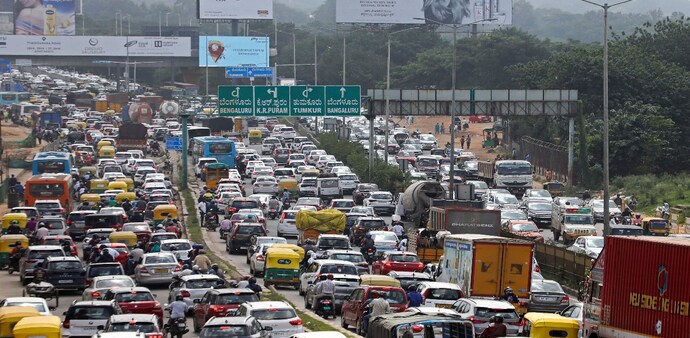
According to the 2024 TomTom Traffic Index, Bengaluru ranks as the world’s third slowest city for traffic, with an average of 34 minutes to cover 10 km. Gupta said economic losses vary sharply by sector: about ₹7,000 crore for IT companies and ₹3,500 crore for SMEs annually.
Despite record infrastructure spending—including ₹40,000 crore for tunnel corridors and ₹8,916 crore for double-decker flyovers in the Karnataka Budget 2025–26—Gupta warns the challenge is long-term and deeply embedded. “India actually needs $2.4 trillion in urban infrastructure by 2040,” he added.
At CoinDCX, employees tweak their work hours just to dodge peak traffic: some arrive before 9:30 am and leave by 6 pm, while others start late and wrap up around 8 pm. “Many even carpool,” Gupta said. “There’s no silver bullet.”
Gupta said a hopeful note: “If we solve Bengaluru’s traffic problem, we’ll see more global entrepreneurs setting up shop here—and that will only boost India’s GDP further. One day, I hope to live 10 km away and still reach office in 10–15 minutes.”
What do ₹20,000 crore in lost productivity, skewed work hours, and startup stress have in common? Bengaluru traffic—and CoinDCX’s Sumit Gupta isn’t mincing words.
In a series of posts on X, Gupta unpacked how Bengaluru’s traffic woes are silently draining productivity and economic potential—calling it a hidden tax on India's innovation hub.
“Before moving to Bangalore, I did my research. That’s why I chose to live just 5–10 minutes from my office,” Gupta wrote. “The productivity loss from traffic is overwhelming.”
Gupta's comments come amid a larger conversation on urban congestion, triggered by reports that Wipro founder Azim Premji declined the Karnataka Chief Minister’s request to open the company’s private roads to public traffic. Instead, Premji offered to fund a comprehensive urban mobility study.
Bengaluru, Gupta noted, contributes $330 billion to India’s GDP—making up 43.6% of Karnataka’s output and 98% of the state’s software exports. Yet, traffic congestion alone costs the city nearly ₹20,000 crore each year—around 5% of its total GDP.
According to the 2024 TomTom Traffic Index, Bengaluru ranks as the world’s third slowest city for traffic, with an average of 34 minutes to cover 10 km. Gupta said economic losses vary sharply by sector: about ₹7,000 crore for IT companies and ₹3,500 crore for SMEs annually.
Despite record infrastructure spending—including ₹40,000 crore for tunnel corridors and ₹8,916 crore for double-decker flyovers in the Karnataka Budget 2025–26—Gupta warns the challenge is long-term and deeply embedded. “India actually needs $2.4 trillion in urban infrastructure by 2040,” he added.
At CoinDCX, employees tweak their work hours just to dodge peak traffic: some arrive before 9:30 am and leave by 6 pm, while others start late and wrap up around 8 pm. “Many even carpool,” Gupta said. “There’s no silver bullet.”
Gupta said a hopeful note: “If we solve Bengaluru’s traffic problem, we’ll see more global entrepreneurs setting up shop here—and that will only boost India’s GDP further. One day, I hope to live 10 km away and still reach office in 10–15 minutes.”