
'Bessent is a chip off the old block': Brahma Chellaney slams US double standards on India, China
Bessent on Monday said that the Trump administration would not impose additional tariffs on China over Russian oil purchases unless European allies imposed their own penalties
- Sep 16, 2025,
- Updated Sep 16, 2025 5:54 PM IST
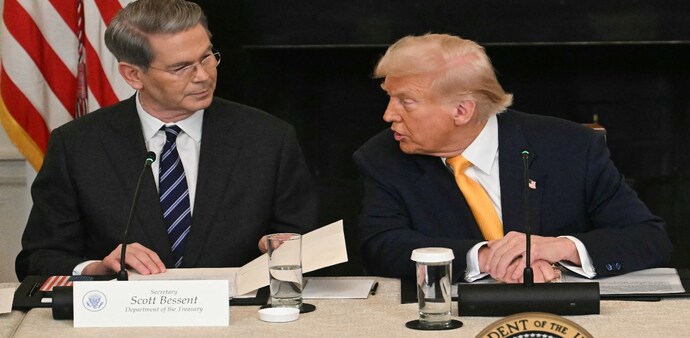
Geostrategist Brahma Chellaney on Tuesday said U.S. Treasury Secretary Scott Bessent was "a chip off the old block," accusing him of letting China off the hook while bullying India with punitive tariffs.
"Bessent is a chip off the old block: By declaring that the U.S. will not impose secondary sanctions on China for its Russian energy imports unless Europe acts first, he is effectively letting Beijing off the hook," Chellaney said. "This stands in stark contrast to Washington’s treatment of India - the first and only victim of Trump's secondary sanctions over Russian energy purchases. Bessent now boasts that the 50% tariffs slapped on India have delivered 'substantial progress' in negotiations."
Bessent told Reuters and Bloomberg in a joint interview on Monday that the Trump administration would not impose additional tariffs on China over Russian oil purchases unless European allies imposed their own penalties. "We expect the Europeans to do their share now, and we are not moving forward without the Europeans," Bessent said.
The Treasury chief said Chinese negotiators in Madrid called oil purchases a "sovereign matter." Bessent added that some European countries were also complicit, either directly importing Russian oil or buying refined petroleum products from India, and insisted European tariffs could bring Moscow's revenues crashing down. "I guarantee you that if Europe put on substantial secondary tariffs on the buyers of Russian oil, the war would be over in 60 or 90 days because it would cut off Moscow's main revenue source," he said.
Chellaney argued Washington was applying different standards for Beijing and New Delhi. In a separate post, he said, "Trump's foreign policy in a nutshell: bark at India, bow to Beijing. After his TikTok deal, he gushed, 'The relationship [with China] remains a very strong one.' No wonder he bullies India while tiptoeing around the world’s biggest buyer of Russian energy. For Trump, respect is a warped currency — reserved only for those who slap him back."
He also called the U.S. tariff strategy on India a form of coercion. "Leverage is the currency of international negotiations, which is why even small states strive to build it. Trump’s 50% tariffs on India are designed not just to tilt negotiations in America’s favor but to bully New Delhi into concessions through economic coercion," Chellaney wrote.
He pointed out the difference in treatment of trade partners, noting that "while U.S. Treasury Secretary Scott Bessent and Trade Representative Jamieson Greer have been negotiating with China in Madrid since yesterday, Washington is sending a relatively junior official to New Delhi for trade talks tomorrow — Brendan Lynch, the Assistant U.S. Trade Representative for South and Central Asia."
New Delhi is preparing for another round of talks with Lynch on September 16. The meeting comes after Trump imposed a 25% tariff on Indian imports in July, later raised to 50%, citing India's imports of Russian crude. Bessent has claimed those tariffs have already produced "substantial progress" in bilateral negotiations.
Geostrategist Brahma Chellaney on Tuesday said U.S. Treasury Secretary Scott Bessent was "a chip off the old block," accusing him of letting China off the hook while bullying India with punitive tariffs.
"Bessent is a chip off the old block: By declaring that the U.S. will not impose secondary sanctions on China for its Russian energy imports unless Europe acts first, he is effectively letting Beijing off the hook," Chellaney said. "This stands in stark contrast to Washington’s treatment of India - the first and only victim of Trump's secondary sanctions over Russian energy purchases. Bessent now boasts that the 50% tariffs slapped on India have delivered 'substantial progress' in negotiations."
Bessent told Reuters and Bloomberg in a joint interview on Monday that the Trump administration would not impose additional tariffs on China over Russian oil purchases unless European allies imposed their own penalties. "We expect the Europeans to do their share now, and we are not moving forward without the Europeans," Bessent said.
The Treasury chief said Chinese negotiators in Madrid called oil purchases a "sovereign matter." Bessent added that some European countries were also complicit, either directly importing Russian oil or buying refined petroleum products from India, and insisted European tariffs could bring Moscow's revenues crashing down. "I guarantee you that if Europe put on substantial secondary tariffs on the buyers of Russian oil, the war would be over in 60 or 90 days because it would cut off Moscow's main revenue source," he said.
Chellaney argued Washington was applying different standards for Beijing and New Delhi. In a separate post, he said, "Trump's foreign policy in a nutshell: bark at India, bow to Beijing. After his TikTok deal, he gushed, 'The relationship [with China] remains a very strong one.' No wonder he bullies India while tiptoeing around the world’s biggest buyer of Russian energy. For Trump, respect is a warped currency — reserved only for those who slap him back."
He also called the U.S. tariff strategy on India a form of coercion. "Leverage is the currency of international negotiations, which is why even small states strive to build it. Trump’s 50% tariffs on India are designed not just to tilt negotiations in America’s favor but to bully New Delhi into concessions through economic coercion," Chellaney wrote.
He pointed out the difference in treatment of trade partners, noting that "while U.S. Treasury Secretary Scott Bessent and Trade Representative Jamieson Greer have been negotiating with China in Madrid since yesterday, Washington is sending a relatively junior official to New Delhi for trade talks tomorrow — Brendan Lynch, the Assistant U.S. Trade Representative for South and Central Asia."
New Delhi is preparing for another round of talks with Lynch on September 16. The meeting comes after Trump imposed a 25% tariff on Indian imports in July, later raised to 50%, citing India's imports of Russian crude. Bessent has claimed those tariffs have already produced "substantial progress" in bilateral negotiations.