
Big rail breakthrough! India’s first hydrogen train successfully completes 120 kmph trial
The successful run is regarded as a crucial step before the train is put into passenger service once the last operational and regulatory procedures are finished
- Jun 26, 2026,
- Updated Jun 26, 2026 2:17 PM IST
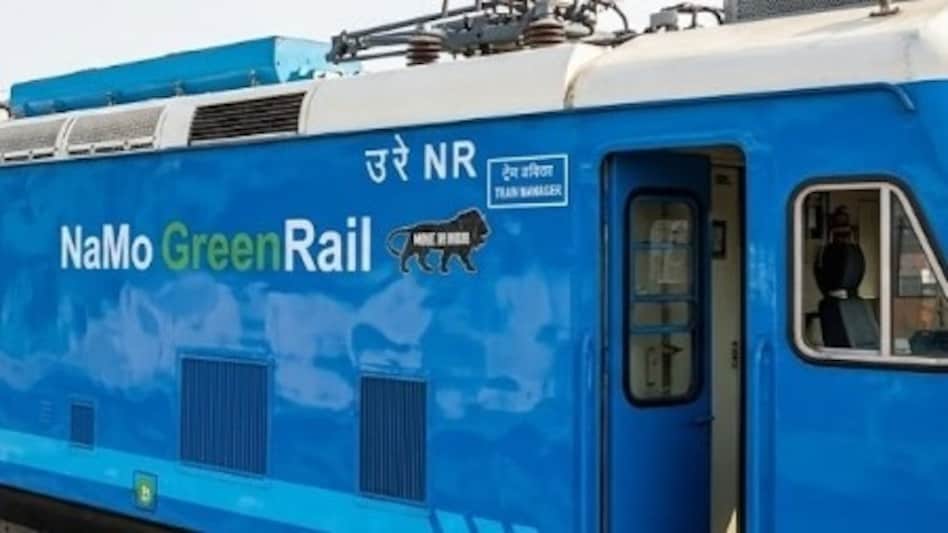
India’s first hydrogen-powered train successfully completed its final high-speed trial from Haryana's Jind on Friday, 26 June 2026, a key step in Indian Railways’ plan to introduce hydrogen-powered passenger services and cut carbon emissions. The train was tested at a top speed of 120 kmph on the Jind-Sonipat section of Northern Railway.
READ THIS: Inside the world's most luxurious trains: From the Orient Express to India's Maharajas' Express
The successful run is regarded as a crucial step before the train is put into passenger service once the last operational and regulatory procedures are finished. Images from the trial were made public, showing the train departing Jind while railway officials kept an eye on its performance during the last stage of testing. A video of the final 120 kmph speed trial's departure from Jind was also released by PTI.
For India's first hydrogen train project, the Jind-Sonipat section was selected as the pilot route since it was thought to be appropriate for testing the new technology under actual operating conditions. Indian Railways has established specialised hydrogen production, storage, and refueling facilities at Jind to support the project and guarantee the train's safe operation and maintenance.
The train has been fitted with several safety systems, including hydrogen leak detectors, flame detection equipment and continuous monitoring technology. These systems are meant to identify and respond quickly to any potential issues during operations.
ALSO READ: Pune–Nashik direct semi-high-speed rail line scrapped: Vaishnaw announces new routes
The hydrogen train has been developed as part of Indian Railways’ wider strategy to reduce dependence on fossil fuels and promote cleaner transport. Hydrogen fuel-cell technology produces electricity through a chemical reaction between hydrogen and oxygen, with water vapours as the direct emission. Indian Railways sees this as a cleaner alternative to conventional diesel-powered trains, with the added benefit of reducing noise and air pollution.
With the completion of the 120 kmph trial, India has moved closer to introducing hydrogen-powered rail services for passengers. The development also places the country among a select group of nations that have developed or tested hydrogen-powered trains, in line with the wider shift towards greener and more sustainable railway transport.
India’s first hydrogen-powered train successfully completed its final high-speed trial from Haryana's Jind on Friday, 26 June 2026, a key step in Indian Railways’ plan to introduce hydrogen-powered passenger services and cut carbon emissions. The train was tested at a top speed of 120 kmph on the Jind-Sonipat section of Northern Railway.
READ THIS: Inside the world's most luxurious trains: From the Orient Express to India's Maharajas' Express
The successful run is regarded as a crucial step before the train is put into passenger service once the last operational and regulatory procedures are finished. Images from the trial were made public, showing the train departing Jind while railway officials kept an eye on its performance during the last stage of testing. A video of the final 120 kmph speed trial's departure from Jind was also released by PTI.
For India's first hydrogen train project, the Jind-Sonipat section was selected as the pilot route since it was thought to be appropriate for testing the new technology under actual operating conditions. Indian Railways has established specialised hydrogen production, storage, and refueling facilities at Jind to support the project and guarantee the train's safe operation and maintenance.
The train has been fitted with several safety systems, including hydrogen leak detectors, flame detection equipment and continuous monitoring technology. These systems are meant to identify and respond quickly to any potential issues during operations.
ALSO READ: Pune–Nashik direct semi-high-speed rail line scrapped: Vaishnaw announces new routes
The hydrogen train has been developed as part of Indian Railways’ wider strategy to reduce dependence on fossil fuels and promote cleaner transport. Hydrogen fuel-cell technology produces electricity through a chemical reaction between hydrogen and oxygen, with water vapours as the direct emission. Indian Railways sees this as a cleaner alternative to conventional diesel-powered trains, with the added benefit of reducing noise and air pollution.
With the completion of the 120 kmph trial, India has moved closer to introducing hydrogen-powered rail services for passengers. The development also places the country among a select group of nations that have developed or tested hydrogen-powered trains, in line with the wider shift towards greener and more sustainable railway transport.