
BITS Pilani duo land Army deal with homegrown kamikaze drones built in college lab
Khatri, a mechanical engineering student from Ajmer, and Choudhury, an electrical and electronics engineering student from Kolkata, launched the venture in April 2025
- Jul 23, 2025,
- Updated Jul 23, 2025 12:29 PM IST
A college dorm room in BITS Pilani has given rise to one of India's most promising defence-tech ventures. Apollyon Dynamics, founded by third-year students Jayant Khatri and Sourya Choudhury, has already secured Indian Army orders for its indigenous tactical drones, barely months after it was conceived.
Khatri, a mechanical engineering student from Ajmer, and Choudhury, an electrical and electronics engineering student from Kolkata, launched the venture in April 2025. Inspired by the growing role of drones in modern warfare, particularly in the Russia-Ukraine conflict, they were determined to reduce India’s dependence on imported UAVs.
By mid-May, they had incorporated Apollyon Dynamics and begun prototyping kamikaze and surveillance drones designed for India's unique tactical needs.
Mentorship and campus support fuel rapid growth
The startup received critical early support from Dr. Sanket Goel, Dean of Research and Innovation at BITS Pilani's Hyderabad campus. With his mentorship and backing from the PIEDS incubator in Pilani, the duo quickly expanded operations from their hostel room to a dedicated on-campus lab. The team soon grew to 10 members, spanning design, software, and field-testing roles.
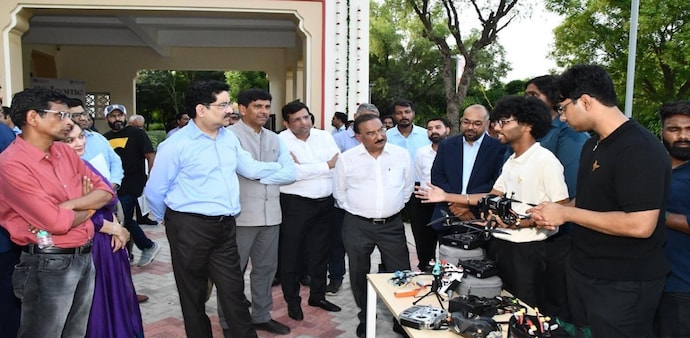
The drones are modular, rugged, and optimised for military operations such as precision strikes, night surveillance, and payload delivery.
Live demo wins Army confidence
In late May, Apollyon Dynamics presented a live demo to Indian Army officials in Chandigarh. The performance secured orders from key Army divisions stationed in Jammu, Panagarh, and Arunachal Pradesh.
The startup now aims to become a leading defence systems manufacturer within five years and contribute significantly to India's strategic self-reliance goals.
A college dorm room in BITS Pilani has given rise to one of India's most promising defence-tech ventures. Apollyon Dynamics, founded by third-year students Jayant Khatri and Sourya Choudhury, has already secured Indian Army orders for its indigenous tactical drones, barely months after it was conceived.
Khatri, a mechanical engineering student from Ajmer, and Choudhury, an electrical and electronics engineering student from Kolkata, launched the venture in April 2025. Inspired by the growing role of drones in modern warfare, particularly in the Russia-Ukraine conflict, they were determined to reduce India’s dependence on imported UAVs.
By mid-May, they had incorporated Apollyon Dynamics and begun prototyping kamikaze and surveillance drones designed for India's unique tactical needs.
Mentorship and campus support fuel rapid growth
The startup received critical early support from Dr. Sanket Goel, Dean of Research and Innovation at BITS Pilani's Hyderabad campus. With his mentorship and backing from the PIEDS incubator in Pilani, the duo quickly expanded operations from their hostel room to a dedicated on-campus lab. The team soon grew to 10 members, spanning design, software, and field-testing roles.
The drones are modular, rugged, and optimised for military operations such as precision strikes, night surveillance, and payload delivery.
Live demo wins Army confidence
In late May, Apollyon Dynamics presented a live demo to Indian Army officials in Chandigarh. The performance secured orders from key Army divisions stationed in Jammu, Panagarh, and Arunachal Pradesh.
The startup now aims to become a leading defence systems manufacturer within five years and contribute significantly to India's strategic self-reliance goals.