
BRICS Summit 2026: India to encourage use of central bank digital currencies for cross-border payments
BRICS Summit 2026: New Delhi remains cautious about a unified BRICS payments system that could be seen as a rival to SWIFT and cast the group as explicitly anti-dollar or anti-Western.
- Sep 10, 2026,
- Updated Sep 10, 2026 3:28 PM IST
BRICS Summit in Delhi: India will encourage BRICS nations to expand the use of central bank-backed digital currencies for cross-border payments. However, it will not support a unified payments network that could be seen as a challenge to the US dollar, as per a report.
According to a report in Bloomberg that cited sources familiar with the matter, as the chair of BRICS this year, Prime Minister Narendra Modi is supporting using central bank digital currencies to settle bilateral trade among member countries. However, an agreement on a single bloc-wide payments settlement system at the upcoming leaders’ summit in New Delhi is unlikely, the sources added.
MUST READ | BRICS Leaders' Summit 2026: UPI for cross-border payments, trade likely to top agenda
BRICS, which includes Brazil, China, Egypt, Ethiopia, India, Indonesia, Iran, Russia, Saudi Arabia, South Africa and the United Arab Emirates, has been working to link members’ payment systems to reduce reliance on the global SWIFT network, dominated by Western nations. This move gained attention after several Russian banks were cut off from SWIFT following Russia’s invasion of Ukraine in 2022.
Nevertheless, New Delhi remains cautious about a unified BRICS payments system that could be seen as a rival to SWIFT and cast the group as explicitly anti-dollar or anti-Western, as per the report. Instead, India proposes linking central bank digital currencies of BRICS countries for cross-border transactions to reduce reliance on banks and lower costs.
India also supports using local currencies to settle trade instead of a third currency like the dollar.
Ministry of External Affairs spokesman Randhir Jaiswal said it was premature to conclude what was discussed at the Finance Ministers-Central Bank Governors meetings and urged reporters to await the joint statement. He described India’s approach to BRICS cooperation, including finance, as development focused, emphasising measures supporting trade and economic ties.
The use of local currencies within BRICS has increased, especially after Western sanctions on Russia. About 96% of India’s trade with Russia now takes place through established rupee-ruble mechanisms, according to Sberbank in India. Almost all trade between Russia and China is settled in yuan and rubles, Russian news agency Interfax reported.
MUST READ | BRICS vs G7: Who has the edge in population, economy, energy & military power in 2026?
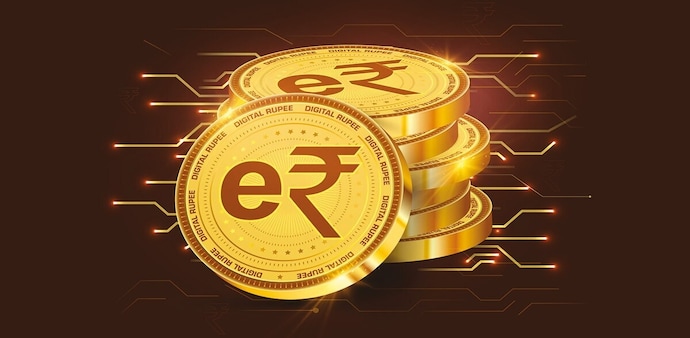
India is piloting a digital rupee, while China and Russia are also experimenting with their own central bank digital currencies. BRICS leaders may also discuss connecting instant mobile payment systems used for small-value retail transactions.
BRICS Summit in Delhi: India will encourage BRICS nations to expand the use of central bank-backed digital currencies for cross-border payments. However, it will not support a unified payments network that could be seen as a challenge to the US dollar, as per a report.
According to a report in Bloomberg that cited sources familiar with the matter, as the chair of BRICS this year, Prime Minister Narendra Modi is supporting using central bank digital currencies to settle bilateral trade among member countries. However, an agreement on a single bloc-wide payments settlement system at the upcoming leaders’ summit in New Delhi is unlikely, the sources added.
MUST READ | BRICS Leaders' Summit 2026: UPI for cross-border payments, trade likely to top agenda
BRICS, which includes Brazil, China, Egypt, Ethiopia, India, Indonesia, Iran, Russia, Saudi Arabia, South Africa and the United Arab Emirates, has been working to link members’ payment systems to reduce reliance on the global SWIFT network, dominated by Western nations. This move gained attention after several Russian banks were cut off from SWIFT following Russia’s invasion of Ukraine in 2022.
Nevertheless, New Delhi remains cautious about a unified BRICS payments system that could be seen as a rival to SWIFT and cast the group as explicitly anti-dollar or anti-Western, as per the report. Instead, India proposes linking central bank digital currencies of BRICS countries for cross-border transactions to reduce reliance on banks and lower costs.
India also supports using local currencies to settle trade instead of a third currency like the dollar.
Ministry of External Affairs spokesman Randhir Jaiswal said it was premature to conclude what was discussed at the Finance Ministers-Central Bank Governors meetings and urged reporters to await the joint statement. He described India’s approach to BRICS cooperation, including finance, as development focused, emphasising measures supporting trade and economic ties.
The use of local currencies within BRICS has increased, especially after Western sanctions on Russia. About 96% of India’s trade with Russia now takes place through established rupee-ruble mechanisms, according to Sberbank in India. Almost all trade between Russia and China is settled in yuan and rubles, Russian news agency Interfax reported.
MUST READ | BRICS vs G7: Who has the edge in population, economy, energy & military power in 2026?
India is piloting a digital rupee, while China and Russia are also experimenting with their own central bank digital currencies. BRICS leaders may also discuss connecting instant mobile payment systems used for small-value retail transactions.