
BT EXPLAINED: PNG vs LPG — Key differences, which is better for home cooking, cost, safety and more
As gas pipeline networks expand across cities, households are gradually shifting to PNG because of convenience, safety and cost benefits
- Mar 16, 2026,
- Updated Mar 16, 2026 3:33 PM IST
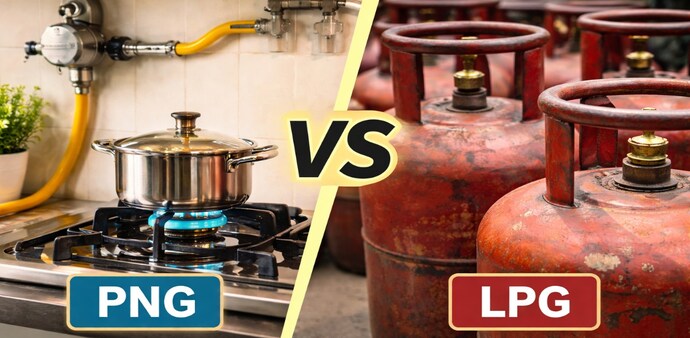
India's kitchens have long relied on LPG cylinders for cooking, but piped natural gas (PNG) is increasingly becoming a preferred alternative in many urban areas. As gas pipeline networks expand across cities, households are gradually shifting to PNG because of convenience, safety and cost benefits.
Understanding the difference between LPG and PNG helps explain why the transition is happening and whether piped gas could eventually replace cylinders in more Indian homes.
What is the difference between PNG and LPG?
LPG, or liquefied petroleum gas, is a mixture of propane and butane stored in pressurised cylinders. These cylinders are delivered to homes and must be replaced once the gas runs out.
PNG, or piped natural gas, is mainly composed of methane and is supplied through underground pipelines directly to homes, similar to water supply lines. Since it is connected through a continuous pipeline network, households do not need to worry about booking or replacing cylinders.
Another key difference lies in storage. LPG is stored as a liquid under high pressure in cylinders, whereas PNG is supplied in gaseous form through pipelines at relatively lower pressure.
Which is better for home cooking?
Both LPG and PNG are widely used for cooking and are capable of producing a steady flame suitable for household kitchens. However, PNG is often considered more convenient because it provides an uninterrupted supply of gas.
With LPG, households must monitor cylinder levels and book refills in advance. Delays in delivery can disrupt cooking, especially during periods of high demand. PNG eliminates this issue because the supply is continuous through pipelines.
Another advantage of PNG is the billing system. Consumers are typically charged based on actual gas consumption, similar to electricity or water bills.
Which is cheaper, PNG or LPG in India?
The cost comparison between PNG and LPG can vary depending on the city and local pricing policies. In many cities, PNG tends to be slightly cheaper than LPG when calculated on a per-unit energy basis.
Since PNG users pay only for the gas consumed, it can also help reduce wastage. LPG cylinders, on the other hand, come in fixed quantities, and consumers must purchase the entire cylinder regardless of how much gas they actually need.
Additionally, PNG eliminates transportation and delivery costs associated with cylinder distribution.
Is PNG safer than LPG?
Safety is another reason many households are shifting to PNG. Natural gas is lighter than air, meaning that in case of a leak it disperses quickly into the atmosphere. LPG, being heavier than air, can accumulate near the ground and increase the risk of fire if not detected early.
PNG systems also typically include safety features such as pressure regulators and automatic shut-off mechanisms that help reduce risks.
Why cities in India are switching to PNG gas
The expansion of city gas distribution networks is a major reason for the growing adoption of PNG in urban areas. The government has been encouraging companies to build pipeline infrastructure under the city gas distribution programme, which aims to supply piped gas to households, industries and vehicles.
As pipelines expand into more cities, the convenience of not having to handle heavy cylinders and the promise of uninterrupted supply are encouraging households to adopt PNG connections.
However, LPG remains essential in many rural and semi-urban areas where pipeline infrastructure has not yet reached. For now, both systems are likely to coexist as India continues to expand its gas distribution network.
India's kitchens have long relied on LPG cylinders for cooking, but piped natural gas (PNG) is increasingly becoming a preferred alternative in many urban areas. As gas pipeline networks expand across cities, households are gradually shifting to PNG because of convenience, safety and cost benefits.
Understanding the difference between LPG and PNG helps explain why the transition is happening and whether piped gas could eventually replace cylinders in more Indian homes.
What is the difference between PNG and LPG?
LPG, or liquefied petroleum gas, is a mixture of propane and butane stored in pressurised cylinders. These cylinders are delivered to homes and must be replaced once the gas runs out.
PNG, or piped natural gas, is mainly composed of methane and is supplied through underground pipelines directly to homes, similar to water supply lines. Since it is connected through a continuous pipeline network, households do not need to worry about booking or replacing cylinders.
Another key difference lies in storage. LPG is stored as a liquid under high pressure in cylinders, whereas PNG is supplied in gaseous form through pipelines at relatively lower pressure.
Which is better for home cooking?
Both LPG and PNG are widely used for cooking and are capable of producing a steady flame suitable for household kitchens. However, PNG is often considered more convenient because it provides an uninterrupted supply of gas.
With LPG, households must monitor cylinder levels and book refills in advance. Delays in delivery can disrupt cooking, especially during periods of high demand. PNG eliminates this issue because the supply is continuous through pipelines.
Another advantage of PNG is the billing system. Consumers are typically charged based on actual gas consumption, similar to electricity or water bills.
Which is cheaper, PNG or LPG in India?
The cost comparison between PNG and LPG can vary depending on the city and local pricing policies. In many cities, PNG tends to be slightly cheaper than LPG when calculated on a per-unit energy basis.
Since PNG users pay only for the gas consumed, it can also help reduce wastage. LPG cylinders, on the other hand, come in fixed quantities, and consumers must purchase the entire cylinder regardless of how much gas they actually need.
Additionally, PNG eliminates transportation and delivery costs associated with cylinder distribution.
Is PNG safer than LPG?
Safety is another reason many households are shifting to PNG. Natural gas is lighter than air, meaning that in case of a leak it disperses quickly into the atmosphere. LPG, being heavier than air, can accumulate near the ground and increase the risk of fire if not detected early.
PNG systems also typically include safety features such as pressure regulators and automatic shut-off mechanisms that help reduce risks.
Why cities in India are switching to PNG gas
The expansion of city gas distribution networks is a major reason for the growing adoption of PNG in urban areas. The government has been encouraging companies to build pipeline infrastructure under the city gas distribution programme, which aims to supply piped gas to households, industries and vehicles.
As pipelines expand into more cities, the convenience of not having to handle heavy cylinders and the promise of uninterrupted supply are encouraging households to adopt PNG connections.
However, LPG remains essential in many rural and semi-urban areas where pipeline infrastructure has not yet reached. For now, both systems are likely to coexist as India continues to expand its gas distribution network.