
BT EXPLAINER: Planning to buy an EV in Delhi? Bumper savings, tax waivers under new policy explained
These incentives depend on how early you bought the electric vehicle as part of a massive push for infrastructure, including a single-window clearance for home and community charging stations.
- Apr 11, 2026,
- Updated Apr 11, 2026 10:29 AM IST
The Delhi government on Saturday unveiled the Draft Delhi Electric Vehicle (EV) Policy 2026-2030. Aimed at curbing vehicular emissions, the policy introduces aggressive incentives to make the switch to electric vehicles more affordable for you.
Vehicular emissions account for around 23% of Delhi's winter air pollution. These incentives depend on how early you bought the electric vehicle as part of a massive push for infrastructure, including a single-window clearance for home and community charging stations.
The public can give their feedback on the draft policy until May 1, 2026, via evpolicy2026@gmail.com.
Massive savings unlocked
The government is offering financial incentives for various electric vehicle segments, including electric two-wheelers and electric autos till March 31, 2030.
- Electric Two-Wheelers: In the first year, you can get ₹10,000 per kWh, capped at ₹30,000. By the third year, this drops to ₹3,300 per kWh (max ₹10,000). The vehicle's price must not exceed ₹2.25 lakh to qualify.
- Electric Autos (L5M): Purchase incentives start at ₹50,000 in Year 1, drop to ₹40,000 in Year 2 and ₹30,000 in Year 3.
- Electric four-wheeler goods vehicles (N1): Purchase incentives begin at ₹1,00,000 in Year 1, go down to ₹75,000 in Year 2 and ₹50,000 in Year 3.
- Road Tax & Registration: Enjoy a 100% exemption on road tax and registration fees for most EVs. For Strong Hybrids (under ₹30 lakh), you get a 50% exemption.
- Price Cap: Electric cars priced above ₹30 lakh (ex-showroom) will not receive tax or registration exemptions.
Tax waiver
Under the Draft Delhi Electric Vehicle (EV) Policy 2026-2030, most EVs get a 100 per cent waiver on road tax and registration fees through March 2030.
Cash for Your Old Clunker (Scrapping Incentives)
If you scrap an old Delhi-registered BS-IV or below vehicle and buy a new EV within six months, you get an extra "Scrapping Incentive". The incentive will be provided on the purchase of a new EV if the purchase is made within 6 months of the issuance of the certificate of deposit (CoD) from an authorised scrapping facility.
- Cars: ₹1,00,000 (for the first 1 lakh applicants; car price must be under ₹30 lakh)
- Two-Wheelers: ₹10,000
- Three-Wheelers & N1 Trucks: ₹25,000 and ₹50,000
Scrapping incentive shall be disbursed via direct benefit transit to eligible individuals.
Key deadlines
The city is moving toward an all-electric future with strict registration cut-offs.
- Three-Wheelers: From January 1, 2027, only electric models can be registered.
- Two-Wheelers: From April 1, 2028, all new registrations must be electric.
- Aggregators: Delivery and ride-sharing services are already barred from adding new petrol/diesel vehicles to their fleets.
EV charging made easier
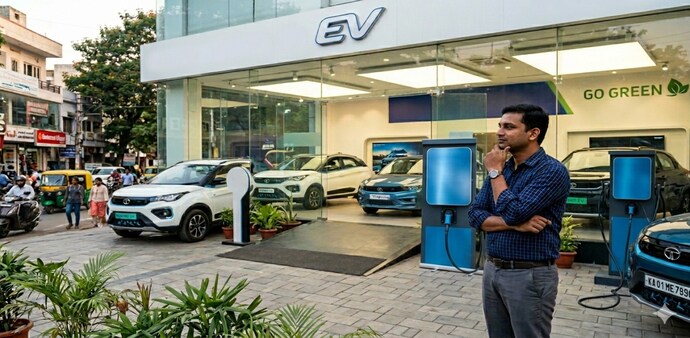
The policy mandates that every EV dealer in Delhi must host at least one public charging station with multiple points. Additionally, a "Single Window Clearance" will be created to help you install charging points at home or in your community quickly.
What changes for corporates, schools?
As per the draft policy, schools must ensure that 30 per cent of their fleet is electric by 2030. "The mandate shall apply to the total school bus fleet, whether owned, leased or hired," the draft policy read.
Fleet aggregators and delivery service providers must stop including petrol/diesel two-wheelers and small commercial vans immediately. The only exemption here is for BS-6 emission standard 2-wheelers up to December 31, 2026.
Government vehicles
As per the Delhi government's draft policy, all new intra-state buses to be inducted by the Delhi Transport Corporation and the Transport Department, GNCTD, on its own, from the date of notification of this policy, shall be electric.
If other cleaner fuel buses are introduced during the period of this policy, such as hydrogen-fuelled buses, the same may be inducted as per the decision of the Transport Department.
Besides this, all new N1 trucks purchased/leased/hired by departments/autonomous bodies/corporations/boards and similar institutions under GNCTD, including Municipal Corporation of Delhi, New Delhi Municipal Council and Delhi Cantonment Board, shall be only electric.
The Delhi government on Saturday unveiled the Draft Delhi Electric Vehicle (EV) Policy 2026-2030. Aimed at curbing vehicular emissions, the policy introduces aggressive incentives to make the switch to electric vehicles more affordable for you.
Vehicular emissions account for around 23% of Delhi's winter air pollution. These incentives depend on how early you bought the electric vehicle as part of a massive push for infrastructure, including a single-window clearance for home and community charging stations.
The public can give their feedback on the draft policy until May 1, 2026, via evpolicy2026@gmail.com.
Massive savings unlocked
The government is offering financial incentives for various electric vehicle segments, including electric two-wheelers and electric autos till March 31, 2030.
- Electric Two-Wheelers: In the first year, you can get ₹10,000 per kWh, capped at ₹30,000. By the third year, this drops to ₹3,300 per kWh (max ₹10,000). The vehicle's price must not exceed ₹2.25 lakh to qualify.
- Electric Autos (L5M): Purchase incentives start at ₹50,000 in Year 1, drop to ₹40,000 in Year 2 and ₹30,000 in Year 3.
- Electric four-wheeler goods vehicles (N1): Purchase incentives begin at ₹1,00,000 in Year 1, go down to ₹75,000 in Year 2 and ₹50,000 in Year 3.
- Road Tax & Registration: Enjoy a 100% exemption on road tax and registration fees for most EVs. For Strong Hybrids (under ₹30 lakh), you get a 50% exemption.
- Price Cap: Electric cars priced above ₹30 lakh (ex-showroom) will not receive tax or registration exemptions.
Tax waiver
Under the Draft Delhi Electric Vehicle (EV) Policy 2026-2030, most EVs get a 100 per cent waiver on road tax and registration fees through March 2030.
Cash for Your Old Clunker (Scrapping Incentives)
If you scrap an old Delhi-registered BS-IV or below vehicle and buy a new EV within six months, you get an extra "Scrapping Incentive". The incentive will be provided on the purchase of a new EV if the purchase is made within 6 months of the issuance of the certificate of deposit (CoD) from an authorised scrapping facility.
- Cars: ₹1,00,000 (for the first 1 lakh applicants; car price must be under ₹30 lakh)
- Two-Wheelers: ₹10,000
- Three-Wheelers & N1 Trucks: ₹25,000 and ₹50,000
Scrapping incentive shall be disbursed via direct benefit transit to eligible individuals.
Key deadlines
The city is moving toward an all-electric future with strict registration cut-offs.
- Three-Wheelers: From January 1, 2027, only electric models can be registered.
- Two-Wheelers: From April 1, 2028, all new registrations must be electric.
- Aggregators: Delivery and ride-sharing services are already barred from adding new petrol/diesel vehicles to their fleets.
EV charging made easier
The policy mandates that every EV dealer in Delhi must host at least one public charging station with multiple points. Additionally, a "Single Window Clearance" will be created to help you install charging points at home or in your community quickly.
What changes for corporates, schools?
As per the draft policy, schools must ensure that 30 per cent of their fleet is electric by 2030. "The mandate shall apply to the total school bus fleet, whether owned, leased or hired," the draft policy read.
Fleet aggregators and delivery service providers must stop including petrol/diesel two-wheelers and small commercial vans immediately. The only exemption here is for BS-6 emission standard 2-wheelers up to December 31, 2026.
Government vehicles
As per the Delhi government's draft policy, all new intra-state buses to be inducted by the Delhi Transport Corporation and the Transport Department, GNCTD, on its own, from the date of notification of this policy, shall be electric.
If other cleaner fuel buses are introduced during the period of this policy, such as hydrogen-fuelled buses, the same may be inducted as per the decision of the Transport Department.
Besides this, all new N1 trucks purchased/leased/hired by departments/autonomous bodies/corporations/boards and similar institutions under GNCTD, including Municipal Corporation of Delhi, New Delhi Municipal Council and Delhi Cantonment Board, shall be only electric.