
Can there be a Shinde-style coup in Bihar? Why arithmetic of Nitish Kumar trounces BJP’s ambition
Nitish may be the only post-Independence leader to govern a major state for two decades without ever winning a majority on his own. That reflects both his personal credibility and his uncanny ability to force larger allies — BJP included — to play second fiddle.
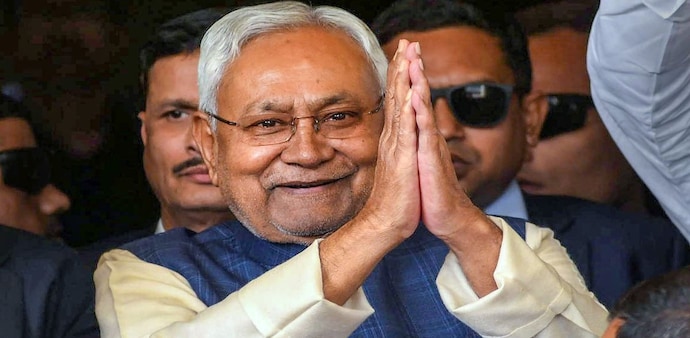
- Nov 14, 2025,
- Updated Nov 14, 2025 2:47 PM IST
Ever since elections to the 243-member Bihar Assembly were announced on October 6, political circles in New Delhi have buzzed with one persistent question: What is the BJP really planning to do with Nitish Kumar?
The 74-year-old chief minister — whose political longevity, reinventions and coalitional manoeuvres are now the stuff of Indian political folklore — found himself at the centre of speculation after Union Home Minister Amit Shah’s latest remarks. Shah reiterated the NDA was fighting Bihar under Nitish’s leadership, praising him as a “committed socialist” shaped by the JP movement and an early opponent of the Emergency.
But it was Shah’s calibrated response to a follow-up question — Will Nitish Kumar continue as CM if the NDA wins? — that triggered the political storm. Shah said elected MLAs would choose their respective leaders and then decide on the next chief minister.
The opposition instantly latched on to the formulation, arguing that Shah’s words hinted at a post-poll BJP plan to sideline Nitish—perhaps even stage a Maharashtra-style manoeuvre that saw Eknath Shinde replace Uddhav Thackeray.
Why Bihar is not Maharashtra
For all the noise, BJP strategists insist the “Shinde model” simply does not apply in Bihar. The comparison, they argue, is misplaced and far-fetched. Nitish, they maintain, remains indispensable to state politics — even if JD(U)’s seat share shrinks.
The reasons are structural, historical and deeply embedded in Bihar’s social fabric:
1. Nitish’s non-Yadav OBC base remains a decisive bloc: Over two decades, Nitish has nurtured and consolidated a non-Yadav OBC vote bank — the only durable counterweight to RJD chief Lalu Prasad’s enduring appeal among Yadavs and Muslims. This block alone often determines which alliance forms the government.
2. Bihar is caste-first, not communal-first: Unlike neighbouring Uttar Pradesh — where communal polarisation has proved an electoral weapon — Bihar votes on caste arithmetic. “One doesn’t cast a vote in Bihar; one votes their caste,” as political observers often quip. Nitish’s successful push for a caste census further cemented his leadership credentials among OBCs and EBCs.
3. The alliance collapses without JD(U): For 20 years, Bihar’s governments — whether NDA or Mahagathbandhan — have required Nitish’s JD(U) to stay afloat. Remove JD(U), and the coalition architecture collapses “like a pack of cards”. The BJP learnt that lesson the hard way in 2015, when its upper-caste heavy leadership failed to beat the Lalu-Nitish combined onslaught despite the Modi wave.
4. Nitish’s unique political positioning: Nitish may be the only post-Independence leader to govern a major state for two decades without ever winning a majority on his own. That reflects both his personal credibility and his uncanny ability to force larger allies — BJP included — to play second fiddle. He has also managed the rare feat of retaining “secular credentials” despite repeatedly sharing power with the BJP.
5. 2024 setbacks have forced BJP into coalition realism: After its electoral reverses in the 2024 Lok Sabha polls, the BJP has softened its hardline approach to allies. A more flexible “coalition dharma” has emerged — one in which every partner must be accommodated. Bihar, where BJP lacks a dominant caste footprint, is the last place to risk alienating an ally with a solid double-digit vote share.
Can BJP be tempted to do a Shinde in Bihar
There may come a moment — particularly if Nitish’s health concerns intensify, as flagged by Prashant Kishor — when the BJP is tempted to strike. Kishor has even demanded a medical bulletin, alleging “cognitive decline” in the ageing CM.
But right now, BJP’s room for manoeuvre is far more constrained than in Maharashtra:
- Bihar’s caste matrix is less favourable to the BJP than Maharashtra’s Maratha-dominated landscape.
- JD(U)’s vote share, even if diminished, remains crucial for victory margins.
- A premature coup risks pushing OBC and EBC voters back toward the RJD.
- With the next national election still years away, BJP cannot risk destabilising a state where its standalone strength is untested and historically inadequate.
BJP’s ambition vs Bihar’s arithmetic
In Maharashtra, the BJP could afford a Shinde because it had the numbers, the organisational muscle, and a political environment conducive to rebellion. Bihar, by contrast, is a state where arithmetic is destiny, caste-coalition building is the only path to power, and Nitish Kumar — despite his political U-turns, diminished aura and advancing age — remains the pivot around which governments form.
Yes, the BJP may dream of replacing Nitish with a more pliant, in-house leader. Yes, it may have laid the groundwork within JD(U). Yes, a “Shinde moment” might come one day.
But today, Nitish Kumar is not the BJP’s choice. He is its compulsion — its majboori. And that alone answers the question: For now, the BJP cannot afford to do a Shinde in Bihar.
Ever since elections to the 243-member Bihar Assembly were announced on October 6, political circles in New Delhi have buzzed with one persistent question: What is the BJP really planning to do with Nitish Kumar?
The 74-year-old chief minister — whose political longevity, reinventions and coalitional manoeuvres are now the stuff of Indian political folklore — found himself at the centre of speculation after Union Home Minister Amit Shah’s latest remarks. Shah reiterated the NDA was fighting Bihar under Nitish’s leadership, praising him as a “committed socialist” shaped by the JP movement and an early opponent of the Emergency.
But it was Shah’s calibrated response to a follow-up question — Will Nitish Kumar continue as CM if the NDA wins? — that triggered the political storm. Shah said elected MLAs would choose their respective leaders and then decide on the next chief minister.
The opposition instantly latched on to the formulation, arguing that Shah’s words hinted at a post-poll BJP plan to sideline Nitish—perhaps even stage a Maharashtra-style manoeuvre that saw Eknath Shinde replace Uddhav Thackeray.
Why Bihar is not Maharashtra
For all the noise, BJP strategists insist the “Shinde model” simply does not apply in Bihar. The comparison, they argue, is misplaced and far-fetched. Nitish, they maintain, remains indispensable to state politics — even if JD(U)’s seat share shrinks.
The reasons are structural, historical and deeply embedded in Bihar’s social fabric:
1. Nitish’s non-Yadav OBC base remains a decisive bloc: Over two decades, Nitish has nurtured and consolidated a non-Yadav OBC vote bank — the only durable counterweight to RJD chief Lalu Prasad’s enduring appeal among Yadavs and Muslims. This block alone often determines which alliance forms the government.
2. Bihar is caste-first, not communal-first: Unlike neighbouring Uttar Pradesh — where communal polarisation has proved an electoral weapon — Bihar votes on caste arithmetic. “One doesn’t cast a vote in Bihar; one votes their caste,” as political observers often quip. Nitish’s successful push for a caste census further cemented his leadership credentials among OBCs and EBCs.
3. The alliance collapses without JD(U): For 20 years, Bihar’s governments — whether NDA or Mahagathbandhan — have required Nitish’s JD(U) to stay afloat. Remove JD(U), and the coalition architecture collapses “like a pack of cards”. The BJP learnt that lesson the hard way in 2015, when its upper-caste heavy leadership failed to beat the Lalu-Nitish combined onslaught despite the Modi wave.
4. Nitish’s unique political positioning: Nitish may be the only post-Independence leader to govern a major state for two decades without ever winning a majority on his own. That reflects both his personal credibility and his uncanny ability to force larger allies — BJP included — to play second fiddle. He has also managed the rare feat of retaining “secular credentials” despite repeatedly sharing power with the BJP.
5. 2024 setbacks have forced BJP into coalition realism: After its electoral reverses in the 2024 Lok Sabha polls, the BJP has softened its hardline approach to allies. A more flexible “coalition dharma” has emerged — one in which every partner must be accommodated. Bihar, where BJP lacks a dominant caste footprint, is the last place to risk alienating an ally with a solid double-digit vote share.
Can BJP be tempted to do a Shinde in Bihar
There may come a moment — particularly if Nitish’s health concerns intensify, as flagged by Prashant Kishor — when the BJP is tempted to strike. Kishor has even demanded a medical bulletin, alleging “cognitive decline” in the ageing CM.
But right now, BJP’s room for manoeuvre is far more constrained than in Maharashtra:
- Bihar’s caste matrix is less favourable to the BJP than Maharashtra’s Maratha-dominated landscape.
- JD(U)’s vote share, even if diminished, remains crucial for victory margins.
- A premature coup risks pushing OBC and EBC voters back toward the RJD.
- With the next national election still years away, BJP cannot risk destabilising a state where its standalone strength is untested and historically inadequate.
BJP’s ambition vs Bihar’s arithmetic
In Maharashtra, the BJP could afford a Shinde because it had the numbers, the organisational muscle, and a political environment conducive to rebellion. Bihar, by contrast, is a state where arithmetic is destiny, caste-coalition building is the only path to power, and Nitish Kumar — despite his political U-turns, diminished aura and advancing age — remains the pivot around which governments form.
Yes, the BJP may dream of replacing Nitish with a more pliant, in-house leader. Yes, it may have laid the groundwork within JD(U). Yes, a “Shinde moment” might come one day.
But today, Nitish Kumar is not the BJP’s choice. He is its compulsion — its majboori. And that alone answers the question: For now, the BJP cannot afford to do a Shinde in Bihar.