
China holds up exports, Delhi wins big: German tunnel-boring machine maker to build plant in India
Chinese customs had blocked at least three Herrenknecht machines bound for India, says Germany's Ambassador to India Philipp Ackermann
- Sep 30, 2025,
- Updated Sep 30, 2025 1:30 PM IST
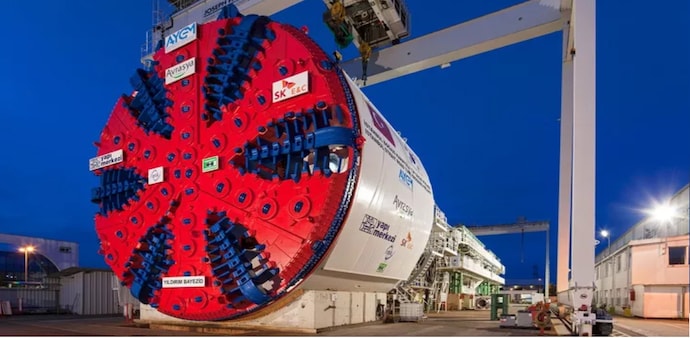
German tunnel-boring machine manufacturer Herrenknecht will establish production facilities in India after export delays from its Chinese factories disrupted infrastructure projects, Germany's Ambassador to India Philipp Ackermann told The Print.
Ackermann said Chinese customs had blocked at least three Herrenknecht machines bound for India. "The tunnel boring machines is an interesting case: So it is clear for political reasons that the Chinese would not really let them out. Now they are out...They are coming in. I think one came a month ago...The last one is coming now," he was quoted as saying.
He noted that the company had decided to shift part of its manufacturing to India to avoid further disruptions. "Of course the company says that it cannot do business when Chinese customs are not allowing this. They are now setting up shop in India, they are trying to produce here. It is a good example on how to diversify, do not put your eggs in one basket only," he said.
Herrenknecht's machines were being built in China for export to India but were caught up in restrictions linked to tensions between New Delhi and Beijing, particularly after the 2020 Galwan clashes. The delays affected major Indian infrastructure projects, prompting New Delhi to raise the matter with both Berlin and Beijing, according to the report.
Ackermann added that ties between India and Germany have strengthened in recent years. He said Chancellor Friedrich Merz, who took office in May, is expected to visit India before the year ends, while Foreign Minister Johann Wadephul had visited New Delhi earlier in September.
Germany is also pursuing deeper defence ties with India, including faster clearances for equipment requests and negotiations on the P75(I) submarine project with ThyssenKrupp Marine Systems and Mazagon Dock Shipbuilders.
Ackermann said Berlin's experience of economic and security dependencies had reinforced its push to diversify supply chains and partnerships. "What Germany learned the hard way in the last four years is that you can't be dependent on one energy provider, on one security provider and one business. I think that is the basis of our rethinking of diversification. Business is China, Security is US and energy is Russia."
German tunnel-boring machine manufacturer Herrenknecht will establish production facilities in India after export delays from its Chinese factories disrupted infrastructure projects, Germany's Ambassador to India Philipp Ackermann told The Print.
Ackermann said Chinese customs had blocked at least three Herrenknecht machines bound for India. "The tunnel boring machines is an interesting case: So it is clear for political reasons that the Chinese would not really let them out. Now they are out...They are coming in. I think one came a month ago...The last one is coming now," he was quoted as saying.
He noted that the company had decided to shift part of its manufacturing to India to avoid further disruptions. "Of course the company says that it cannot do business when Chinese customs are not allowing this. They are now setting up shop in India, they are trying to produce here. It is a good example on how to diversify, do not put your eggs in one basket only," he said.
Herrenknecht's machines were being built in China for export to India but were caught up in restrictions linked to tensions between New Delhi and Beijing, particularly after the 2020 Galwan clashes. The delays affected major Indian infrastructure projects, prompting New Delhi to raise the matter with both Berlin and Beijing, according to the report.
Ackermann added that ties between India and Germany have strengthened in recent years. He said Chancellor Friedrich Merz, who took office in May, is expected to visit India before the year ends, while Foreign Minister Johann Wadephul had visited New Delhi earlier in September.
Germany is also pursuing deeper defence ties with India, including faster clearances for equipment requests and negotiations on the P75(I) submarine project with ThyssenKrupp Marine Systems and Mazagon Dock Shipbuilders.
Ackermann said Berlin's experience of economic and security dependencies had reinforced its push to diversify supply chains and partnerships. "What Germany learned the hard way in the last four years is that you can't be dependent on one energy provider, on one security provider and one business. I think that is the basis of our rethinking of diversification. Business is China, Security is US and energy is Russia."