
China may use it as...': Arunachal CM raises alarm over Beijing's border dam
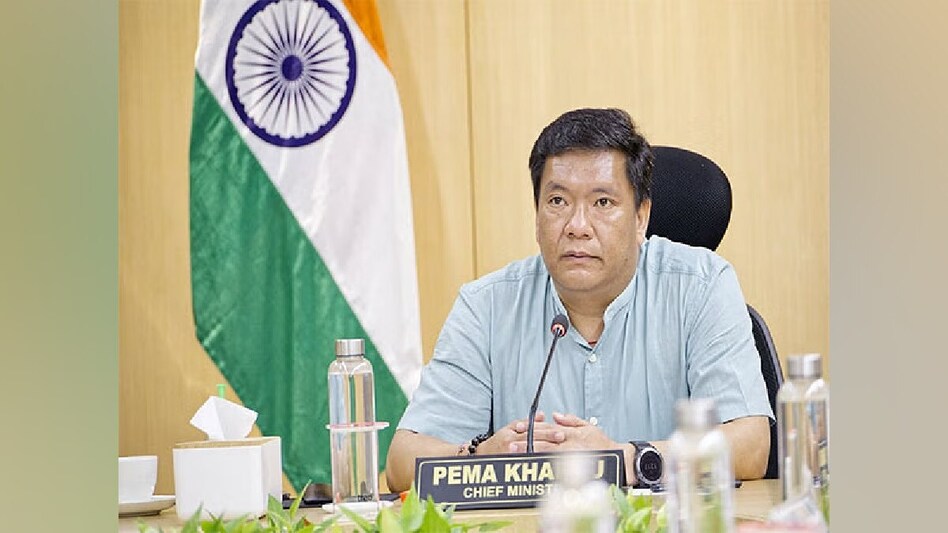
Arunachal Pradesh Chief Minister Pema Khandu has sounded the alarm regarding China's ongoing development of a massive hydropower project near the Indian border, labeling it an "existential threat" that surpasses any military conflict.
- Jul 9, 2025,
- Updated Jul 17, 2025 3:53 PM IST
In an interview with PTI, Khandu highlighted that China's proposed dam on the Yarlung Tsangpo—referred to as the Brahmaputra in India—could cause irreversible harm to the lives, livelihoods, and environment of India’s northeastern region.
"The concern is that China is not trustworthy. Their actions are unpredictable," Khandu cautioned. "Beyond the military dangers posed by China, I believe this issue represents a far greater challenge than anything else. It threatens the very existence of our tribes and our ways of life." He described the situation as quite serious, indicating that China might utilize this project as a form of 'water bomb.'
The Yarlung Tsangpo River begins in Tibet and enters India as the Siang before joining the Brahmaputra in Assam. China has revealed intentions to construct the largest hydroelectric dam in the world near the Great Bend area, just a short distance from the Indian border in Arunachal Pradesh.
India has consistently expressed concerns over the lack of transparency and the absence of any bilateral or multilateral arrangements with China pertaining to water sharing.
As China is not a signatory to the 1997 UN Convention on the Law of the Non-Navigational Uses of International Watercourses, it is under no legal obligation to inform downstream countries like India and Bangladesh before constructing dams or redirecting water. Experts have long cautioned that such unilateral projects could alter the river's flow, particularly in dry periods, or even weaponise water in the event of a dispute.
Sudden releases from upstream dams could cause flash floods, wreaking havoc in downstream areas of Arunachal Pradesh and Assam. Khandu's comments reflect the increasing concern within Indian strategic circles about China's utilisation of infrastructure near critical borders for geopolitical gain. The dam’s site, in proximity to Arunachal Pradesh—a region that China claims as “South Tibet”—further complicates the situation. The implications extend beyond environmental issues; strategically, in times of conflict, the dam could be leveraged to induce flooding or restrict vital water supply to India’s northeastern regions.
Pema Khandu warned, "This transcends state matters. This is a national concern. The country must take this threat seriously before it becomes too late."
In an interview with PTI, Khandu highlighted that China's proposed dam on the Yarlung Tsangpo—referred to as the Brahmaputra in India—could cause irreversible harm to the lives, livelihoods, and environment of India’s northeastern region.
"The concern is that China is not trustworthy. Their actions are unpredictable," Khandu cautioned. "Beyond the military dangers posed by China, I believe this issue represents a far greater challenge than anything else. It threatens the very existence of our tribes and our ways of life." He described the situation as quite serious, indicating that China might utilize this project as a form of 'water bomb.'
The Yarlung Tsangpo River begins in Tibet and enters India as the Siang before joining the Brahmaputra in Assam. China has revealed intentions to construct the largest hydroelectric dam in the world near the Great Bend area, just a short distance from the Indian border in Arunachal Pradesh.
India has consistently expressed concerns over the lack of transparency and the absence of any bilateral or multilateral arrangements with China pertaining to water sharing.
As China is not a signatory to the 1997 UN Convention on the Law of the Non-Navigational Uses of International Watercourses, it is under no legal obligation to inform downstream countries like India and Bangladesh before constructing dams or redirecting water. Experts have long cautioned that such unilateral projects could alter the river's flow, particularly in dry periods, or even weaponise water in the event of a dispute.
Sudden releases from upstream dams could cause flash floods, wreaking havoc in downstream areas of Arunachal Pradesh and Assam. Khandu's comments reflect the increasing concern within Indian strategic circles about China's utilisation of infrastructure near critical borders for geopolitical gain. The dam’s site, in proximity to Arunachal Pradesh—a region that China claims as “South Tibet”—further complicates the situation. The implications extend beyond environmental issues; strategically, in times of conflict, the dam could be leveraged to induce flooding or restrict vital water supply to India’s northeastern regions.
Pema Khandu warned, "This transcends state matters. This is a national concern. The country must take this threat seriously before it becomes too late."