
Consumers likely to get relief from CNG, PNG bills as PNGRB cuts gas transportation tariffs
As part of this change, the unified tariff for Zone 1 has been fixed at Rs 54. This is lower than the earlier rates of Rs 80 and Rs 107 that applied to many regions.
- Dec 17, 2025,
- Updated Dec 17, 2025 5:23 PM IST
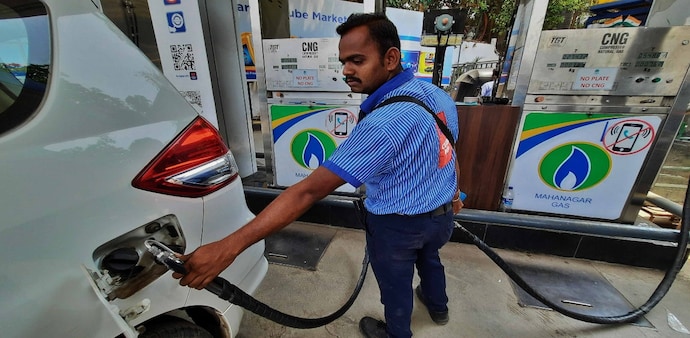
Consumers across India may soon get some relief on their gas bills, as prices of Compressed Natural Gas (CNG) and domestic Piped Natural Gas (PNG) are expected to come down from January 1, 2026, according to ANI News.
The Petroleum and Natural Gas Regulatory Board (PNGRB) has announced a revised and simplified tariff structure, which is likely to lower costs for users. In an exclusive interview, PNGRB Member A K Tiwari said the new system could help consumers save around Rs 2–3 per unit, depending on the state and local taxes.
Under the new framework, the regulator has reduced the number of tariff zones from three to two. Earlier, in 2023, gas transportation tariffs were split into three distance-based zones — Rs 42 for distances up to 200 kilometres, Rs 80 for 300–1,200 kilometres, and Rs 107 for distances beyond 1,200 kilometres.
“We have rationalised the tariff. Instead of three zones, there will be two zones, and the first zone will be applicable for CNG and domestic PNG customers on a pan-India basis,” Tiwari said.
As part of this change, the unified tariff for Zone 1 has been fixed at Rs 54. This is lower than the earlier rates of Rs 80 and Rs 107 that applied to many regions.
The revised tariff is expected to benefit consumers in 312 geographical areas served by 40 City Gas Distribution (CGD) companies across the country. “This will benefit consumers in the transport sector who use CNG and households that use PNG in their kitchens,” Tiwari said.
To ensure that consumers actually see the benefit, the PNGRB has made it mandatory for CGD companies to pass on the savings to end users. The regulator will monitor compliance closely. “Our role is to balance the interests of consumers as well as the operators in this business,” Tiwari added.
On the expansion of gas infrastructure, Tiwari said licences have already been issued to cover the entire country. These include public sector units, private companies and joint ventures.
The PNGRB is also working with state governments to support CGD companies. This coordination has helped several states reduce Value Added Tax (VAT) and simplify approval processes. “We are supporting them not just as a regulator but as a facilitator,” he said.
The government’s push to provide subsidised and rationalised gas for CNG and domestic PNG is expected to increase natural gas use across India. The CGD sector has been identified as the key driver for growth in the country’s natural gas consumption.
Consumers across India may soon get some relief on their gas bills, as prices of Compressed Natural Gas (CNG) and domestic Piped Natural Gas (PNG) are expected to come down from January 1, 2026, according to ANI News.
The Petroleum and Natural Gas Regulatory Board (PNGRB) has announced a revised and simplified tariff structure, which is likely to lower costs for users. In an exclusive interview, PNGRB Member A K Tiwari said the new system could help consumers save around Rs 2–3 per unit, depending on the state and local taxes.
Under the new framework, the regulator has reduced the number of tariff zones from three to two. Earlier, in 2023, gas transportation tariffs were split into three distance-based zones — Rs 42 for distances up to 200 kilometres, Rs 80 for 300–1,200 kilometres, and Rs 107 for distances beyond 1,200 kilometres.
“We have rationalised the tariff. Instead of three zones, there will be two zones, and the first zone will be applicable for CNG and domestic PNG customers on a pan-India basis,” Tiwari said.
As part of this change, the unified tariff for Zone 1 has been fixed at Rs 54. This is lower than the earlier rates of Rs 80 and Rs 107 that applied to many regions.
The revised tariff is expected to benefit consumers in 312 geographical areas served by 40 City Gas Distribution (CGD) companies across the country. “This will benefit consumers in the transport sector who use CNG and households that use PNG in their kitchens,” Tiwari said.
To ensure that consumers actually see the benefit, the PNGRB has made it mandatory for CGD companies to pass on the savings to end users. The regulator will monitor compliance closely. “Our role is to balance the interests of consumers as well as the operators in this business,” Tiwari added.
On the expansion of gas infrastructure, Tiwari said licences have already been issued to cover the entire country. These include public sector units, private companies and joint ventures.
The PNGRB is also working with state governments to support CGD companies. This coordination has helped several states reduce Value Added Tax (VAT) and simplify approval processes. “We are supporting them not just as a regulator but as a facilitator,” he said.
The government’s push to provide subsidised and rationalised gas for CNG and domestic PNG is expected to increase natural gas use across India. The CGD sector has been identified as the key driver for growth in the country’s natural gas consumption.