
CBI arrests Delhi Chief Minister Arvind Kejriwal in excise policy case
The central probe agency sought the court's permission to interrogate Kejriwal and said it would make a formal arrest now.
- Jun 26, 2024,
- Updated Jun 26, 2024 11:43 AM IST
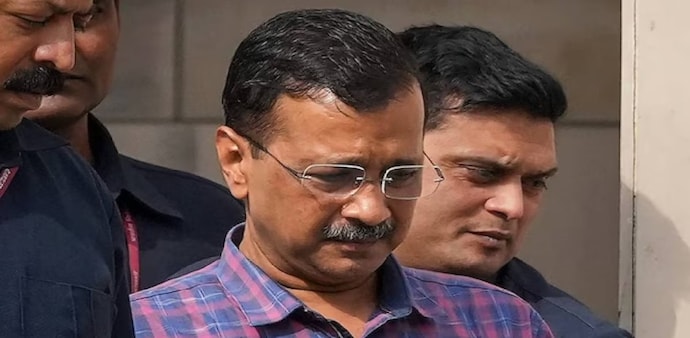
The Central Bureau of Investigation (CBI) on Wednesday arrested Delhi Chief Minister Arvind Kejriwal in the excise policy case. He was arrested soon after Delhi's Rouse Avenue Court allowed the central agency to interrogate Kejriwal in the courtroom and asked it to place on record the material they had for his arrest. The central probe agency sought the court's permission to interrogate Kejriwal and said it would make a formal arrest now.
Sources told India Today that the CBI's reasons for questioning and arrest of Kejriwal were that he was part of the Cabinet that approved the now-scrapped liquor policy. The allegations are that changes in the excise policy were made after taking alleged illegal gratification. It is also alleged that the profit margin for wholesalers was increased from 5% to 12%, and kickbacks were received in the now-scrapped excise policy.
Advocate DP Singh, Special Public Prosecutor appearing for the CBI, said: "I am seeking permission because he is in custody and investigation is my prerogative. I would like to seek formal custody of Arvind Kejriwal to interrogate and make a formal arrest."
The arrest comes a day after the Delhi High Court stayed the trial court order granting him bail in the money laundering case. The HC, in its order, said the trial court did not "appropriately appreciate" the material placed before it by the Enforcement Directorate (ED).
A vacation bench of Justice Sudhir Kumar Jain said the ED's contentions assailing the bail order required serious consideration. "The Vacation (trial) Judge while passing the Impugned Order did not appropriately appreciate the material/documents submitted on record and pleas taken by ED and the averments/grounds as raised in the petition under section 439(2) of the Code require serious consideration," it said. "Accordingly, the present application is allowed and the operation of the Impugned Order is stayed."
Vacation judge Niyay Bindu had granted bail to Kejriwal on June 20 and ordered his release on a personal bond of Rs 1 lakh. The ED moved the high court the very next day and contended that the trial court's order was "perverse", "one-sided" and "wrong-sided" and it was passed without granting it adequate opportunity to argue the case.
In the 34-page order, Justice Jain asserted that every court is under an obligation to give sufficient opportunity to the parties to present their respective case and, in the instant case as well, ED ought to have been given adequate opportunity to advance arguments on Kejriwal's bail application.
Justice Jain said the trial judge not only did not discuss and consider the arguments made by the anti-money laundering agency, including those advanced in the written submissions, it also did not discuss and record its view with respect to the "twin condition" requirement under section 45 of the Prevention of Money Laundering Act (PMLA) while granting bail.
(With inputs from PTI)
The Central Bureau of Investigation (CBI) on Wednesday arrested Delhi Chief Minister Arvind Kejriwal in the excise policy case. He was arrested soon after Delhi's Rouse Avenue Court allowed the central agency to interrogate Kejriwal in the courtroom and asked it to place on record the material they had for his arrest. The central probe agency sought the court's permission to interrogate Kejriwal and said it would make a formal arrest now.
Sources told India Today that the CBI's reasons for questioning and arrest of Kejriwal were that he was part of the Cabinet that approved the now-scrapped liquor policy. The allegations are that changes in the excise policy were made after taking alleged illegal gratification. It is also alleged that the profit margin for wholesalers was increased from 5% to 12%, and kickbacks were received in the now-scrapped excise policy.
Advocate DP Singh, Special Public Prosecutor appearing for the CBI, said: "I am seeking permission because he is in custody and investigation is my prerogative. I would like to seek formal custody of Arvind Kejriwal to interrogate and make a formal arrest."
The arrest comes a day after the Delhi High Court stayed the trial court order granting him bail in the money laundering case. The HC, in its order, said the trial court did not "appropriately appreciate" the material placed before it by the Enforcement Directorate (ED).
A vacation bench of Justice Sudhir Kumar Jain said the ED's contentions assailing the bail order required serious consideration. "The Vacation (trial) Judge while passing the Impugned Order did not appropriately appreciate the material/documents submitted on record and pleas taken by ED and the averments/grounds as raised in the petition under section 439(2) of the Code require serious consideration," it said. "Accordingly, the present application is allowed and the operation of the Impugned Order is stayed."
Vacation judge Niyay Bindu had granted bail to Kejriwal on June 20 and ordered his release on a personal bond of Rs 1 lakh. The ED moved the high court the very next day and contended that the trial court's order was "perverse", "one-sided" and "wrong-sided" and it was passed without granting it adequate opportunity to argue the case.
In the 34-page order, Justice Jain asserted that every court is under an obligation to give sufficient opportunity to the parties to present their respective case and, in the instant case as well, ED ought to have been given adequate opportunity to advance arguments on Kejriwal's bail application.
Justice Jain said the trial judge not only did not discuss and consider the arguments made by the anti-money laundering agency, including those advanced in the written submissions, it also did not discuss and record its view with respect to the "twin condition" requirement under section 45 of the Prevention of Money Laundering Act (PMLA) while granting bail.
(With inputs from PTI)