
'Deeply disturbing incidents': SC dismisses animal rights groups' plea on removal of stray dogs from public places
The bench dismissed a batch of applications filed by dog lovers and animal rights groups seeking modifications to the directions originally issued in November last year
- May 19, 2026,
- Updated May 19, 2026 11:29 AM IST
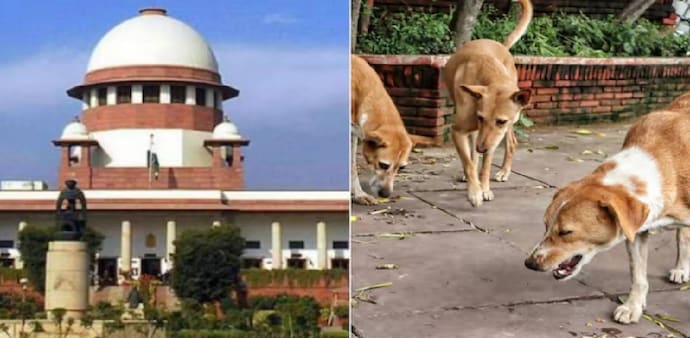
A Supreme Court bench comprising Justices Vikram Nath, Sandeep Mehta, and NV Anjaria refused to recall its earlier order that stray dogs picked up from hospitals, bus stands, schools, railway stations, and other public places must not be returned to those locations after vaccination or sterilisation. The dogs must instead be confined to shelters.
The bench dismissed a batch of applications filed by dog lovers and animal rights groups seeking modifications to the directions originally issued in November last year, as well as challenges to the Standard Operating Procedure issued by the Animal Welfare Board of India.
Why the court held firm
In its judgment, the court referenced "deeply disturbing incidents" of dog attacks, children mauled, elderly people targeted, and even international travellers falling victim. It held the state squarely responsible for these failures.
"The menace of dog bites has extended to public places of critical areas, including airports and residential areas," the court noted, drawing on multiple news reports.
Justice Sandeep Mehta, pronouncing the judgment, was unequivocal: "Right to life with dignity encompasses the right to life freely without threat of harm from a dog bite attack. The state cannot remain a passive spectator. The court cannot remain oblivious to harsh ground realities where children, international travellers, old age people have fallen victim to dog bite incidents. The Constitution doesn't envisage a society where children, elderly people are to survive on the mercy of physical strength, chance," according to Live Law.
The court said the problem had a "staggering dimension" and that the continued recurrence of attacks reflected a failure of implementation rather than a failure of the directions themselves.
New directions issued
Alongside upholding the existing order, the bench issued a fresh set of directions:
- States and Union Territories must enforce the Animal Welfare Board of India Rules
- Each state and UT must set up at least one Animal Birth Control centre per district
- Adequate availability of anti-rabies vaccines and immunoglobulins must be ensured
- Officials of local bodies carrying out these directions are entitled to protection in the performance of their duties, no FIRs or criminal complaints should ordinarily be registered against them for acting in compliance
- Authorities may consider euthanasia for rabid or dangerous dogs where legally permissible, to address the threat to human life
- High Courts are directed to register suo motu cases to monitor compliance
- The National Highways Authority of India has been directed to secure highways from stray cattle
Officials who fail to implement the court's directions will be liable to contempt proceedings and disciplinary action, the bench warned.
How the case evolved
The matter originated in July last year when a two-judge bench comprising Justice JB Pardiwala and Justice R Mahadevan took suo motu cognisance of a news article on the death of a child allegedly caused by a dog bite in the National Capital Region. The initial order directing that all stray dogs in NCR be picked up and confined to shelters generated significant public outrage, leading to the matter being transferred to a three-judge bench.
That bench modified the earlier direction, allowing dogs to be released after vaccination and sterilisation, but late, in November, issued further directions prohibiting the release of dogs back to the premises of public institutions. It also banned feeding dogs on streets except at designated spots.
A Supreme Court bench comprising Justices Vikram Nath, Sandeep Mehta, and NV Anjaria refused to recall its earlier order that stray dogs picked up from hospitals, bus stands, schools, railway stations, and other public places must not be returned to those locations after vaccination or sterilisation. The dogs must instead be confined to shelters.
The bench dismissed a batch of applications filed by dog lovers and animal rights groups seeking modifications to the directions originally issued in November last year, as well as challenges to the Standard Operating Procedure issued by the Animal Welfare Board of India.
Why the court held firm
In its judgment, the court referenced "deeply disturbing incidents" of dog attacks, children mauled, elderly people targeted, and even international travellers falling victim. It held the state squarely responsible for these failures.
"The menace of dog bites has extended to public places of critical areas, including airports and residential areas," the court noted, drawing on multiple news reports.
Justice Sandeep Mehta, pronouncing the judgment, was unequivocal: "Right to life with dignity encompasses the right to life freely without threat of harm from a dog bite attack. The state cannot remain a passive spectator. The court cannot remain oblivious to harsh ground realities where children, international travellers, old age people have fallen victim to dog bite incidents. The Constitution doesn't envisage a society where children, elderly people are to survive on the mercy of physical strength, chance," according to Live Law.
The court said the problem had a "staggering dimension" and that the continued recurrence of attacks reflected a failure of implementation rather than a failure of the directions themselves.
New directions issued
Alongside upholding the existing order, the bench issued a fresh set of directions:
- States and Union Territories must enforce the Animal Welfare Board of India Rules
- Each state and UT must set up at least one Animal Birth Control centre per district
- Adequate availability of anti-rabies vaccines and immunoglobulins must be ensured
- Officials of local bodies carrying out these directions are entitled to protection in the performance of their duties, no FIRs or criminal complaints should ordinarily be registered against them for acting in compliance
- Authorities may consider euthanasia for rabid or dangerous dogs where legally permissible, to address the threat to human life
- High Courts are directed to register suo motu cases to monitor compliance
- The National Highways Authority of India has been directed to secure highways from stray cattle
Officials who fail to implement the court's directions will be liable to contempt proceedings and disciplinary action, the bench warned.
How the case evolved
The matter originated in July last year when a two-judge bench comprising Justice JB Pardiwala and Justice R Mahadevan took suo motu cognisance of a news article on the death of a child allegedly caused by a dog bite in the National Capital Region. The initial order directing that all stray dogs in NCR be picked up and confined to shelters generated significant public outrage, leading to the matter being transferred to a three-judge bench.
That bench modified the earlier direction, allowing dogs to be released after vaccination and sterilisation, but late, in November, issued further directions prohibiting the release of dogs back to the premises of public institutions. It also banned feeding dogs on streets except at designated spots.