
Delhi air pollution: AQI ‘very poor’ at 356; Supreme Court to hear plea on stubble burning
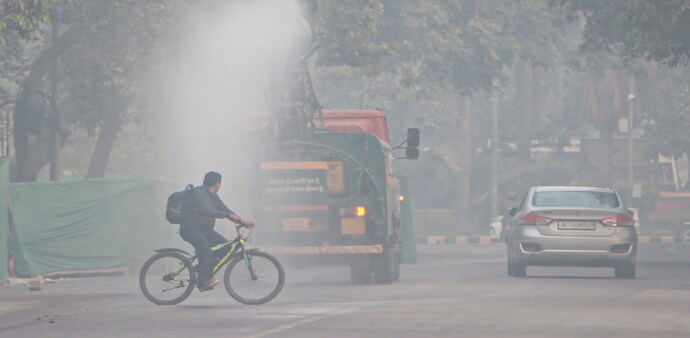
Delhi air pollution: While most stations recorded AQI readings of below 400, there were some like Jahangirpuri and Rohini that recorded AQI of over 400, which is in the ‘severe’ category.
- Nov 17, 2025,
- Updated Nov 17, 2025 10:59 AM IST
The Supreme Court will hear a plea concerning stubble burning, a practice identified as a major contributor to the deteriorating air quality in Delhi-NCR. This hearing follows earlier directives from the court instructing Punjab and Haryana to report on measures undertaken to curb crop residue burning, which has been criticised for exacerbating hazardous smog conditions in the region. Meanwhile, Delhi’s air quality continues to remain in the ‘very poor’ category, an improvement after continuous days of ‘severe’ category.
A bench led by Chief Justice BR Gavai, with Justices K Vinod Chandran and N V Anjaria, previously instructed Punjab and Haryana governments to respond on steps taken to control stubble burning. The hearing is scheduled in response to a plea seeking urgent intervention amidst recurring air pollution episodes during this season.
On Monday, Delhi’s AQI was at 356. While most stations recorded AQI readings of below 400, there were some like Jahangirpuri and Rohini that recorded AQI of over 400, which is in the ‘severe’ category.
- Anand Vihar – 380
- Ashok Vihar – 388
- CRRI Mathura Road – 341
- Dwarka Sector 8 – 352
- ITO – 388
- Jahangirpuri – 404
- Jawaharlal Nehru Stadium – 354
- Lodhi Road – 335
- Mandir Marg – 339
- Mundka – 388
- Narela – 405
- Nehru Nagar – 385
- North Campus, DU – 328
- Okhla Phase 2 – 352
- Patparganj – 367
- Punjabi Bagh – 378
- Pusa – 339
- RK Puram – 362
- Rohini – 401
- Shadipur – 354
- Sirifort – 364
- Vivek Vihar – 391
The court had earlier ordered the Commission for Air Quality Management (CAQM) to submit an affidavit detailing preventive steps taken to address the pollution crisis in the capital and adjoining areas. During the hearing of the M C Mehta case, the bench emphasised the need for proactive action, stating that authorities should not wait for air quality to reach a "severe" stage before responding. The interventions aim to strengthen regulatory oversight and ensure that mitigation measures are implemented effectively.
Amicus curiae Singh brought attention to operational lapses, citing, "There are newspapers after newspapers saying that monitoring stations are non-functional. If the monitoring stations are not even functioning, we don't even know when to implement GRAP (graded response action plan)... Out of 37 monitoring stations, only nine were functioning continuously on the day of Diwali.”
Singh urged the bench to direct CAQM to provide comprehensive data and a robust action plan, reflecting concerns over the effectiveness of current monitoring infrastructure.
The Supreme Court had also recently allowed green firecrackers to be sold and used during Diwali in Delhi-NCR, but explicitly limited this as a "test case basis and it shall be only for the period specified". The permitted window for sale and use was from October 18 to 20, with strict adherence to limited hours, demonstrating the court's effort to balance cultural practices with environmental safeguards and public well-being.
The Supreme Court will hear a plea concerning stubble burning, a practice identified as a major contributor to the deteriorating air quality in Delhi-NCR. This hearing follows earlier directives from the court instructing Punjab and Haryana to report on measures undertaken to curb crop residue burning, which has been criticised for exacerbating hazardous smog conditions in the region. Meanwhile, Delhi’s air quality continues to remain in the ‘very poor’ category, an improvement after continuous days of ‘severe’ category.
A bench led by Chief Justice BR Gavai, with Justices K Vinod Chandran and N V Anjaria, previously instructed Punjab and Haryana governments to respond on steps taken to control stubble burning. The hearing is scheduled in response to a plea seeking urgent intervention amidst recurring air pollution episodes during this season.
On Monday, Delhi’s AQI was at 356. While most stations recorded AQI readings of below 400, there were some like Jahangirpuri and Rohini that recorded AQI of over 400, which is in the ‘severe’ category.
- Anand Vihar – 380
- Ashok Vihar – 388
- CRRI Mathura Road – 341
- Dwarka Sector 8 – 352
- ITO – 388
- Jahangirpuri – 404
- Jawaharlal Nehru Stadium – 354
- Lodhi Road – 335
- Mandir Marg – 339
- Mundka – 388
- Narela – 405
- Nehru Nagar – 385
- North Campus, DU – 328
- Okhla Phase 2 – 352
- Patparganj – 367
- Punjabi Bagh – 378
- Pusa – 339
- RK Puram – 362
- Rohini – 401
- Shadipur – 354
- Sirifort – 364
- Vivek Vihar – 391
The court had earlier ordered the Commission for Air Quality Management (CAQM) to submit an affidavit detailing preventive steps taken to address the pollution crisis in the capital and adjoining areas. During the hearing of the M C Mehta case, the bench emphasised the need for proactive action, stating that authorities should not wait for air quality to reach a "severe" stage before responding. The interventions aim to strengthen regulatory oversight and ensure that mitigation measures are implemented effectively.
Amicus curiae Singh brought attention to operational lapses, citing, "There are newspapers after newspapers saying that monitoring stations are non-functional. If the monitoring stations are not even functioning, we don't even know when to implement GRAP (graded response action plan)... Out of 37 monitoring stations, only nine were functioning continuously on the day of Diwali.”
Singh urged the bench to direct CAQM to provide comprehensive data and a robust action plan, reflecting concerns over the effectiveness of current monitoring infrastructure.
The Supreme Court had also recently allowed green firecrackers to be sold and used during Diwali in Delhi-NCR, but explicitly limited this as a "test case basis and it shall be only for the period specified". The permitted window for sale and use was from October 18 to 20, with strict adherence to limited hours, demonstrating the court's effort to balance cultural practices with environmental safeguards and public well-being.