
Delhi air pollution: AQI ‘very poor’ at 361; national capital most polluted in PM2.5 concentration
The Centre for Research on Energy and Clean Air reported that Chandigarh recorded the second-highest annual average PM2.5 level at 70 micrograms per cubic metre during the same period.
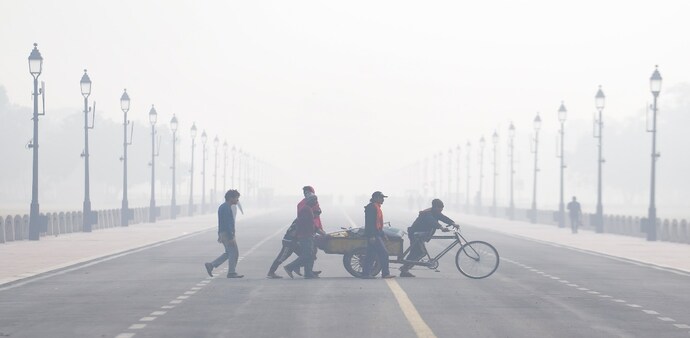
- Nov 25, 2025,
- Updated Nov 25, 2025 12:06 PM IST
Delhi has been identified as the most polluted among 33 Indian states and Union territories, with an annual mean PM2.5 concentration of 101 micrograms per cubic metre. This level is 2.5 times higher than the Indian national standard and 20 times above the World Health Organisation guideline, according to a new satellite-based analysis covering March 2024 to February 2025.
This comes amid days of low air quality, reaching a ‘severe’ category on some days. On Tuesday, the AQI of Delhi was recorded at 361, as per SAFAR-India.
Here’s the AQI readings from various stations on Thursday as per SAFAR-India:
- Anand Vihar – 399
- Ashok Vihar – 385
- CRRI Mathura Road – 363
- Dwarka Sector 8 – 376
- ITO – 376
- Jahangirpuri – 398
- Jawaharlal Nehru Stadium – 357
- Lodhi Road – 324
- Mandir Marg – 286
- Mundka – 391
- Narela – 372
- Nehru Nagar – 390
- North Campus, DU – 366
- Okhla Phase 2 – 359
- Patparganj – 379
- Punjabi Bagh – 389
- Pusa – 357
- RK Puram – 386
- Rohini – 416
- Shadipur – 338
- Sirifort – 366
- Vivek Vihar – 392
The Centre for Research on Energy and Clean Air reported that Chandigarh recorded the second-highest annual average PM2.5 level at 70 micrograms per cubic metre during the same period, followed by Haryana at 63 and Tripura at 62. Assam, Bihar, West Bengal, Punjab, Meghalaya and Nagaland also exceeded the national standard, with annual averages between 52 and 60 micrograms per cubic metre.
Out of 749 districts analysed, 447 districts, or 60 percent, breached the National Ambient Air Quality Standard for annual PM2.5, which is set at 40 micrograms per cubic metre. The most polluted districts are mainly concentrated in a few states, showing significant regional differences in air quality across India.
Delhi and Assam together accounted for nearly half of the 50 most polluted districts, with 11 districts each. Bihar and Haryana had seven districts each, Uttar Pradesh four, Tripura three, and Rajasthan and West Bengal two each in the top 50.
All monitored districts in Delhi, Assam, Punjab, Haryana, Chandigarh, Himachal Pradesh, Meghalaya, Tripura and Jammu and Kashmir exceeded the national standard. In other states, most districts also breached the limit, including Bihar (37 of 38), West Bengal (22 of 23), Gujarat (32 of 33), Nagaland (11 of 12), Rajasthan (30 of 33) and Jharkhand (21 of 24). Ladakh, Andaman and Nicobar Islands, and Lakshadweep were excluded from the analysis due to insufficient ground monitoring data for the period.
Delhi has been identified as the most polluted among 33 Indian states and Union territories, with an annual mean PM2.5 concentration of 101 micrograms per cubic metre. This level is 2.5 times higher than the Indian national standard and 20 times above the World Health Organisation guideline, according to a new satellite-based analysis covering March 2024 to February 2025.
This comes amid days of low air quality, reaching a ‘severe’ category on some days. On Tuesday, the AQI of Delhi was recorded at 361, as per SAFAR-India.
Here’s the AQI readings from various stations on Thursday as per SAFAR-India:
- Anand Vihar – 399
- Ashok Vihar – 385
- CRRI Mathura Road – 363
- Dwarka Sector 8 – 376
- ITO – 376
- Jahangirpuri – 398
- Jawaharlal Nehru Stadium – 357
- Lodhi Road – 324
- Mandir Marg – 286
- Mundka – 391
- Narela – 372
- Nehru Nagar – 390
- North Campus, DU – 366
- Okhla Phase 2 – 359
- Patparganj – 379
- Punjabi Bagh – 389
- Pusa – 357
- RK Puram – 386
- Rohini – 416
- Shadipur – 338
- Sirifort – 366
- Vivek Vihar – 392
The Centre for Research on Energy and Clean Air reported that Chandigarh recorded the second-highest annual average PM2.5 level at 70 micrograms per cubic metre during the same period, followed by Haryana at 63 and Tripura at 62. Assam, Bihar, West Bengal, Punjab, Meghalaya and Nagaland also exceeded the national standard, with annual averages between 52 and 60 micrograms per cubic metre.
Out of 749 districts analysed, 447 districts, or 60 percent, breached the National Ambient Air Quality Standard for annual PM2.5, which is set at 40 micrograms per cubic metre. The most polluted districts are mainly concentrated in a few states, showing significant regional differences in air quality across India.
Delhi and Assam together accounted for nearly half of the 50 most polluted districts, with 11 districts each. Bihar and Haryana had seven districts each, Uttar Pradesh four, Tripura three, and Rajasthan and West Bengal two each in the top 50.
All monitored districts in Delhi, Assam, Punjab, Haryana, Chandigarh, Himachal Pradesh, Meghalaya, Tripura and Jammu and Kashmir exceeded the national standard. In other states, most districts also breached the limit, including Bihar (37 of 38), West Bengal (22 of 23), Gujarat (32 of 33), Nagaland (11 of 12), Rajasthan (30 of 33) and Jharkhand (21 of 24). Ladakh, Andaman and Nicobar Islands, and Lakshadweep were excluded from the analysis due to insufficient ground monitoring data for the period.