
Delhi air pollution: Supreme Court modifies order, allows action against BS-III and older vehicles in Delhi-NCR
Acting on the recommendation of the Commission for Air Quality Management (CAQM), the top court modified its August 12 order, which had earlier extended protection from coercive action to all EOL vehicles in Delhi and the NCR.
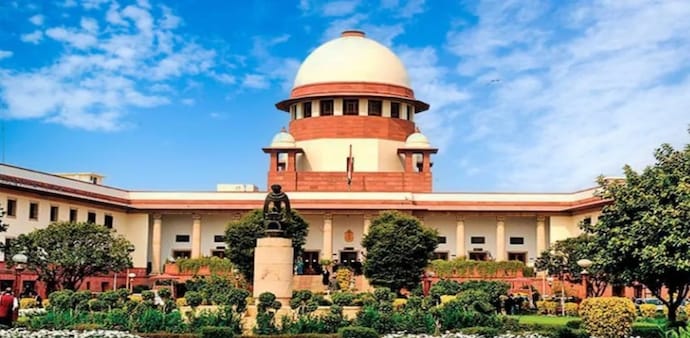
- Dec 17, 2025,
- Updated Dec 17, 2025 4:42 PM IST
The Supreme Court on Wednesday announced the withdrawal of protection for end-of-life (EOL) vehicles with poor emission standards—BS-III and below—in the Delhi-NCR region. Additional Solicitor General Aishwarya Bhati sought a modification of the court’s earlier order that had granted protection against coercive steps to owners of 10-year-old diesel and 15-year-old petrol vehicles in Delhi.
Acting on the recommendation of the Commission for Air Quality Management (CAQM), the top court modified its August 12 order, which had earlier extended protection from coercive action to all EOL vehicles in Delhi and the NCR.
"Para 2 of August 12, 2025 order is modified to the extent that no coercive steps shall be taken for BS-4 vehicles and above,” Chief Justice Surya Kant was quoted as saying by Bar and Bench.
Citing worsening pollution levels in the national capital, the CAQM had urged the court to revisit its August order that shielded old diesel and petrol vehicles from enforcement action.
Separately, a bench led by Chief Justice Surya Kant directed the temporary suspension of operations at nine toll plazas in Delhi, citing the urgent need to curb pollution caused by traffic congestion at the city’s entry points.
During the proceedings, the Supreme Court said that a portion of toll proceeds at the new locations could be diverted to the Municipal Corporation of Delhi (MCD) to compensate for revenue losses arising from the suspension.
The bench also directed the National Highways Authority of India (NHAI) to examine the feasibility of relocating the toll plazas—currently operated by the MCD—to locations where the NHAI could manage them. Notices were issued to the CAQM and the MCD, seeking their responses to concerns over traffic congestion at entry toll plazas.
The MCD was instructed to cooperate with the NHAI and consider temporarily suspending operations at the nine toll plazas. The court asked the civic body to place its decision on record within one week.
The Supreme Court on Wednesday announced the withdrawal of protection for end-of-life (EOL) vehicles with poor emission standards—BS-III and below—in the Delhi-NCR region. Additional Solicitor General Aishwarya Bhati sought a modification of the court’s earlier order that had granted protection against coercive steps to owners of 10-year-old diesel and 15-year-old petrol vehicles in Delhi.
Acting on the recommendation of the Commission for Air Quality Management (CAQM), the top court modified its August 12 order, which had earlier extended protection from coercive action to all EOL vehicles in Delhi and the NCR.
"Para 2 of August 12, 2025 order is modified to the extent that no coercive steps shall be taken for BS-4 vehicles and above,” Chief Justice Surya Kant was quoted as saying by Bar and Bench.
Citing worsening pollution levels in the national capital, the CAQM had urged the court to revisit its August order that shielded old diesel and petrol vehicles from enforcement action.
Separately, a bench led by Chief Justice Surya Kant directed the temporary suspension of operations at nine toll plazas in Delhi, citing the urgent need to curb pollution caused by traffic congestion at the city’s entry points.
During the proceedings, the Supreme Court said that a portion of toll proceeds at the new locations could be diverted to the Municipal Corporation of Delhi (MCD) to compensate for revenue losses arising from the suspension.
The bench also directed the National Highways Authority of India (NHAI) to examine the feasibility of relocating the toll plazas—currently operated by the MCD—to locations where the NHAI could manage them. Notices were issued to the CAQM and the MCD, seeking their responses to concerns over traffic congestion at entry toll plazas.
The MCD was instructed to cooperate with the NHAI and consider temporarily suspending operations at the nine toll plazas. The court asked the civic body to place its decision on record within one week.