
Delhi air quality improves to 'very poor'; IMD predicts Chilly days ahead as capital to receive rain soon
For the past four days, the AQI in the national capital had remained classified as either "severe" or "severe plus," prompting health authorities to issue warnings about the associated risks to public health
- Dec 21, 2024,
- Updated Dec 21, 2024 1:20 PM IST
Delhi's air quality showed signs of improvement on Saturday morning, with the Air Quality Index (AQI) returning to the "very poor" category. As of 8 am, the overall average 24-hour AQI was recorded at 395, according to official data.
For the past four days, the AQI in the national capital had remained classified as either "severe" or "severe plus," prompting health authorities to issue warnings about the associated risks to public health.
The Air Quality Index (AQI) is a scale used to measure air pollution levels. Here's what each range means:
- 0 to 50: Good - Air quality is considered healthy.
- 51 to 100: Satisfactory - Air quality is acceptable; however, there may be some pollution for a very small number of people.
- 101 to 200: Moderate - Air quality is acceptable; however, some pollutants may be a concern for a small number of people.
- 201 to 300: Poor - Air quality is unhealthy for some people, especially those who are sensitive to pollution.
- 301 to 400: Very Poor - Everyone may begin to experience health effects, and members of sensitive groups may experience more serious health effects.
- 401 to 500: Severe - The entire population is likely to be affected, and health warnings of emergency conditions are issued.
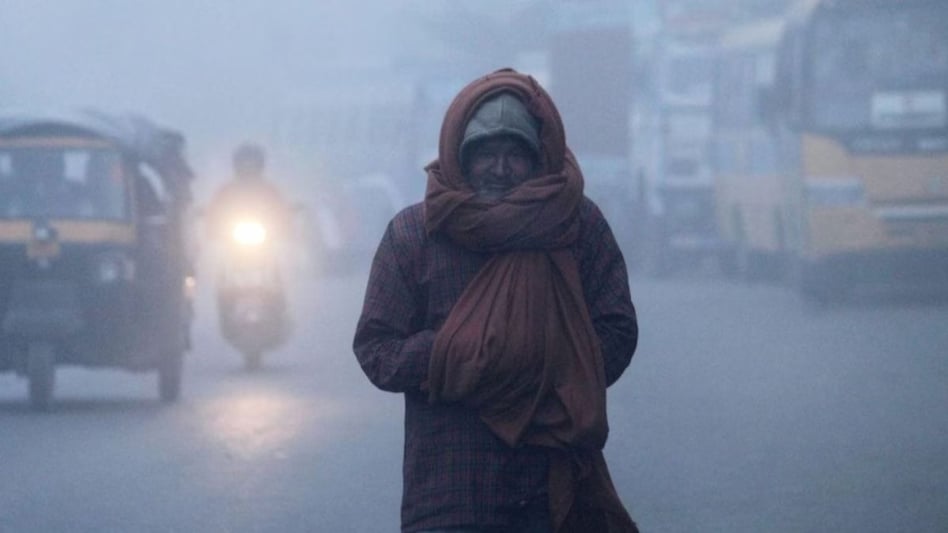
Visibility at Indira Gandhi International Airport has been notably affected, dropping to 600 meters, while runway visibility has fluctuated between 700 and 2,000 meters.
The India Meteorological Department (IMD) reported a temperature of 8 degrees Celsius at 5:30 am. In light of the ongoing poor air quality, authorities continue to advise residents, especially children, the elderly, and individuals with respiratory conditions, to limit outdoor activities. "We strongly urge people to stay indoors as much as possible, given the health risks associated with prolonged exposure," a health official cautioned.
Rainfall expected post-Christmas
Dense fog is forecasted for the weekend, which may further impair visibility. Meanwhile, light to moderate rainfall has been predicted for December 26, potentially providing temporary relief from the prevailing pollution.
Delhi remains under Stage IV of the Graded Response Action Plan (GRAP), which enforces strict anti-pollution measures, including a ban on construction activities and restrictions on the entry of non-essential polluting trucks into the city.
Delhi's air quality showed signs of improvement on Saturday morning, with the Air Quality Index (AQI) returning to the "very poor" category. As of 8 am, the overall average 24-hour AQI was recorded at 395, according to official data.
For the past four days, the AQI in the national capital had remained classified as either "severe" or "severe plus," prompting health authorities to issue warnings about the associated risks to public health.
The Air Quality Index (AQI) is a scale used to measure air pollution levels. Here's what each range means:
- 0 to 50: Good - Air quality is considered healthy.
- 51 to 100: Satisfactory - Air quality is acceptable; however, there may be some pollution for a very small number of people.
- 101 to 200: Moderate - Air quality is acceptable; however, some pollutants may be a concern for a small number of people.
- 201 to 300: Poor - Air quality is unhealthy for some people, especially those who are sensitive to pollution.
- 301 to 400: Very Poor - Everyone may begin to experience health effects, and members of sensitive groups may experience more serious health effects.
- 401 to 500: Severe - The entire population is likely to be affected, and health warnings of emergency conditions are issued.
Visibility at Indira Gandhi International Airport has been notably affected, dropping to 600 meters, while runway visibility has fluctuated between 700 and 2,000 meters.
The India Meteorological Department (IMD) reported a temperature of 8 degrees Celsius at 5:30 am. In light of the ongoing poor air quality, authorities continue to advise residents, especially children, the elderly, and individuals with respiratory conditions, to limit outdoor activities. "We strongly urge people to stay indoors as much as possible, given the health risks associated with prolonged exposure," a health official cautioned.
Rainfall expected post-Christmas
Dense fog is forecasted for the weekend, which may further impair visibility. Meanwhile, light to moderate rainfall has been predicted for December 26, potentially providing temporary relief from the prevailing pollution.
Delhi remains under Stage IV of the Graded Response Action Plan (GRAP), which enforces strict anti-pollution measures, including a ban on construction activities and restrictions on the entry of non-essential polluting trucks into the city.