
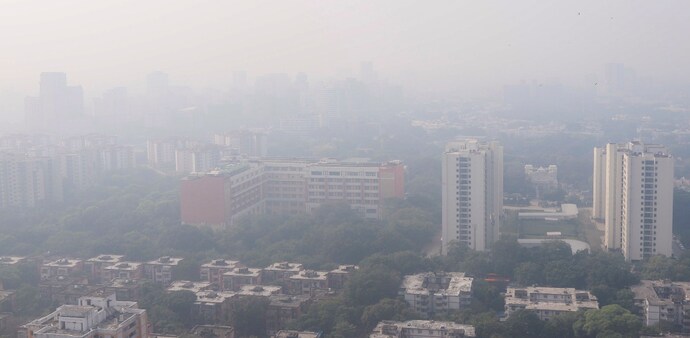
Delhi air quality turns 'very poor': GRAP 2 imposed, tighter curbs on vehicles and generators
The restrictions come after a rapid rise in pollution levels over the past three days. The authorities have warned that unfavourable weather conditions could keep air quality in the very poor range for several more days
- Nov 2, 2026,
- Updated Nov 2, 2026 7:04 PM IST
Delhi's air quality deteriorated sharply on Monday, prompting the Commission for Air Quality Management (CAQM) to impose Stage 2 restrictions under the Graded Response Action Plan (GRAP) across Delhi-NCR with immediate effect.
The national capital's Air Quality Index (AQI) stood at 325 at 5 pm, placing it in the "very poor" category.
The restrictions come after a rapid rise in pollution levels over the past three days. The authorities have warned that unfavourable weather conditions could keep air quality in the very poor range for several more days.
According to the CAQM, Delhi's AQI climbed from 117 on October 31 to 261 on November 1, before crossing the 300 mark on Monday morning. By 5 pm on November 2, the reading had reached 325.
The sharp deterioration prompted the commission to activate additional measures aimed at reducing emissions from vehicles, diesel generators, commercial establishments and road dust.
Don't Miss: Delhi’s air turns ‘very poor’: Is your air purifier ready? Here’s how to clean and maintain it
What restrictions come into force under GRAP 2?
Under Stage 2, authorities will implement measures to discourage private vehicle use and limit pollution from commercial activities.
Parking charges will be increased to encourage commuters to shift towards public transport.
The use of coal and firewood in hotels and restaurants, including for operating tandoors, will be prohibited.
The restrictions also include tighter regulations on diesel generator sets to limit emissions from backup power systems.
Local agencies have been directed to intensify mechanical road sweeping and increase water sprinkling with dust suppressants to prevent dust from becoming airborne.
The measures will apply across Delhi and NCR.
The CAQM attributed the rapid deterioration in air quality to unfavourable meteorological conditions.
The rise has been particularly sharp since October 31, when Delhi's AQI was recorded at 117, within the moderate category. Within two days, the reading had climbed above 300, crossing into the very poor category.
According to forecasts cited by the commission from the India Meteorological Department (IMD) and the Indian Institute of Tropical Meteorology (IITM), air quality is expected to remain in the "very poor" category over the coming days.