
Delhi records coldest October night in two years, AQI improves to ‘poor’
According to the India Meteorological Department (IMD), the minimum temperature was 0.2°C below normal, marking the lowest this season so far
- Oct 25, 2025,
- Updated Oct 25, 2025 8:13 AM IST
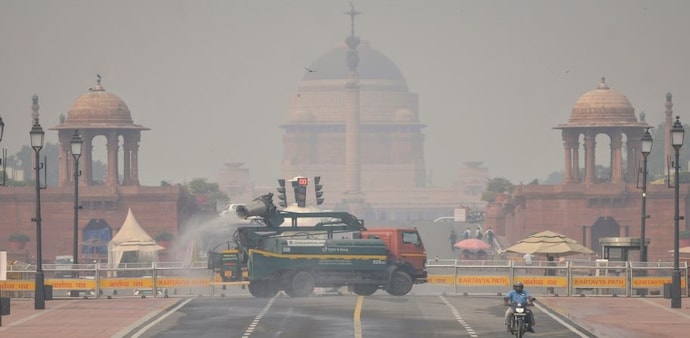
Delhi recorded its coldest October night in two years on Thursday, with temperatures dipping to 17°C, even as the city’s air quality showed a marginal improvement, moving from the ‘very poor’ to the ‘poor’ category after four consecutive days of severe pollution.
According to the India Meteorological Department (IMD), the minimum temperature was 0.2°C below normal, marking the lowest this season so far. In October 2024, the lowest temperature was 17.4°C on October 15, the data showed. The maximum temperature stood at 32.3°C, slightly above normal by 0.4°C.
The weather office has forecast morning mist on Saturday, with the mercury likely to hover around 31°C during the day and 17°C at night.
Air quality improves, but still ‘poor’
The Central Pollution Control Board (CPCB) reported a 24-hour average Air Quality Index (AQI) of 275, placing the capital in the ‘poor’ category. This marks an improvement from the ‘very poor’ levels recorded earlier in the week.
However, the air quality remained uneven across the city. Anand Vihar reported the highest AQI at 414, falling under the ‘severe’ range. Out of 38 monitoring stations, 10 recorded ‘very poor’ air, 24 ‘poor’, and three ‘moderate’, according to CPCB’s Sameer app.
Neighbouring NCR cities, Gurugram, Noida, and Ghaziabad, also recorded air quality in the ‘poor’ range, with AQI levels in the 200s.
Forecasts from the Air Quality Early Warning System (EWS) suggest that Delhi’s air is likely to fluctuate between ‘poor’ and ‘very poor’ over the next week.
Vehicles, stubble burning continue to pollute
Transport emissions remained the biggest contributor to Delhi’s pollution, accounting for 17.8% of total emissions on Friday, according to the Decision Support System (DSS).
Satellite data showed 28 stubble-burning incidents in Punjab and 13 in Uttar Pradesh on Thursday, continuing to add to regional pollution levels.
The CPCB defines AQI levels between 0–50 as ‘good’, 51–100 ‘satisfactory’, 101–200 ‘moderate’, 201–300 ‘poor’, 301–400 ‘very poor’, and 401–500 ‘severe’.
Delhi recorded its coldest October night in two years on Thursday, with temperatures dipping to 17°C, even as the city’s air quality showed a marginal improvement, moving from the ‘very poor’ to the ‘poor’ category after four consecutive days of severe pollution.
According to the India Meteorological Department (IMD), the minimum temperature was 0.2°C below normal, marking the lowest this season so far. In October 2024, the lowest temperature was 17.4°C on October 15, the data showed. The maximum temperature stood at 32.3°C, slightly above normal by 0.4°C.
The weather office has forecast morning mist on Saturday, with the mercury likely to hover around 31°C during the day and 17°C at night.
Air quality improves, but still ‘poor’
The Central Pollution Control Board (CPCB) reported a 24-hour average Air Quality Index (AQI) of 275, placing the capital in the ‘poor’ category. This marks an improvement from the ‘very poor’ levels recorded earlier in the week.
However, the air quality remained uneven across the city. Anand Vihar reported the highest AQI at 414, falling under the ‘severe’ range. Out of 38 monitoring stations, 10 recorded ‘very poor’ air, 24 ‘poor’, and three ‘moderate’, according to CPCB’s Sameer app.
Neighbouring NCR cities, Gurugram, Noida, and Ghaziabad, also recorded air quality in the ‘poor’ range, with AQI levels in the 200s.
Forecasts from the Air Quality Early Warning System (EWS) suggest that Delhi’s air is likely to fluctuate between ‘poor’ and ‘very poor’ over the next week.
Vehicles, stubble burning continue to pollute
Transport emissions remained the biggest contributor to Delhi’s pollution, accounting for 17.8% of total emissions on Friday, according to the Decision Support System (DSS).
Satellite data showed 28 stubble-burning incidents in Punjab and 13 in Uttar Pradesh on Thursday, continuing to add to regional pollution levels.
The CPCB defines AQI levels between 0–50 as ‘good’, 51–100 ‘satisfactory’, 101–200 ‘moderate’, 201–300 ‘poor’, 301–400 ‘very poor’, and 401–500 ‘severe’.