
Delhi weather update: Cold wave expected between January 3-6, AQI remains ‘poor’. Details here
The Met department further said that the national capital's maximum temperature is likely to oscillate between 15 degrees Celsius and 17 degrees Celsius.
- Jan 3, 2026,
- Updated Jan 3, 2026 10:45 AM IST
The national capital recorded a minimum temperature of 8.1 degrees Celsius on Saturday, which was 1.2 degrees above the seasonal average, according to the India Meteorological Department (IMD). The Met department further said that the national capital's maximum temperature is likely to oscillate between 15 degrees Celsius and 17 degrees Celsius.
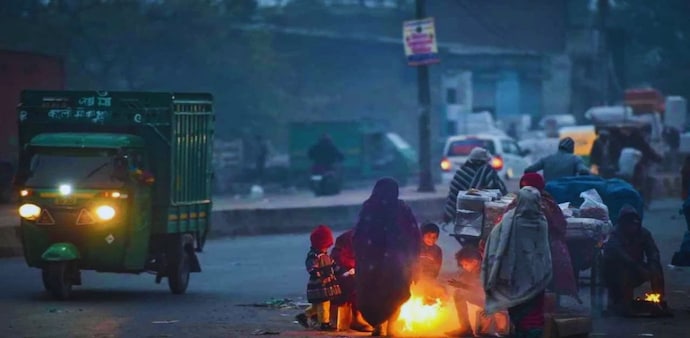
The weather office said a cold wave is likely to affect isolated parts of Delhi between January 3 and January 6. A cold wave is declared when the minimum temperature drops between 4.5 degrees Celsius and 6.5 degrees Celsius below the normal average.
IMD data showed that Safdarjung recorded a minimum temperature of 8.1 degrees Celsius, while Palam logged 7.9 degrees Celsius, 0.9 degrees above the seasonal average. Lodhi Road recorded 8 degrees Celsius, two degrees above normal, and the Ridge reported 9 degrees Celsius, 1.3 degrees above normal. Ayanagar recorded the lowest minimum temperature at 6.9 degrees Celsius, which was 0.1 degrees below normal.
Relative humidity stood at 95 per cent at 9 am.
The improvement in weather conditions has led to a decline in air pollution levels. Delhi’s Air Quality Index (AQI) was recorded at 240 at 9 am, placing it in the 'poor' category, according to Central Pollution Control Board (CPCB) data.
Anand Vihar registered an AQI of 248, RK Puram stood at 252, Rohini at 2670, Mundka at 281, Nehru Park at 297, Chandni Chowk at 272, and ITO at 219. Some other areas like Bawana (145) and Indira Gandhi International Airport (148) reported relatively cleaner air.
As per CPCB standards, an AQI between 0 and 50 is considered ‘good’, 51 to 100 ‘satisfactory’, 101 to 200 ‘moderate’, 201 to 300 ‘poor’, 301 to 400 ‘very poor’, and 401 to 500 ‘severe’.
Despite the improvement in air quality, dense smog and lowered visibility adversely impacted the movement of flights. Republic Day rehearsal activities continued as scheduled at the India Gate despite the weather conditions.
Given the improvement in air quality, the Commission for Air Quality Management (CAQM) revoked stage 3 of the Graded Response Action Plan (GRAP) on Friday. Delhi Environment Minister Manjinder Singh Sirsa, however, said that despite GRAP-3 being lifted, anti-pollution measures would continue with full force on the ground.
"We are encouraged by the progress, but this is not the time to relax. On-ground operations will continue with the same force to consolidate the gains we have made," Sirsa said.
The national capital recorded a minimum temperature of 8.1 degrees Celsius on Saturday, which was 1.2 degrees above the seasonal average, according to the India Meteorological Department (IMD). The Met department further said that the national capital's maximum temperature is likely to oscillate between 15 degrees Celsius and 17 degrees Celsius.
The weather office said a cold wave is likely to affect isolated parts of Delhi between January 3 and January 6. A cold wave is declared when the minimum temperature drops between 4.5 degrees Celsius and 6.5 degrees Celsius below the normal average.
IMD data showed that Safdarjung recorded a minimum temperature of 8.1 degrees Celsius, while Palam logged 7.9 degrees Celsius, 0.9 degrees above the seasonal average. Lodhi Road recorded 8 degrees Celsius, two degrees above normal, and the Ridge reported 9 degrees Celsius, 1.3 degrees above normal. Ayanagar recorded the lowest minimum temperature at 6.9 degrees Celsius, which was 0.1 degrees below normal.
Relative humidity stood at 95 per cent at 9 am.
The improvement in weather conditions has led to a decline in air pollution levels. Delhi’s Air Quality Index (AQI) was recorded at 240 at 9 am, placing it in the 'poor' category, according to Central Pollution Control Board (CPCB) data.
Anand Vihar registered an AQI of 248, RK Puram stood at 252, Rohini at 2670, Mundka at 281, Nehru Park at 297, Chandni Chowk at 272, and ITO at 219. Some other areas like Bawana (145) and Indira Gandhi International Airport (148) reported relatively cleaner air.
As per CPCB standards, an AQI between 0 and 50 is considered ‘good’, 51 to 100 ‘satisfactory’, 101 to 200 ‘moderate’, 201 to 300 ‘poor’, 301 to 400 ‘very poor’, and 401 to 500 ‘severe’.
Despite the improvement in air quality, dense smog and lowered visibility adversely impacted the movement of flights. Republic Day rehearsal activities continued as scheduled at the India Gate despite the weather conditions.
Given the improvement in air quality, the Commission for Air Quality Management (CAQM) revoked stage 3 of the Graded Response Action Plan (GRAP) on Friday. Delhi Environment Minister Manjinder Singh Sirsa, however, said that despite GRAP-3 being lifted, anti-pollution measures would continue with full force on the ground.
"We are encouraged by the progress, but this is not the time to relax. On-ground operations will continue with the same force to consolidate the gains we have made," Sirsa said.