
Delhi's air dips to 'very poor' on Diwali eve; CAQM enforces GRAP Stage II without delay
According to the Central Pollution Control Board (CPCB), Delhi recorded an AQI of 296 at 4 pm — classified as “poor” — with 12 out of 38 monitoring stations showing readings in the “very poor” range.
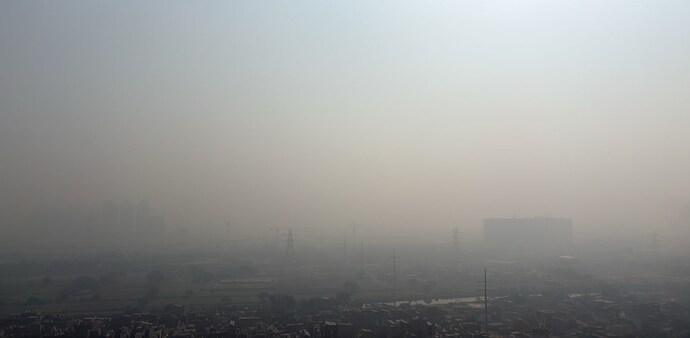
- Oct 19, 2025,
- Updated Oct 19, 2025 9:19 PM IST
The Commission for Air Quality Management (CAQM) in Delhi-NCR has invoked Stage II of the Graded Response Action Plan (GRAP) with immediate effect, as air quality dipped to ‘very poor’ levels on the eve of Diwali. This comes just four days after Stage I of the emergency plan was activated in the capital.
Citing data from the India Meteorological Department, CAQM noted a rising trend in Delhi’s Air Quality Index (AQI), which climbed from 296 at 4:00 pm to 302 at 7:00 pm on Saturday. “The forecast by IMD/IITM also predicts further deterioration of AQI in the coming days,” the order stated.
According to the Central Pollution Control Board (CPCB), Delhi recorded an AQI of 296 at 4 pm — classified as “poor” — with 12 out of 38 monitoring stations showing readings in the “very poor” range.
Anand Vihar topped the chart with an AQI of 430, followed by Wazirpur (364), Vivek Vihar (351), Dwarka (335), and RK Puram (323). Other areas, including Siri Fort, Dilshad Garden, and Jahangirpuri, crossed 310, while Punjabi Bagh, Nehru Nagar, Ashok Vihar, and Bawana also reported “very poor” levels.
The spike in pollution follows a relatively clean spell for Delhi. The capital last recorded a ‘poor’ AQI on June 11, and July saw 29 days of “satisfactory” air, aided by heavy rains over the monsoon months.
The city’s weather added to the haze on October 19, with the maximum temperature reaching 33.3°C — 0.9 degrees above the seasonal norm — and the minimum at 20.6°C, 2.2 degrees higher than usual. The IMD has forecast mist for Monday morning, with temperatures expected to hover around the same levels.
Amid worsening air, the Supreme Court last week allowed the sale and use of green firecrackers for the first time since 2020. The decision — limited to fixed hours over two days — was hailed by Delhi Chief Minister Rekha Gupta as a “balanced” approach between “tradition and environment.”
As a reminder, AQI levels between 301-400 are deemed “very poor,” while 401-500 is “severe.” Ground-level ozone, a key pollutant during winter, is known to aggravate asthma, chronic bronchitis, and other respiratory issues.
The Commission for Air Quality Management (CAQM) in Delhi-NCR has invoked Stage II of the Graded Response Action Plan (GRAP) with immediate effect, as air quality dipped to ‘very poor’ levels on the eve of Diwali. This comes just four days after Stage I of the emergency plan was activated in the capital.
Citing data from the India Meteorological Department, CAQM noted a rising trend in Delhi’s Air Quality Index (AQI), which climbed from 296 at 4:00 pm to 302 at 7:00 pm on Saturday. “The forecast by IMD/IITM also predicts further deterioration of AQI in the coming days,” the order stated.
According to the Central Pollution Control Board (CPCB), Delhi recorded an AQI of 296 at 4 pm — classified as “poor” — with 12 out of 38 monitoring stations showing readings in the “very poor” range.
Anand Vihar topped the chart with an AQI of 430, followed by Wazirpur (364), Vivek Vihar (351), Dwarka (335), and RK Puram (323). Other areas, including Siri Fort, Dilshad Garden, and Jahangirpuri, crossed 310, while Punjabi Bagh, Nehru Nagar, Ashok Vihar, and Bawana also reported “very poor” levels.
The spike in pollution follows a relatively clean spell for Delhi. The capital last recorded a ‘poor’ AQI on June 11, and July saw 29 days of “satisfactory” air, aided by heavy rains over the monsoon months.
The city’s weather added to the haze on October 19, with the maximum temperature reaching 33.3°C — 0.9 degrees above the seasonal norm — and the minimum at 20.6°C, 2.2 degrees higher than usual. The IMD has forecast mist for Monday morning, with temperatures expected to hover around the same levels.
Amid worsening air, the Supreme Court last week allowed the sale and use of green firecrackers for the first time since 2020. The decision — limited to fixed hours over two days — was hailed by Delhi Chief Minister Rekha Gupta as a “balanced” approach between “tradition and environment.”
As a reminder, AQI levels between 301-400 are deemed “very poor,” while 401-500 is “severe.” Ground-level ozone, a key pollutant during winter, is known to aggravate asthma, chronic bronchitis, and other respiratory issues.