
Delhi's air pollution turns deadly: AQI hits 727 as stubble fires, stagnant winds choke the capital
The worsening pollution crisis in Delhi and the National Capital Region (NCR) has pushed air quality into the ‘very poor’ and now ‘hazardous’ category, sparking renewed health concerns across the city
- Nov 7, 2025,
- Updated Nov 7, 2025 9:57 AM IST
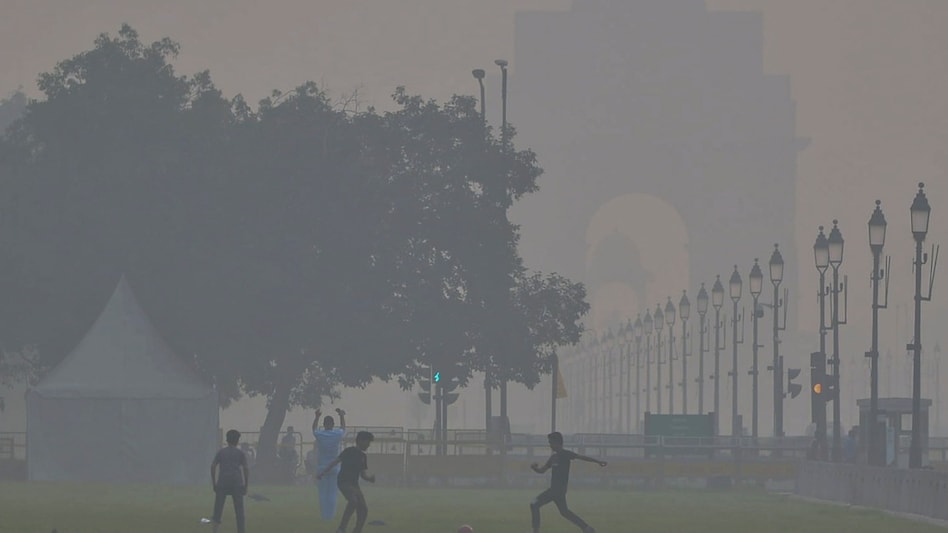
Delhi woke up to a blanket of toxic smog on Friday as its air quality plunged to “hazardous” levels, recording an overall Air Quality Index (AQI) of 727, according to Swiss air monitoring platform IQAir. The capital, already reeling from post-Diwali pollution, is now trapped under a dense mix of farm fire emissions, stagnant winds, and winter inversion that have turned its air unbreathable.
The worsening pollution crisis in Delhi and the National Capital Region (NCR) has pushed air quality into the ‘very poor’ and now ‘hazardous’ category, sparking renewed health concerns across the city. According to reports, the pollution level was under the poor category, but now it has breached the mark and has entered the very poor category. The average AQI in Delhi stood at 311 on Thursday, although certain areas, such as Bawana, recorded significantly higher levels.
Despite the deployment of water sprinklers and other measures by the Delhi government, there has been little improvement. Officials confirmed that PM2.5 remains the dominant pollutant. With low wind speeds continuing to trap pollutants, the India Meteorological Department warned that the toxic haze is likely to persist for several more days, offering no immediate relief.
Data from the Central Pollution Control Board (CPCB) placed Delhi in the “red zone,” while IQAir recorded a citywide AQI of 727 on Friday morning, among the highest readings globally. Officials said a marginal improvement may occur later in the day as wind speeds pick up.
Across 254 cities monitored, Delhi ranked fourth among the most polluted in India, while Rohtak topped the list with an AQI of 348. According to CPCB’s Sameer App, 32 out of 38 monitoring stations in Delhi reported “very poor” air, with PM2.5 levels far exceeding safe limits.
The Air Quality Early Warning System projected that stubble burning would be the leading contributor to Delhi’s rising PM2.5 concentrations. It estimated the share of crop residue burning in the city’s pollution at 21.5% on Thursday, expected to rise to 36.9% on Friday and 32.4% on Saturday, up from just 1.2% two days earlier. Satellite data detected 94 stubble-burning incidents in Punjab, 13 in Haryana, and 74 in Uttar Pradesh. Transport emissions followed as the second-highest contributor, at up to 16.2%.
As the air thickened, protests broke out at Delhi’s Jantar Mantar on Thursday. Around 80 demonstrators, including students, scientists, and civil society members, gathered under banners demanding stronger government action. The protest, led by Scientists for Society and the Campaign for Right to Public Health, saw participation from groups such as the Naujawan Bharat Sabha and Disha Students’ Organisation.
Officials and health experts have reiterated that unless stubble burning, transport emissions, and industrial sources are controlled in a coordinated manner, Delhi’s air will continue to oscillate between “very poor” and “severe” zones , especially as winter sets in.
(With inputs from PTI)
Delhi woke up to a blanket of toxic smog on Friday as its air quality plunged to “hazardous” levels, recording an overall Air Quality Index (AQI) of 727, according to Swiss air monitoring platform IQAir. The capital, already reeling from post-Diwali pollution, is now trapped under a dense mix of farm fire emissions, stagnant winds, and winter inversion that have turned its air unbreathable.
The worsening pollution crisis in Delhi and the National Capital Region (NCR) has pushed air quality into the ‘very poor’ and now ‘hazardous’ category, sparking renewed health concerns across the city. According to reports, the pollution level was under the poor category, but now it has breached the mark and has entered the very poor category. The average AQI in Delhi stood at 311 on Thursday, although certain areas, such as Bawana, recorded significantly higher levels.
Despite the deployment of water sprinklers and other measures by the Delhi government, there has been little improvement. Officials confirmed that PM2.5 remains the dominant pollutant. With low wind speeds continuing to trap pollutants, the India Meteorological Department warned that the toxic haze is likely to persist for several more days, offering no immediate relief.
Data from the Central Pollution Control Board (CPCB) placed Delhi in the “red zone,” while IQAir recorded a citywide AQI of 727 on Friday morning, among the highest readings globally. Officials said a marginal improvement may occur later in the day as wind speeds pick up.
Across 254 cities monitored, Delhi ranked fourth among the most polluted in India, while Rohtak topped the list with an AQI of 348. According to CPCB’s Sameer App, 32 out of 38 monitoring stations in Delhi reported “very poor” air, with PM2.5 levels far exceeding safe limits.
The Air Quality Early Warning System projected that stubble burning would be the leading contributor to Delhi’s rising PM2.5 concentrations. It estimated the share of crop residue burning in the city’s pollution at 21.5% on Thursday, expected to rise to 36.9% on Friday and 32.4% on Saturday, up from just 1.2% two days earlier. Satellite data detected 94 stubble-burning incidents in Punjab, 13 in Haryana, and 74 in Uttar Pradesh. Transport emissions followed as the second-highest contributor, at up to 16.2%.
As the air thickened, protests broke out at Delhi’s Jantar Mantar on Thursday. Around 80 demonstrators, including students, scientists, and civil society members, gathered under banners demanding stronger government action. The protest, led by Scientists for Society and the Campaign for Right to Public Health, saw participation from groups such as the Naujawan Bharat Sabha and Disha Students’ Organisation.
Officials and health experts have reiterated that unless stubble burning, transport emissions, and industrial sources are controlled in a coordinated manner, Delhi’s air will continue to oscillate between “very poor” and “severe” zones , especially as winter sets in.
(With inputs from PTI)