
Delhi’s AQI stays ‘very poor’ at 373 as pollution hotspots cross 400 mark
13 of 39 monitoring stations recorded ‘severe’ air, with Wazirpur topping the charts at 442, the worst in the capital
- Nov 21, 2025,
- Updated Nov 21, 2025 10:14 AM IST
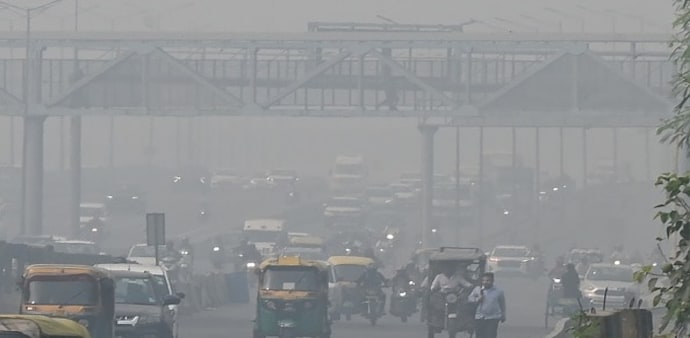
A dense layer of smog sat heavy over Delhi on Friday morning, pushing air quality back into the ‘very poor’ zone even as pollution levels showed a marginal dip from the previous day. The city logged an Air Quality Index of 373, according to the Central Pollution Control Board (CPCB), with several neighbourhoods slipping into the ‘severe’ category.
Data from CPCB’s Sameer app showed 13 of 39 monitoring stations recording ‘severe’ air, with Wazirpur topping the charts at 442, the worst in the capital.
Only three stations, IHBAS Dilshad Garden (255), Lodhi Road (286) and Mandir Marg (278), recorded ‘poor’ air quality, offering little relief across the city. Most locations remained well above the ‘very poor’ threshold.
Pollution hotspots worsen
Key pollution hotspots continued to choke. Anand Vihar (412), Bawana (430), Burari Crossing (404), Jahangirpuri (433), Mundka (435), Narela (408), RK Puram (406) and Rohini (421) all reported ‘severe’ AQI levels.
The broader trend also remains bleak. Delhi’s AQI stood at 391 on Thursday, 392 on Wednesday, and 374 on Tuesday, CPCB data showed.
What’s driving the pollution spike?
The Decision Support System of the Indian Institute of Tropical Meteorology (IITM), Pune, estimated that vehicular emissions contributed 17.3% to Delhi’s pollution on Thursday, while stubble burning accounted for 2.8%.
For Friday, these numbers are expected to shift slightly to 16.2% and 1.8%, respectively.
NCR pollution snapshot
In the wider National Capital Region, Ghaziabad emerged as the most polluted city, with an AQI of 431, firmly in the ‘severe’ category. Faridabad was the least polluted, though still at a ‘poor’ 242, followed by Gurugram at 294.
Noida’s AQI hit 400, nearly touching ‘severe’, while Greater Noida logged 377, keeping it in the ‘very poor’ bracket.
Temperatures dip as smog thickens
Delhi recorded a minimum temperature of 11.4°C, nearly a degree below normal, while the maximum touched 28.2°C, slightly above normal, according to the India Meteorological Department (IMD).
The IMD has predicted moderate fog for Friday, with temperatures likely to hover around 27°C (max) and 12°C (min).
A dense layer of smog sat heavy over Delhi on Friday morning, pushing air quality back into the ‘very poor’ zone even as pollution levels showed a marginal dip from the previous day. The city logged an Air Quality Index of 373, according to the Central Pollution Control Board (CPCB), with several neighbourhoods slipping into the ‘severe’ category.
Data from CPCB’s Sameer app showed 13 of 39 monitoring stations recording ‘severe’ air, with Wazirpur topping the charts at 442, the worst in the capital.
Only three stations, IHBAS Dilshad Garden (255), Lodhi Road (286) and Mandir Marg (278), recorded ‘poor’ air quality, offering little relief across the city. Most locations remained well above the ‘very poor’ threshold.
Pollution hotspots worsen
Key pollution hotspots continued to choke. Anand Vihar (412), Bawana (430), Burari Crossing (404), Jahangirpuri (433), Mundka (435), Narela (408), RK Puram (406) and Rohini (421) all reported ‘severe’ AQI levels.
The broader trend also remains bleak. Delhi’s AQI stood at 391 on Thursday, 392 on Wednesday, and 374 on Tuesday, CPCB data showed.
What’s driving the pollution spike?
The Decision Support System of the Indian Institute of Tropical Meteorology (IITM), Pune, estimated that vehicular emissions contributed 17.3% to Delhi’s pollution on Thursday, while stubble burning accounted for 2.8%.
For Friday, these numbers are expected to shift slightly to 16.2% and 1.8%, respectively.
NCR pollution snapshot
In the wider National Capital Region, Ghaziabad emerged as the most polluted city, with an AQI of 431, firmly in the ‘severe’ category. Faridabad was the least polluted, though still at a ‘poor’ 242, followed by Gurugram at 294.
Noida’s AQI hit 400, nearly touching ‘severe’, while Greater Noida logged 377, keeping it in the ‘very poor’ bracket.
Temperatures dip as smog thickens
Delhi recorded a minimum temperature of 11.4°C, nearly a degree below normal, while the maximum touched 28.2°C, slightly above normal, according to the India Meteorological Department (IMD).
The IMD has predicted moderate fog for Friday, with temperatures likely to hover around 27°C (max) and 12°C (min).