
'Deploy Covid playbook, push Euro deal': JP Morgan economist's 3-step plan to counter US tariff shock
The immediate concern should be the survival of labor-intensive industries, says the economist
- Aug 27, 2025,
- Updated Aug 27, 2025 5:11 PM IST
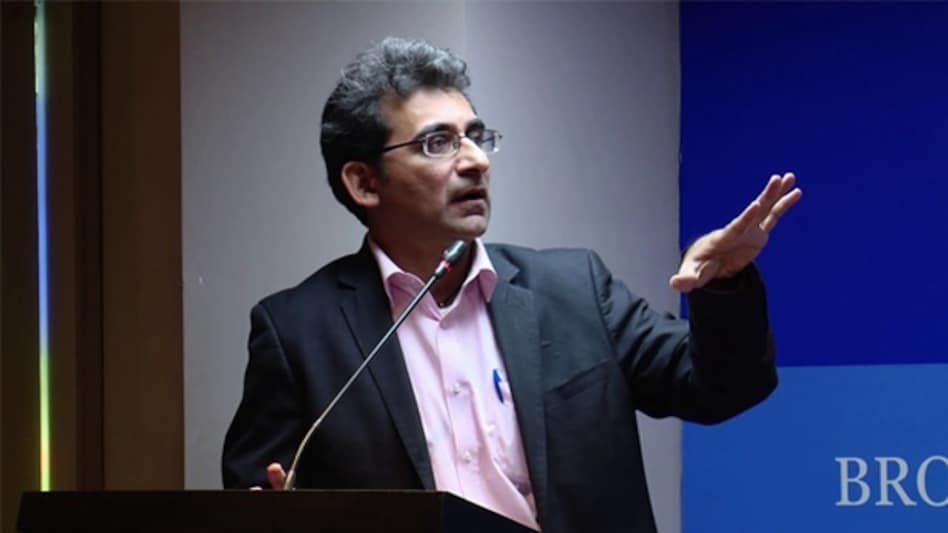
India must preserve the economic viability of export-focused firms, diversify trade relationships, and accelerate domestic reforms to withstand the impact of the United States' 50 per cent tariff on Indian goods, said Dr. Sajjid Chinoy, Managing Director and Chief India Economist at JP Morgan, in an interview with India Today.
The US has imposed an additional 25 per cent tariff on Indian products from August 27, doubling the import duty to 50 per cent for most sectors. The penalty, linked to India's purchase of Russian crude oil and military equipment, will affect more than $48 billion worth of exports to the US. Sectors hit hardest include textiles, clothing, gems and jewellery, shrimp, leather and footwear, chemicals, and machinery, while pharmaceuticals, energy products, and electronics remain exempt.
Chinoy, who is also a part-time member of the Economic Advisory Council to the Prime Minister (EAC-PM), said the immediate concern should be the survival of labor-intensive industries. "The biggest imperative in the near term is to preserve the economic viability of the firms in these sectors. We have a playbook from COVID where there was a sudden demand shock. So we know what's required. I'd expect there'd be specific sectors, specific fiscal packages, liquidity, regulatory forbearance," he said.
He warned that with about 1 per cent of India's GDP exposed to US tariffs, the escalation to 50 per cent would quickly erode competitiveness. "At 50% we become much less competitive than our peers in the region, who face more like 20 or 25%. Then of course there'll be a knock-on impact on consumption and employment because these are labor-intensive, and if this persists for a while, then of course the tertiary impact will be on investment and animal spirits," Chinoy said.
Beyond short-term relief, he urged India to expand trade beyond the United States. "The US is our largest trading partner. But the US accounts for just 15% of global imports. There is a trading world outside the US and India must seek to exploit that, diversify and deepen, and strengthen our trading relationships in tandem," he said.
Chinoy noted progress on the India–UK trade pact but pressed for speed on other fronts: "I think it's important to push ahead with the Euro deal as soon as possible. Also consider regional deals, CPPTP, the Asian free trade arrangement. That's where the growth is."
He also emphasised the opportunity for reforms at home. "Our economic history is littered with examples where adverse external shocks create the political space for reforms. The government started very well with a big GST shakeup, which I think is extremely progressive. But we need to follow that up with other reforms to try and reverse animal spirits sentiment investments."
Despite the disruption, Chinoy argued against panic, noting the unpredictability of US trade policy. "The fact is if the tariffs last for a few weeks or a couple of months, the shock can be absorbed. If the tariffs last for longer than that, the cost will grow over time. We should keep negotiating with the Americans. The fact that the US has been so capricious actually gives us hope that at some point their negotiating position will change."
He called for a multi-pronged strategy: "Protect economic viability, seek to diversify trade, continue with reforms at home, but keep negotiating with the US because they are our largest trading partner on goods and services and hope that at some point a win-win agreement can be achieved."
India must preserve the economic viability of export-focused firms, diversify trade relationships, and accelerate domestic reforms to withstand the impact of the United States' 50 per cent tariff on Indian goods, said Dr. Sajjid Chinoy, Managing Director and Chief India Economist at JP Morgan, in an interview with India Today.
The US has imposed an additional 25 per cent tariff on Indian products from August 27, doubling the import duty to 50 per cent for most sectors. The penalty, linked to India's purchase of Russian crude oil and military equipment, will affect more than $48 billion worth of exports to the US. Sectors hit hardest include textiles, clothing, gems and jewellery, shrimp, leather and footwear, chemicals, and machinery, while pharmaceuticals, energy products, and electronics remain exempt.
Chinoy, who is also a part-time member of the Economic Advisory Council to the Prime Minister (EAC-PM), said the immediate concern should be the survival of labor-intensive industries. "The biggest imperative in the near term is to preserve the economic viability of the firms in these sectors. We have a playbook from COVID where there was a sudden demand shock. So we know what's required. I'd expect there'd be specific sectors, specific fiscal packages, liquidity, regulatory forbearance," he said.
He warned that with about 1 per cent of India's GDP exposed to US tariffs, the escalation to 50 per cent would quickly erode competitiveness. "At 50% we become much less competitive than our peers in the region, who face more like 20 or 25%. Then of course there'll be a knock-on impact on consumption and employment because these are labor-intensive, and if this persists for a while, then of course the tertiary impact will be on investment and animal spirits," Chinoy said.
Beyond short-term relief, he urged India to expand trade beyond the United States. "The US is our largest trading partner. But the US accounts for just 15% of global imports. There is a trading world outside the US and India must seek to exploit that, diversify and deepen, and strengthen our trading relationships in tandem," he said.
Chinoy noted progress on the India–UK trade pact but pressed for speed on other fronts: "I think it's important to push ahead with the Euro deal as soon as possible. Also consider regional deals, CPPTP, the Asian free trade arrangement. That's where the growth is."
He also emphasised the opportunity for reforms at home. "Our economic history is littered with examples where adverse external shocks create the political space for reforms. The government started very well with a big GST shakeup, which I think is extremely progressive. But we need to follow that up with other reforms to try and reverse animal spirits sentiment investments."
Despite the disruption, Chinoy argued against panic, noting the unpredictability of US trade policy. "The fact is if the tariffs last for a few weeks or a couple of months, the shock can be absorbed. If the tariffs last for longer than that, the cost will grow over time. We should keep negotiating with the Americans. The fact that the US has been so capricious actually gives us hope that at some point their negotiating position will change."
He called for a multi-pronged strategy: "Protect economic viability, seek to diversify trade, continue with reforms at home, but keep negotiating with the US because they are our largest trading partner on goods and services and hope that at some point a win-win agreement can be achieved."