
'Diwali have nothing to do with it': Sanjeev Sanyal calls for focus on real causes of Delhi’s air crisis
He also underlined the role of public transport in reducing pollution, saying the conversation must shift towards making transport systems truly functional
- Dec 29, 2025,
- Updated Dec 29, 2025 5:18 PM IST
Economist and historian Sanjeev Sanyal has said that Delhi’s pollution crisis cannot be addressed unless citizens and policymakers focus on the real causes instead of engaging in what he described as “pointless debates.”
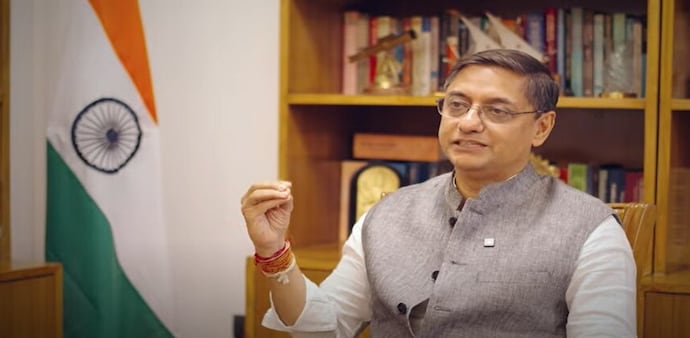
Speaking on a podcast with journalist Smita Prakash, Sanyal said public discussions on air pollution often get diverted to issues that have little impact. Referring to debates around Diwali, he said, “Unfortunately we’ll have pointless debates about Diwali which has nothing to do with it. It’s one day and that day by the way if you look at the statistics barely different from the day before or after.”
Sanyal stressed that air pollution in Delhi is a complex problem with multiple long-term causes that require serious attention. “There are serious issues about stubble burning. That is one part of the issue. It’s not the only issue. There are serious issues about construction dust. There are serious issues about burning of garbage and so on and so forth,” he said.
He also underlined the role of public transport in reducing pollution, saying the conversation must shift towards making transport systems truly functional. Pointing to the Delhi Metro, Sanyal said it has grown into a substantial network over the years. “By any standard the Delhi Metro is a decent system,” he said.
However, he added that the system fails at the most critical stage—what happens after commuters exit the station. “You come out of the Delhi Metro into absolute chaos,” Sanyal said, explaining that the real problem lies in the lack of proper last-mile connectivity.
Sanyal argued that last-mile connectivity is often misunderstood. “When I talk about last mile connectivity, it becomes about how to allow some three-wheeler or some other such thing,” he said, rejecting this approach. “All public transport has to be based on the last mile being walking,” he added.
Emphasising the importance of walking, Sanyal called it the most essential form of transport in any city. “It is cheap. It is egalitarian and essential to all public transport systems,” he said. While noting that he is a cyclist himself, Sanyal clarified that cycling should not be confused with walking and cannot replace it.
He also criticised the lack of investment in pedestrian infrastructure, particularly sidewalks. According to him, cities consistently fail to prioritise pedestrian spaces. He pointed out that what is often described as “road widening” actually harms pedestrians. “What is road widening? It is narrowing of the pedestrian space,” Sanyal said.
He added that pedestrian spaces serve multiple purposes and are crucial to urban life. “The pedestrian space is for people to sell their wares,” he said, noting that many vendors depend on these spaces for their livelihood. He also said these spaces are used by cyclists.
Sanyal concluded by calling for a more serious and citizen-driven conversation on urban issues. He said such discussions should be led by citizens of cities themselves and not driven only by activists
Economist and historian Sanjeev Sanyal has said that Delhi’s pollution crisis cannot be addressed unless citizens and policymakers focus on the real causes instead of engaging in what he described as “pointless debates.”
Speaking on a podcast with journalist Smita Prakash, Sanyal said public discussions on air pollution often get diverted to issues that have little impact. Referring to debates around Diwali, he said, “Unfortunately we’ll have pointless debates about Diwali which has nothing to do with it. It’s one day and that day by the way if you look at the statistics barely different from the day before or after.”
Sanyal stressed that air pollution in Delhi is a complex problem with multiple long-term causes that require serious attention. “There are serious issues about stubble burning. That is one part of the issue. It’s not the only issue. There are serious issues about construction dust. There are serious issues about burning of garbage and so on and so forth,” he said.
He also underlined the role of public transport in reducing pollution, saying the conversation must shift towards making transport systems truly functional. Pointing to the Delhi Metro, Sanyal said it has grown into a substantial network over the years. “By any standard the Delhi Metro is a decent system,” he said.
However, he added that the system fails at the most critical stage—what happens after commuters exit the station. “You come out of the Delhi Metro into absolute chaos,” Sanyal said, explaining that the real problem lies in the lack of proper last-mile connectivity.
Sanyal argued that last-mile connectivity is often misunderstood. “When I talk about last mile connectivity, it becomes about how to allow some three-wheeler or some other such thing,” he said, rejecting this approach. “All public transport has to be based on the last mile being walking,” he added.
Emphasising the importance of walking, Sanyal called it the most essential form of transport in any city. “It is cheap. It is egalitarian and essential to all public transport systems,” he said. While noting that he is a cyclist himself, Sanyal clarified that cycling should not be confused with walking and cannot replace it.
He also criticised the lack of investment in pedestrian infrastructure, particularly sidewalks. According to him, cities consistently fail to prioritise pedestrian spaces. He pointed out that what is often described as “road widening” actually harms pedestrians. “What is road widening? It is narrowing of the pedestrian space,” Sanyal said.
He added that pedestrian spaces serve multiple purposes and are crucial to urban life. “The pedestrian space is for people to sell their wares,” he said, noting that many vendors depend on these spaces for their livelihood. He also said these spaces are used by cyclists.
Sanyal concluded by calling for a more serious and citizen-driven conversation on urban issues. He said such discussions should be led by citizens of cities themselves and not driven only by activists