
Explained: Why DAC’s ₹79,000-crore defence approvals matter for India’s military readiness
The ₹79,000-crore AoN reflects India’s push to modernise its armed forces in response to evolving security challenges, including drone warfare, long-range precision strikes and the need for persistent surveillance.
- Dec 29, 2025,
- Updated Dec 29, 2025 4:11 PM IST
India has taken a significant step to bolster its military capabilities with the Defence Acquisition Council (DAC) clearing capital procurement proposals worth nearly ₹79,000 crore. The approvals, granted on December 29 span the Army, Navy and Air Force, and focus on modern warfare needs such as drones, long-range precision strikes, surveillance and advanced training systems.
The DAC is chaired by Defence Minister Rajnath Singh, and its Acceptance of Necessity (AoN) is a crucial milestone that allows the armed forces to move forward with acquisitions under the defence procurement process.
What has been cleared for the Indian Army?
The Army’s approvals reflect the growing importance of precision warfare and counter-drone capabilities on modern battlefields.
Key clearances include:
- Loiter Munition Systems for artillery regiments: These can hover over a target area and strike with high precision. These systems are designed for tactical, time-sensitive targets.
- Low Level Light Weight Radars: Capable of detecting and tracking small, low-flying unmanned aerial systems, addressing the rising threat from hostile drones.
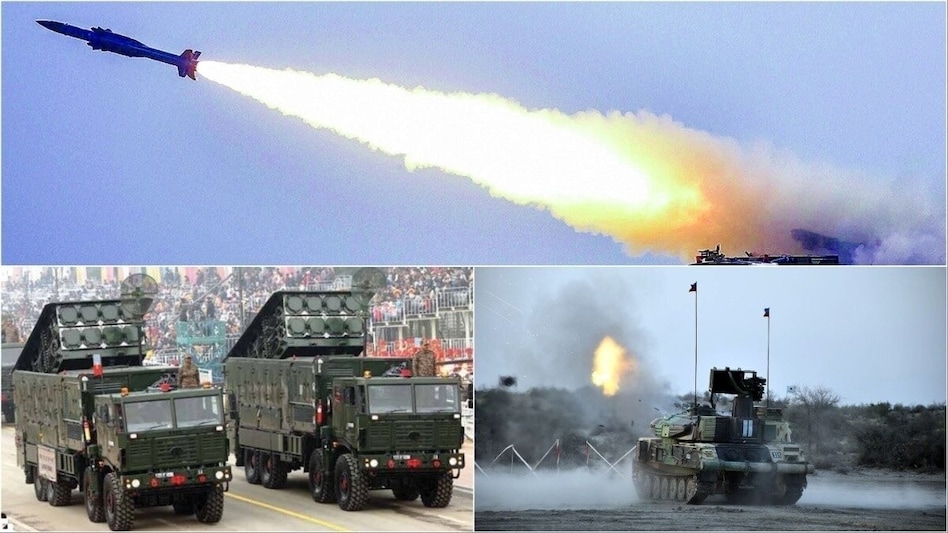
- Long Range Guided Rocket Ammunition for the Pinaka Multiple Launch Rocket System (MRLS): Significantly improving the range and accuracy of India’s indigenous rocket artillery.
- Integrated Drone Detection & Interdiction System (IDDIS) Mk-II: Has enhanced range to protect vital military assets both in tactical battle zones and hinterland areas.
Together, these systems strengthen the Army’s ability to detect, deter and neutralise threats across land borders and sensitive installations.
What does the Indian Navy gain?
For the Navy, the DAC approvals focus on operational support, secure communications and maritime surveillance.
The cleared proposals include:
- Bollard Pull (BP) Tugs: These will assist naval ships and submarines during berthing, unberthing and manoeuvring in harbours and confined waters.
- High Frequency Software Defined Radios (HF SDR) Manpack: It will improve long-range, secure communications during boarding and landing operations.
- Leasing of High Altitude Long Endurance (HALE) Remotely Piloted Aircraft Systems (RPAS): It will provide continuous intelligence, surveillance and reconnaissance (ISR) and enhance maritime domain awareness across the Indian Ocean Region.
The HALE drones, in particular, will play a key role in monitoring vast ocean spaces and safeguarding sea lanes.
What’s in it for the Indian Air Force?
The Air Force approvals centre on air combat capability, pilot safety and training efficiency.
Key systems cleared include:
- Automatic Take-off and Landing Recording Systems: It will provide high-definition, all-weather recording of aircraft operations to enhance flight safety.
- Astra Mk-II air-to-air missiles: These have extended range, enabling fighter jets to engage adversary aircraft from greater stand-off distances.
- Full Mission Simulators for the Light Combat Aircraft (LCA) Tejas: This will offer cost-effective and safe pilot training.
- SPICE-1000 Long Range Guidance Kits: These will convert conventional bombs into precision-guided munitions, enhancing long-range strike accuracy.
The ₹79,000-crore AoN reflects India’s push to modernise its armed forces in response to evolving security challenges, including drone warfare, long-range precision strikes and the need for persistent surveillance. While AoN does not immediately translate into contracts, it clears the path for procurement under the defence acquisition process.
India has taken a significant step to bolster its military capabilities with the Defence Acquisition Council (DAC) clearing capital procurement proposals worth nearly ₹79,000 crore. The approvals, granted on December 29 span the Army, Navy and Air Force, and focus on modern warfare needs such as drones, long-range precision strikes, surveillance and advanced training systems.
The DAC is chaired by Defence Minister Rajnath Singh, and its Acceptance of Necessity (AoN) is a crucial milestone that allows the armed forces to move forward with acquisitions under the defence procurement process.
What has been cleared for the Indian Army?
The Army’s approvals reflect the growing importance of precision warfare and counter-drone capabilities on modern battlefields.
Key clearances include:
- Loiter Munition Systems for artillery regiments: These can hover over a target area and strike with high precision. These systems are designed for tactical, time-sensitive targets.
- Low Level Light Weight Radars: Capable of detecting and tracking small, low-flying unmanned aerial systems, addressing the rising threat from hostile drones.
- Long Range Guided Rocket Ammunition for the Pinaka Multiple Launch Rocket System (MRLS): Significantly improving the range and accuracy of India’s indigenous rocket artillery.
- Integrated Drone Detection & Interdiction System (IDDIS) Mk-II: Has enhanced range to protect vital military assets both in tactical battle zones and hinterland areas.
Together, these systems strengthen the Army’s ability to detect, deter and neutralise threats across land borders and sensitive installations.
What does the Indian Navy gain?
For the Navy, the DAC approvals focus on operational support, secure communications and maritime surveillance.
The cleared proposals include:
- Bollard Pull (BP) Tugs: These will assist naval ships and submarines during berthing, unberthing and manoeuvring in harbours and confined waters.
- High Frequency Software Defined Radios (HF SDR) Manpack: It will improve long-range, secure communications during boarding and landing operations.
- Leasing of High Altitude Long Endurance (HALE) Remotely Piloted Aircraft Systems (RPAS): It will provide continuous intelligence, surveillance and reconnaissance (ISR) and enhance maritime domain awareness across the Indian Ocean Region.
The HALE drones, in particular, will play a key role in monitoring vast ocean spaces and safeguarding sea lanes.
What’s in it for the Indian Air Force?
The Air Force approvals centre on air combat capability, pilot safety and training efficiency.
Key systems cleared include:
- Automatic Take-off and Landing Recording Systems: It will provide high-definition, all-weather recording of aircraft operations to enhance flight safety.
- Astra Mk-II air-to-air missiles: These have extended range, enabling fighter jets to engage adversary aircraft from greater stand-off distances.
- Full Mission Simulators for the Light Combat Aircraft (LCA) Tejas: This will offer cost-effective and safe pilot training.
- SPICE-1000 Long Range Guidance Kits: These will convert conventional bombs into precision-guided munitions, enhancing long-range strike accuracy.
The ₹79,000-crore AoN reflects India’s push to modernise its armed forces in response to evolving security challenges, including drone warfare, long-range precision strikes and the need for persistent surveillance. While AoN does not immediately translate into contracts, it clears the path for procurement under the defence acquisition process.