
Final phase of Bihar polls on November 11: Key candidates, polling details, and what’s at stake
Election officials say the enthusiasm is likely to continue in this round as well, which will close the curtain on Bihar’s 2025 electoral battle.
- Nov 10, 2025,
- Updated Nov 10, 2025 2:12 PM IST
After a record-breaking first phase, Bihar is heading into the final stretch of its Assembly election. The second and last phase of polling will take place on Tuesday, November 11, across 122 constituencies in 20 districts, deciding the fate of over a thousand candidates — including several ministers, political debutants, and celebrity contestants.
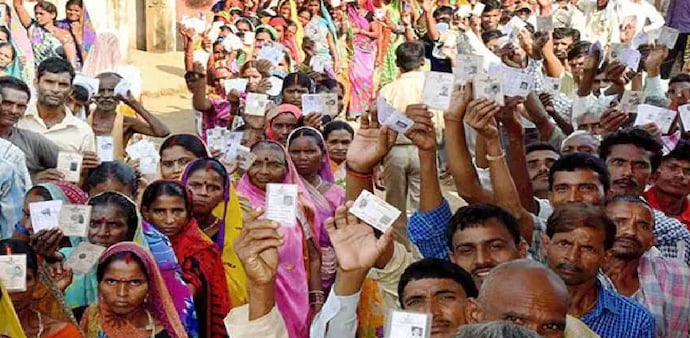
The first phase, held on November 6, made history with a 64.66% voter turnout — the highest the state has seen since its first Assembly election in 1951. Election officials say the enthusiasm is likely to continue in this round as well, which will close the curtain on Bihar’s 2025 electoral battle.
A total of 1,302 candidates, including 136 women, are in the fray in this phase. Among the key candidates contesting in this phase are: Bihar minister for science and technology Sumit Kumar Singh in Chakai, former Bihar deputy CM Renu Devi in Bettiah, former international shooter Singh in Jamui, Bihar transport and communication minister Sheela Mandal in Phulparas, Bihar minister Jayant Raj Kushwaha in Amarpur, Bhojpuri actor and singer Ritesh Pandey in Kargahar, Sushant Singh Rajput's cousin Neeraj Kumar Singh ‘Bablu’ in Chhatapur, and Bihar minister Mohammad Zama Khan in Chainpur.
The electorate stands at around 3.7 crore, with approximately 1.95 crore men and 1.74 crore women eligible to vote. To accommodate them, the Election Commission of India has set up over 45,399 polling booths across 20 districts. Voting will be held from 7 am to 5 pm, and anyone standing in queue by 5 pm will be allowed to cast their ballot.
The 122 constituencies going to polls include 101 general seats, 19 reserved for Scheduled Castes (SC), and two reserved for Scheduled Tribes (ST). The results for all 243 Assembly constituencies will be declared on November 14, while the current Assembly term ends on November 22.
Security has been tightened across Bihar to ensure free and fair polling. Over 500 companies of Central Armed Police Forces — including the CRPF, BSF, CISF, ITBP, and SSB — have been deployed. Every constituency will have an appointed observer, and webcasting from all polling booths will allow real-time monitoring of voting. Mobile phones will not be allowed inside polling rooms.
Voters can establish their identity using any of 12 valid photo IDs, including their EPIC voter card, Aadhaar card, or passport. The Election Commission has clarified that Aadhaar can be used as identity proof but not as proof of citizenship.
The campaign for this round was intense, featuring fiery rallies, high-profile roadshows, and sharp exchanges between the ruling NDA and the opposition Mahagathbandhan. Chief Minister Nitish Kumar, backed by the JD(U) and BJP, is seeking another term, while Tejashwi Yadav’s RJD and its allies are hoping to mount a strong comeback. The newly formed Jan Suraaj Party of Prashant Kishor is also testing its electoral strength for the first time, fielding several prominent faces in Gaya, Rohtas, and surrounding districts.
While the NDA is relying on its organisational machinery and Nitish Kumar’s governance record, the Mahagathbandhan has centred its campaign on issues such as unemployment, price rise, and alleged corruption. Meanwhile, Jan Suraaj has positioned itself as a people-driven alternative to both camps, calling for a “new model of politics” in Bihar.
The Election Commission has also introduced enhanced monitoring and transparency measures, including live webcasting from every polling station, randomised deployment of polling staff, and increased accessibility for elderly and differently-abled voters.
With campaigning now silent and preparations in their final stages, Bihar stands ready for a decisive polling day. The outcome, to be revealed on November 14, will determine whether Nitish Kumar’s NDA continues to hold power, the RJD-led Mahagathbandhan stages a comeback, or Prashant Kishor’s Jan Suraaj carves out a new political space.
After a record-breaking first phase, Bihar is heading into the final stretch of its Assembly election. The second and last phase of polling will take place on Tuesday, November 11, across 122 constituencies in 20 districts, deciding the fate of over a thousand candidates — including several ministers, political debutants, and celebrity contestants.
The first phase, held on November 6, made history with a 64.66% voter turnout — the highest the state has seen since its first Assembly election in 1951. Election officials say the enthusiasm is likely to continue in this round as well, which will close the curtain on Bihar’s 2025 electoral battle.
A total of 1,302 candidates, including 136 women, are in the fray in this phase. Among the key candidates contesting in this phase are: Bihar minister for science and technology Sumit Kumar Singh in Chakai, former Bihar deputy CM Renu Devi in Bettiah, former international shooter Singh in Jamui, Bihar transport and communication minister Sheela Mandal in Phulparas, Bihar minister Jayant Raj Kushwaha in Amarpur, Bhojpuri actor and singer Ritesh Pandey in Kargahar, Sushant Singh Rajput's cousin Neeraj Kumar Singh ‘Bablu’ in Chhatapur, and Bihar minister Mohammad Zama Khan in Chainpur.
The electorate stands at around 3.7 crore, with approximately 1.95 crore men and 1.74 crore women eligible to vote. To accommodate them, the Election Commission of India has set up over 45,399 polling booths across 20 districts. Voting will be held from 7 am to 5 pm, and anyone standing in queue by 5 pm will be allowed to cast their ballot.
The 122 constituencies going to polls include 101 general seats, 19 reserved for Scheduled Castes (SC), and two reserved for Scheduled Tribes (ST). The results for all 243 Assembly constituencies will be declared on November 14, while the current Assembly term ends on November 22.
Security has been tightened across Bihar to ensure free and fair polling. Over 500 companies of Central Armed Police Forces — including the CRPF, BSF, CISF, ITBP, and SSB — have been deployed. Every constituency will have an appointed observer, and webcasting from all polling booths will allow real-time monitoring of voting. Mobile phones will not be allowed inside polling rooms.
Voters can establish their identity using any of 12 valid photo IDs, including their EPIC voter card, Aadhaar card, or passport. The Election Commission has clarified that Aadhaar can be used as identity proof but not as proof of citizenship.
The campaign for this round was intense, featuring fiery rallies, high-profile roadshows, and sharp exchanges between the ruling NDA and the opposition Mahagathbandhan. Chief Minister Nitish Kumar, backed by the JD(U) and BJP, is seeking another term, while Tejashwi Yadav’s RJD and its allies are hoping to mount a strong comeback. The newly formed Jan Suraaj Party of Prashant Kishor is also testing its electoral strength for the first time, fielding several prominent faces in Gaya, Rohtas, and surrounding districts.
While the NDA is relying on its organisational machinery and Nitish Kumar’s governance record, the Mahagathbandhan has centred its campaign on issues such as unemployment, price rise, and alleged corruption. Meanwhile, Jan Suraaj has positioned itself as a people-driven alternative to both camps, calling for a “new model of politics” in Bihar.
The Election Commission has also introduced enhanced monitoring and transparency measures, including live webcasting from every polling station, randomised deployment of polling staff, and increased accessibility for elderly and differently-abled voters.
With campaigning now silent and preparations in their final stages, Bihar stands ready for a decisive polling day. The outcome, to be revealed on November 14, will determine whether Nitish Kumar’s NDA continues to hold power, the RJD-led Mahagathbandhan stages a comeback, or Prashant Kishor’s Jan Suraaj carves out a new political space.