
'Fomenting caste unrest in India...': Experts urge Marco Rubio to enforce discipline on Navarro
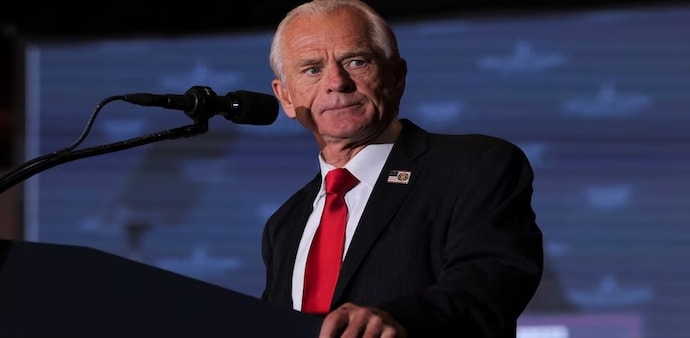
Peter Navarro, a key Trump advisor, linked his comments to India's discounted purchases of Russian crude oil, alleging that Indian refiners were re-exporting the processed fuel to global markets at a profit
- Sep 1, 2025,
- Updated Sep 1, 2025 12:54 PM IST
White House trade adviser Peter Navarro has come under fire for his remarks on India, with two prominent US voices criticising his comments after he accused "Brahmins" of profiteering from Russian oil at the expense of the Indian people. "Fomenting caste unrest in India should never be US foreign policy," said security analyst Derek J. Grossman on Monday.
Navarro, a key Trump advisor, linked his comments to India's discounted purchases of Russian crude oil, alleging that Indian refiners were re-exporting the processed fuel to global markets at a profit while "fueling the Russian war machine."
Navarro said, "Look, Prime Minister Narendra Modi is a great leader, but I don't understand how he is cooperating with Putin and Xi Jinping when he's the biggest democracy in the world." He argued that India had become "a laundromat for the Kremlin," suggesting that oil purchases from Moscow funded Russia's war in Ukraine.
Evan Feigenbaum, former US deputy assistant secretary of state for South Asia, suggested Navarro's rhetoric pointed to a lack of discipline in Washington's messaging. "As national security advisor, it's really past time for Rubio to enforce some message discipline on this guy," Feigenbaum wrote, referring to Marco Rubio, United States Secretary of State.
The controversy comes against the backdrop of escalating trade tensions between India and the United States. Earlier this month, Washington imposed a second round of tariffs on Indian goods, raising duties to 50 per cent across a broad range of sectors.
Navarro defended the tariffs in his Fox News Sunday appearance, claiming that India had some of the world's highest trade barriers and accusing New Delhi of blocking market access to American companies.
"They export us a bunch of stuff, (and) they won't let us sell to them. So who gets hurt? Workers in America, taxpayers in America, Ukrainians in cities getting killed by Russian drones," he said. He described the levies as both a penalty for India’s energy ties with Russia and a corrective measure against what he called "the maharaja of tariffs."
He also alleged that before Russia's invasion of Ukraine in 2022, India's imports of Russian crude were negligible, but that Moscow's refiners subsequently struck deals with Indian oil majors, allowing them to buy discounted crude, refine it, and resell it globally at a premium.
However, energy analyst Anas Alhajji rejected this claim, arguing that India's petroleum exports remain largely unchanged since before the Ukraine war. Navarro's argument is false, said Alhajji. "And the reason why it is false because if you look at Indian petroleum export before the Russian invasion of Ukraine and now - it's virtually the same. So the idea that they are importing to export is not correct."
In fact, what is happening since the Russian invasion is, the energy analyst explained, a change in the direction of trade. He said India was exporting those petroleum products to Asia and now it diverted that to Europe because Europe or the EU sanctioned itself from importing Russian petroleum products.
"So India basically is compensating for that, while the Asian market is supplied by the new refineries in the Middle East in Kuwait, UAE, and Oman."
White House trade adviser Peter Navarro has come under fire for his remarks on India, with two prominent US voices criticising his comments after he accused "Brahmins" of profiteering from Russian oil at the expense of the Indian people. "Fomenting caste unrest in India should never be US foreign policy," said security analyst Derek J. Grossman on Monday.
Navarro, a key Trump advisor, linked his comments to India's discounted purchases of Russian crude oil, alleging that Indian refiners were re-exporting the processed fuel to global markets at a profit while "fueling the Russian war machine."
Navarro said, "Look, Prime Minister Narendra Modi is a great leader, but I don't understand how he is cooperating with Putin and Xi Jinping when he's the biggest democracy in the world." He argued that India had become "a laundromat for the Kremlin," suggesting that oil purchases from Moscow funded Russia's war in Ukraine.
Evan Feigenbaum, former US deputy assistant secretary of state for South Asia, suggested Navarro's rhetoric pointed to a lack of discipline in Washington's messaging. "As national security advisor, it's really past time for Rubio to enforce some message discipline on this guy," Feigenbaum wrote, referring to Marco Rubio, United States Secretary of State.
The controversy comes against the backdrop of escalating trade tensions between India and the United States. Earlier this month, Washington imposed a second round of tariffs on Indian goods, raising duties to 50 per cent across a broad range of sectors.
Navarro defended the tariffs in his Fox News Sunday appearance, claiming that India had some of the world's highest trade barriers and accusing New Delhi of blocking market access to American companies.
"They export us a bunch of stuff, (and) they won't let us sell to them. So who gets hurt? Workers in America, taxpayers in America, Ukrainians in cities getting killed by Russian drones," he said. He described the levies as both a penalty for India’s energy ties with Russia and a corrective measure against what he called "the maharaja of tariffs."
He also alleged that before Russia's invasion of Ukraine in 2022, India's imports of Russian crude were negligible, but that Moscow's refiners subsequently struck deals with Indian oil majors, allowing them to buy discounted crude, refine it, and resell it globally at a premium.
However, energy analyst Anas Alhajji rejected this claim, arguing that India's petroleum exports remain largely unchanged since before the Ukraine war. Navarro's argument is false, said Alhajji. "And the reason why it is false because if you look at Indian petroleum export before the Russian invasion of Ukraine and now - it's virtually the same. So the idea that they are importing to export is not correct."
In fact, what is happening since the Russian invasion is, the energy analyst explained, a change in the direction of trade. He said India was exporting those petroleum products to Asia and now it diverted that to Europe because Europe or the EU sanctioned itself from importing Russian petroleum products.
"So India basically is compensating for that, while the Asian market is supplied by the new refineries in the Middle East in Kuwait, UAE, and Oman."